
Business
FEMA Quietly Slid $59 Million Out The Door For Illegal Migrants To Put Their Feet Up At ‘Luxury Hotels’: Musk



From the Daily Caller News Foundation
By Jason Hopkins
“That money is meant for American disaster relief and instead is being spent on high end hotels for illegals!” he continued. “A clawback demand will be made today to recoup those funds.”
The Federal Emergency Management Agency (FEMA) handed out $59 million to “luxury” hotels in New York City to house illegal migrants, Elon Musk said Monday.
Musk — who leads the Department of Government Efficiency (DOGE), a temporary agency within the Trump administration tasked with weeding out frivolous spending by the federal government — said it was his DOGE team that made the discovery. The top White House official said the payment was in violation of President Donald Trump’s executive order and efforts would be made to recover the funds.
“The @DOGE team just discovered that FEMA sent $59M LAST WEEK to luxury hotels in New York City to house illegal migrants,” Musk posted on X. “Sending this money violated the law and is in gross insubordination to the President’s executive order.”
“That money is meant for American disaster relief and instead is being spent on high end hotels for illegals!” he continued. “A clawback demand will be made today to recoup those funds.”
The details around the alleged payout are not completely clear. FEMA did not immediately respond to a request for comment from the Daily Caller News Foundation, nor did a spokesperson for DOGE.
Former White House press secretary Karine Jean-Pierre in October denied the Biden administration was using FEMA funds for migrant accommodations, but in 2022 she suggested that the agency was assisting cities with the migrant crisis.
On his first day back in office, Trump signed an executive order that placed a temporary suspension on refugee resettlement into the United States. The president additionally noted how some major cities, like New York City and Chicago, have requested federal aid to help manage the massive influx of migrants entering their jurisdictions.
The president additionally signed an executive order placing a freeze on federal grants and loans as it conducts a review of the government’s spending, but that order has since been blocked by the courts.
However, New York City officials have a long history of placing illegal migrants into four-star hotels as they’ve struggled to find accommodations for the sheer number of asylum seekers flocking to the Big Apple.
New York City began housing migrants in the four-star Collective Paper Factory hotel around August 2023 after it was reorganized into a Department of Homeless Services emergency shelter. The five-story Collective Paper Factory itself is equipped with a restaurant, a gym, a bar, meeting rooms for guests and communal spaces.
The “chic” Square Hotel was converted into housing for migrants. Other “upscale” hotels in the Big Apple have also been converted into migrant housing in the past as city officials continue to deal with the migrant crisis, including The Row, which has also been described as a “four-star hotel.”
“A 4-star hotel is considered luxury lodging,” according to Kayak, a company that provides hotel booking services. “Guest rooms are noticeably more spacious, with top-quality linens, pillowtop mattresses, bathrobes, slippers, minibars, and upscale toiletries, plus equipped kitchens.”
NYC’s Department of Homeless Services was reportedly seeking a contract with local hotels to provide roughly 14,000 rooms in order to shelter migrants through 2025. City officials anticipated spending on migrants in need of housing for the current fiscal year and the past two years combined will exceed $2.3 billion, with a significant amount of these costs going toward hotel rent.
The Big Apple — a sanctuary city jurisdiction with strict laws restricting cooperation between local law enforcement and Immigration and Customs Enforcement — has become a major destination for the massive number of illegal migrants who’ve flocked into the United States. Roughly 230,000 migrants have arrived in NYC since the spring of 2022, according to data provided by the mayor’s office.
FEMA underwent an internal investigation in November after it was uncovered that a supervisor reportedly instructed disaster relief workers deployed in the aftermath of Hurricane Milton to avoid houses with Trump signs.


If you think the CCP will treat foreigners better than its own people, when it extends its power over you, please think again: Dimon Liu’s warning to Canadian Parliament.
Editor’s Note: The Bureau is publishing the following testimony to Canada’s House of Commons committee on International Human Rights from Dimon Liu, a China-born, Washington, D.C.-based democracy advocate who testified in Parliament on December 8, 2025, about the human cost of China’s economic rise. Submitted to The Bureau as an op-ed, Liu’s testimony argues that the Canadian government should tighten scrutiny of high-risk trade and investment, and ensure Canada’s foreign policy does not inadvertently reward coercion. Liu also warns that the Chinese Communist Party could gain leverage over Canadians and treat them as it has done to its own subjugated population—an implied message to Prime Minister Mark Carney, who has pledged to engage China as a strategic partner without making that position clear to Canadians during his election campaign.
OTTAWA — It is an honor to speak before you at the Canadian Parliament.
My testimony will attempt to explain why China’s economic success is built on the backs of the largest number of displaced persons in human history.
It is estimated that these displaced individuals range between 300 to 400 million — it is equivalent to the total population of the United States being uprooted and forced to relocate. These displaced persons are invisible to the world, their sufferings unnoticed, their plights ignored.
In 1978, when economic reform began, China’s GDP was $150 billion USD.
In 2000, when China joined the WTO, it was approximately $1.2 trillion USD.
China’s current GDP is approximately $18 trillion USD.
In 2000 China’s manufacturing output was smaller than Italy’s.
Today it’s larger than America, Europe, Japan, and South Korea combined.
If you have ever wondered how China managed to grow so fast in such a short time, Charles Li, former CEO of the Hong Kong Stock Exchange, has the answers for you.
He listed 4 reasons: 1) cheapest land, 2) cheapest labor, 3) cheapest capital, and 4) disregard of environmental costs.

“The cheapest land” because the CCP government took the land from the farmers at little to no compensation.
“The cheapest labor,” because these farmers, without land to farm, were forced to find work in urban areas at very low wages.
The communist household registration system (hukou 戶口) ties them perpetually to the rural areas. This means they are not legal residents, and cannot receive social benefits that legal urban residents are entitled. They could be evicted at any time.
One well known incident of eviction occurred in November 2017. Cai Qi, now the second most powerful man in China after Xi Jinping, was a municipal official in Beijing. He evicted tens of thousands into Beijing’s harsh winter, with only days, or just moments of notice. Cai Qi made famous a term, “low-end population” (低端人口), and exposed CCP’s contempt of rural migrants it treats as second class citizens.
These displaced migrant workers have one tradition they hold dear — it is to reunite with their families during the Chinese Lunar New Year holiday, making this seasonal migration of 100 to 150 million people a spectacular event. In China’s economic winter of 2025 with waves of bankruptcies and factory closures, the tide of unemployed migrant workers returning home to where there is also no work, and no land to farm, has become a worrisome event.
Historically in the last 2,000 years, social instability has caused the collapse of many ruling regimes in China.
“The cheapest capital” is acquired through predatory banking practices, and through the stock markets, first to rake in the savings of the Chinese people; and later international investments by listing opaque, and state owned enterprises in leading stock markets around the world.
“A disregard of environmental costs” is a hallmark of China’s industrialization. The land is poisoned, so is the water; and China produces one-third of all global greenhouse gases.
Chinese Communist officials often laud their system as superior. The essayist Qin Hui has written that the Chinese communist government enjoys a human rights abuse advantage. This is true. By abusing its own people so brutally, the CCP regime has created an image of success, which will prove to be a mirage.
If you think the CCP will treat foreigners better than its own people, when it extends its power over you, please think again.
The Bureau is a reader-supported publication.
To receive new posts and support my work, consider becoming a free or paid subscriber.



U.S. District Judge Brian Cogan declared a mistrial Monday afternoon in the high-profile foreign-agent and corruption case against former New York state official Linda Sun and her husband Chris Hu, after jurors reported they were hopelessly deadlocked on all 19 counts.
After restarting deliberations Monday morning with an alternate juror, the panel sent a note to Judge Cogan stating:
“Your honor, after extensive deliberations and redeliberations the jury remains unable to reach a unanimous verdict. The jurors’ positions are firmly held.”
Cogan brought the jury into court and asked the foreman whether they had reached agreement on any counts. They replied that they were deadlocked on every one. The judge then declared a mistrial.
Assistant U.S. Attorney Alexander Solomon immediately told the court that the government intends to retry the case “as soon as possible.” A status conference is scheduled for January 26, 2026, to determine next steps.
Jury selection began November 10, 2025, and the government called 41 witnesses to the stand, compared with eight for the defense and one rebuttal witness for the prosecution. Deliberations began on December 12, and by this afternoon the jurors had sent three notes to the court — each indicating deadlock.
As The Bureau reported in its exclusive analysis Friday, the panel’s fracture had become visible as jurors headed into a second week of deliberations in a landmark foreign-agent and corruption trial that reached into two governors’ offices — a case asking a jury of New Yorkers to decide whether Sun secretly served Beijing’s interests while she and Hu built a small business and luxury-property empire during the pandemic, cashing in on emergency procurement as other Americans were locked down.
Prosecutors urged jurors to accept their account of a dense web of family and Chinese-community financial transactions through which Sun and Hu allegedly secured many millions of dollars in business deals tied to “United Front” proxies aligned with Beijing. The defense, by contrast, argued that Sun and Hu were simply successful through legitimate, culturally familiar transactions, not any covert scheme directed by a foreign state.
Sun and Hu face 19 charges in total, including allegations that Sun acted as an unregistered foreign agent for the People’s Republic of China; visa-fraud and alien-smuggling counts tied to a 2019 Henan provincial delegation; a multimillion-dollar pandemic PPE kickback scheme; bank-fraud and identity-misuse allegations; and multiple money-laundering and tax-evasion counts.
Prosecutors have argued that the clearest money trail ran through New York’s COVID procurement scramble and a pair of Jiangsu-linked emails. In closing, Solomon told jurors that Sun’s “reward” for steering contracts was “millions of dollars in kickbacks or bribes,” contending the money was routed through accounts opened in Sun’s mother’s name and via friends and relatives.
The government has tied those claims to a broader narrative — laid out in Solomon’s summation and dissected in The Bureau’s reporting — that Sun functioned as a “trusted insider” who repurposed state access and letterhead to advance Beijing’s priorities, including by allegedly forging Governor Kathy Hochul’s signature on invitation letters used for Chinese provincial delegations, while keeping those relationships hidden from colleagues. The defense, in turn, urged jurors to reject the government’s picture of clandestine agency and argued prosecutors had overreached by treating ordinary diaspora networking, trade promotion, and pandemic procurement as criminal conduct — insisting none of the evidence proved the “direction or control” element central to the Foreign Agents Registration Act.
Whether a future jury will see the same evidence as corruption and covert foreign agency or as culturally familiar commerce and politics — will now be tested again, on a new timetable, in a courtroom that has already shown just how difficult this record is to unanimously interpret.
The Bureau is a reader-supported publication.
To receive new posts and support my work, consider becoming a free or paid subscriber.


Argentina’s Milei delivers results free-market critics said wouldn’t work

Australian PM booed at Bondi vigil as crowd screams “shame!”

‘Almost Sounds Made Up’: Jeffrey Epstein Was Bill Clinton Plus-One At Moroccan King’s Wedding, Per Report
FDA warns ‘breast binder’ manufacturers to stop marketing to gender-confused girls
-
International2 days ago
Australian PM booed at Bondi vigil as crowd screams “shame!”
-
 Uncategorized2 days ago
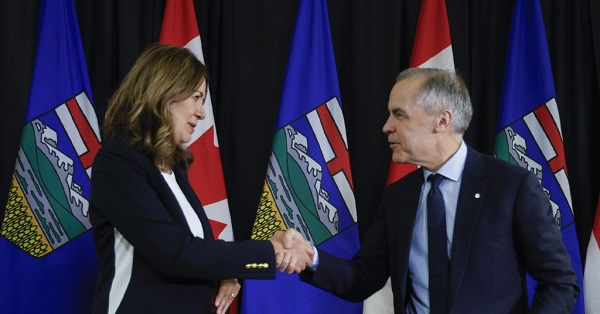
Mortgaging Canada’s energy future — the hidden costs of the Carney-Smith pipeline deal
-
 Opinion2 days ago
Religion on trial: what could happen if Canada passes its new hate speech legislation
-
 Automotive1 day ago
Canada’s EV gamble is starting to backfire
-
 Alberta22 hours ago
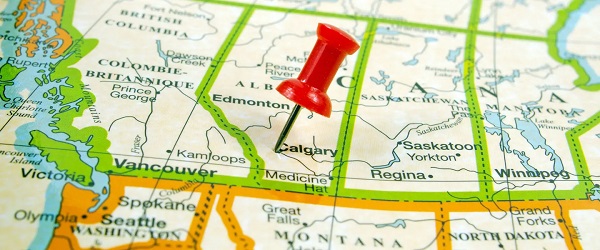
Alberta Next Panel calls to reform how Canada works
-
 Digital ID12 hours ago
Canadian government launches trial version of digital ID for certain licenses, permits
-
 Agriculture23 hours ago
End Supply Management—For the Sake of Canadian Consumers
-
 Business11 hours ago
The “Disruptor-in-Chief” places Canada in the crosshairs