
Business
Federal government ratchets up ‘climate’ propaganda

From the Fraser Institute
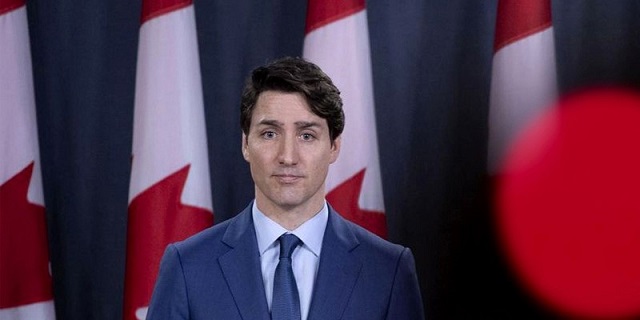
In the face of resistance from provinces to its anti-fossil fuel agenda, and having endured several setbacks in the federal courts over some of its signature environmental policies, the Trudeau government has rolled out a new propaganda campaign to build greater support for its climate and energy policies.
According to the government’s new “Raising the Bar” campaign, manmade climate change has quickly evolved from a future threat to a real-time crisis where we’re experiencing more “wildfires, floods, and droughts” that affect “our economy, our infrastructure, our health, and our overall well-being.”
But is this true? Our government, which regularly claims to follow evidence-based policy, doesn’t provide much evidence to back up these claims—probably because there isn’t a lot of strong evidence that we’re seeing dramatic changes in extreme weather events.
Take wildfires, for example. In reality, wildfires in Canada have been declining in number, extent and severity over the last four decades, even as the overall climate has warmed (which it has, undeniably). More broadly, according to the United Nations Intergovernmental Panel on Climate Change (IPCC), it’s only “likely” that heavy rainfall events have increased in North America since 1950, and the IPCC only has “medium confidence” that droughts have worsened since 1950.

Nonetheless, despite a relative paucity of data indicating worsening extreme weather events in Canada, we must “Raise the Bar” and “tackle the climate crisis” by essentially doing less of just about everything Canadians want to do.
The Trudeau government’s new campaign includes a slick video showing how Canadians are “Stepping Up” to the government’s ideas of the good life. We meet Charles, who now takes the bus twice a week, and Megan, who swapped her trusty gas-powered leaf blower for an electric one. Jade and Amina have taken government subsidies to swap out their reliable gas heating system for an electric heat pump. And the Nguyen family now dries its clothes on clotheslines. Of course, the video does not reveal that some of these virtuous acts will be fairly horrible in the cold winters that grip most of the country. One wonders how many tax dollars went to fund this little paean to Canadians who follow government dictates. (Interestingly, when the government posted the video on YouTube, it disabled the comments so Canadians can’t, well, comment.)
But the propaganda doesn’t stop with gentle nudging. On the website, Canadians are told to use less energy, less water, buy less new clothing, travel less, and eat less meat while eating more plant matter (ironically, the government’s efforts to reduce nitrogen fertilizer will make plant matter more expensive and less available).
One might dismiss the latest climate propaganda campaign as just another government Public Service Announcement intended to help people live more climate-healthy and mindful lives, but that would be a mistake. Because this propaganda campaign doesn’t simply encourage people to get more exercise or eat less junk food, it seeks to create a public mindset that will convince Canadians to accept a raft of coercive regulations—such as the hard cap on greenhouse gas emissions or restrictions on fuel tankers and pipelines—which prevent the development of oil and gas resources across Western Canada and restrict the economy.
Rather than making our lives better, as the “Stepping Up” video suggests, the coercive regulatory regime that underpins these new ways of living will, in fact, leave Canadians less prosperous and force them to pay more for less of just about everything.
Author:



From the Canadian Taxpayers Federation
Author: Jay Goldberg
Trudeau and Ford bragged about how a $5 billion giveaway to Honda is going to generate 1,000 jobs. In case you’re thinking of doing the math, that’s $5 million per job.
Politicians are rolling the dice on the electric vehicle industry with your money.
If they bet wrong, and there’s a good chance they have, hardworking Canadians will be left holding the bag.
Prime Minister Justin Trudeau and Premier Doug Ford announced a $5-billion agreement with Honda, giving another Fortune 500 automaker a huge wad of taxpayer cash.
Then Trudeau released a video on social media bragging about “betting big” on the electric vehicle industry in Canada. The “betting” part of Trudeau’s statement tells you everything you need to know about why this is a big mistake.
Governments should never “bet” with taxpayer money. That’s the reality of corporate welfare: when governments give taxpayer money to corporations with few strings attached, everyday Canadians are left hoping and praying that politicians put the chips on the right numbers.
And these are huge bets.
When Trudeau and Ford announced this latest giveaway to Honda, the amount of taxpayer cash promised to the electric vehicle sector reached $57 billion. That’s more than the federal government plans to spend on health care this year.
Governments should never gamble with taxpayer money and there are at least three key reasons why this Honda deal is a mistake.
First, governments haven’t even proven themselves capable of tracking how many jobs are created through their corporate welfare schemes.
Trudeau and Ford bragged about how a $5 billion giveaway to Honda is going to generate 1,000 jobs. In case you’re thinking of doing the math, that’s $5 million per job.
Five million dollars per job is already outrageous. But some recent reporting from the Globe and Mail shows why corporate welfare in general is a terrible idea.
The feds don’t even have a proper mechanism for verifying if jobs are actually created after handing corporations buckets of taxpayer cash. So, while 1,000 jobs are promised through the Honda deal, the government isn’t capable of confirming whether those measly 1,000 jobs will materialize.

Second, betting on the electric vehicle industry comes with risk.
Trudeau and Ford gave the Ford Motor Company nearly $600 million to retool a plant in Oakville to build electric cars instead of gasoline powered ones back in 2020. But just weeks ago, Ford announced plans to delay the conversion for another three years, citing slumping electric vehicle sales.
Look into Ford’s quarterly reports and the danger of betting on electric vehicles becomes clear as day: Ford’s EV branch lost $1.3 billion in the first quarter of 2024. Reports also show Ford lost $130,000 on every electric vehicle sold.
The decline of electric vehicle demand isn’t limited to Ford. In the United States, electric vehicle sales fell by 7.3 per cent between the last quarter of 2023 and the first quarter of 2024.
Even Tesla’s sales were down 13 per cent in the first quarter of this year compared to the first quarter of 2023.
A Bloomberg headline from early April read “Tesla’s sales miss by the most ever in brutal blow for EVs.”
There’s certainly a risk in betting on electric vehicles right now.
Third, there’s the question of opportunity cost. Imagine what else our governments could be doing with $57 billion?
For about the same amount of money, the federal government could suspend the federal sales tax for an entire year. The feds could also use $57 billion to double health-care spending or build 57 new hospitals.
The solution for creating jobs isn’t to hand a select few companies buckets of cash just to lure them to Canada. Politicians should be focusing on creating the right environment for any company, large or small, to grow without a government handout.
To do that, Canada must be more competitive with lower business taxes, less red tape and more affordable energy. That’s a real recipe for success that doesn’t involve gambling with taxpayer cash.
It’s time for our politicians to kick their corporate welfare addiction. Until they do, Canadians will be left paying the price.
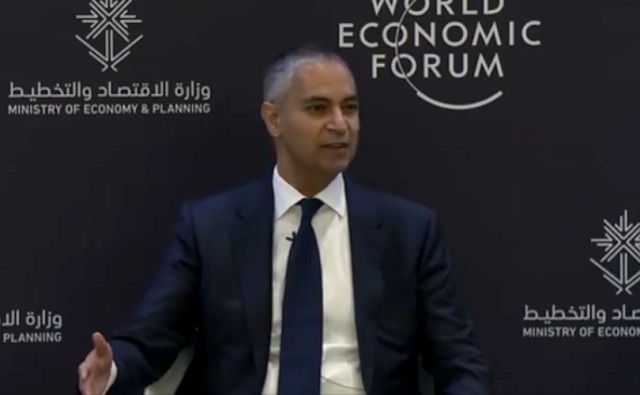
Central Bank of Bahrain governor Khalid Humaidan
From LifeSiteNews
When asked how he would convince people that CBDCs would be a trusted medium of exchange, Bahrain’s central bank governor said that COVID made the digital transformation ‘something of a requirement’ that had ‘very little resistance.’
Central bank digital currencies (CBDCs) will hopefully replace physical cash and become fully digital, a central banker tells the World Economic Forum (WEF).
Speaking at the WEF Special Meeting on Global Collaboration, Growth and Energy Development on Sunday, Central Bank of Bahrain governor Khalid Humaidan told the panel “Open Forum: The Digital Currencies’ Opportunity in the Middle East” that one of the goals of CBDC was to replace cash, at least in Bahrain, and to go “one hundred percent digital.”
Humaidan likened physical cash to being an antiquated “analogue” technology and that CBDC was the digital solution that would hopefully replace cash:
"We're probably going to stop calling it central bank digital currency [CBDC]. It's going to be a digital form of cash, and at some point in time hopefully we will be able to be 100% digital": Central Bank of Bahrain Governor Khalid Humaidan to the WEF https://t.co/Pspr0M1Uuq pic.twitter.com/N5aOkCpzh1
— Tim Hinchliffe (@TimHinchliffe) April 29, 2024
“I thank this panel and this opportunity. It forced me to refine my thoughts and opinions where I’m at a place comfortably now that I’m ready to verbalize what I think about CBDC,” said Humaidan.
If we think cash is the analogue and digital currency is the form of digital – CBDC is the digital form of cash – today, clearly we’re in a hybrid situation; we’re using both.
We know in the past when it comes to cash, central bankers were very much in control with all aspects of cash, and now we’re comfortable to the point where the private sector plays a big role in the printing of the cash, in the distribution of the cash, and with the private sector we use interest rates to manage the supply of cash.
The same thing is likely to happen with CBDC. Yes, the central bank will have a role, but at some point in time – the same way we don’t call it ‘central bank cash’ – we’re probably going to stop calling it central bank digital currency.
“It’s going to be a digital form of the cash, and at some point in time hopefully we will be able to be one hundred percent digital,” he added.
When asked how he would convince people that CBDC would be a trusted medium of exchange, Bahrain’s central bank governor said that people were already used to it and that COVID made the digital transformation “necessary” and “something of a requirement” that had “very little resistance.”
"There's less use of cash […] The transition to fully digital is not going to be a stretch […] People are used to it […] Its adoption rates increased because of COVID […] There is very little resistance": Central Bank of Bahrain Governor Khalid Humaidan to the WEF on CBDC pic.twitter.com/zB7nJAi48G
— Tim Hinchliffe (@TimHinchliffe) April 29, 2024
“Right now, many of our payments are digital. The truth is, I said that we’re in a hybrid model; there’s less and less use of cash,” said Humaidan.
I think from predominantly digital with a little physical, I think the transition to fully digital is not going to be a stretch.
People are used to it, people have engaged in it and certain circumstances did help. Its adoption rates increased because of COVID.
“This is where contactless started to become something of a necessity, something of safety, something of a requirement, and because of that there is very little resistance; trust is already there,” he added.
"Is it [digital euro] going to be as private as cash? No. A digital currency will never be as anonymous and as protecting of privacy in many respects as cash, which is why cash will always be around": Christine Lagarde, BIS Innovation Summit, March 2023 #CBDC pic.twitter.com/BLMVOPax6a
— Tim Hinchliffe (@TimHinchliffe) April 11, 2023
Meanwhile, European Central Bank president Christine Lagarde has been going around the world telling people that the digital euro CBDC would not eliminate cash, and that cash would always be an option.

Speaking at the Bank for International Settlements (BIS) Innovation Summit in March 2023, Lagarde said that a digital currency will never be as anonymous as cash, and for that reason, cash will always be around.
“Is it [digital euro] going to be as private as cash? No,” she said.
A digital currency will never be as anonymous and as protecting of privacy in many respects as cash, which is why cash will always be around.
If people want to use cash in some countries or in some transactions, cash should be available.
“A digital currency is an alternative, is another means of payment and will not provide exactly the same level of privacy and anonymity as cash, but will be pretty close in terms of complete neutrality in relation to the data,” she added.
A WEF Agenda blog post from September, 2017, lists the “gradual obsolescence of paper currency” as being “characteristic of a well-designed CBDC.”
"You could have a potentially […] darker world where the government decides that [CBDC] can be used to purchase some things, but not other things that it deems less desirable like say ammunition, or drugs, or pornography, or something of the sort": Eswar Prasad, WEF #AMNC23 pic.twitter.com/KkWgaEWAR5
— Tim Hinchliffe (@TimHinchliffe) June 28, 2023
Last year at the WEF’s 14th Annual Meeting of the New Champions, aka “Summer Davos,” in Tianjing, China, Cornell University professor Eswar Prasad said that “we are at the cusp of physical currency essentially disappearing,” and that programmable CBDCs could take us to either a better or much darker place.
“If you think about the benefits of digital money, there are huge potential gains,” said Prasad, adding, “It’s not just about digital forms of digital currency; you can have programmability – units of central bank currency with expiry dates.
You could have […] a potentially better – or some people might say a darker world – where the government decides that units of central bank money can be used to purchase some things, but not other things that it deems less desirable like say ammunition, or drugs, or pornography, or something of the sort, and that is very powerful in terms of the use of a CBDC, and I think also extremely dangerous to central banks.
The WEF’s Special Meeting on Global Collaboration, Growth and Energy Development took place from April 27-29 in Riyadh, Saudi Arabia.
“Saudi Arabia’s absolute monarchy restricts almost all political rights and civil liberties,” according to D.C.-based NGO Freedom House.
In the kingdom, “No officials at the national level are elected,” and “the regime relies on pervasive surveillance, the criminalization of dissent, appeals to sectarianism and ethnicity, and public spending supported by oil revenues to maintain power.”
Reprinted with permission from The Sociable.

‘Gambling With The Grid’: New Data Highlights Achilles’ Heel Of One Of Biden’s Favorite Green Power Sources
Market Realities Are Throwing Wrench In Biden’s Green Energy Dreams

Climate Murder? Media Picks Up Novel Legal Theory Suggesting Big Oil Is Homicidal

Official statement from Premier Danielle Smith and Energy Minister Brian Jean on the start-up of the Trans Mountain Pipeline

-
Economy2 days ago
‘Gambling With The Grid’: New Data Highlights Achilles’ Heel Of One Of Biden’s Favorite Green Power Sources
-
Energy1 day ago
Market Realities Are Throwing Wrench In Biden’s Green Energy Dreams
-
 illegal immigration2 days ago
Biden’s DOJ Threatens To Sue Another State For Enforcing Immigration Law
-
 ESG2 days ago
Tennessee Taking Lead In Protecting Civil Rights And Free Enterprise—And Stopping Political Debanking
-
 Brownstone Institute15 hours ago
Book Burning Goes Digital
-
 conflict18 hours ago
Over 200 Days Into War, Family Of American Hostage in Gaza Strives For Deal To Bring Son Home
-
 illegal immigration2 days ago
More Chinese Illegal Migrants Apprehended At Southern Border In Two Days Than In All Of 2021: REPORT
-
 Brownstone Institute3 hours ago
The Predictable Wastes of Covid Relief