
Daily Caller
‘Extraordinary’: El Salvador Agrees To Take In Any Gangbangers, Convicted Criminals Deported Out Of US

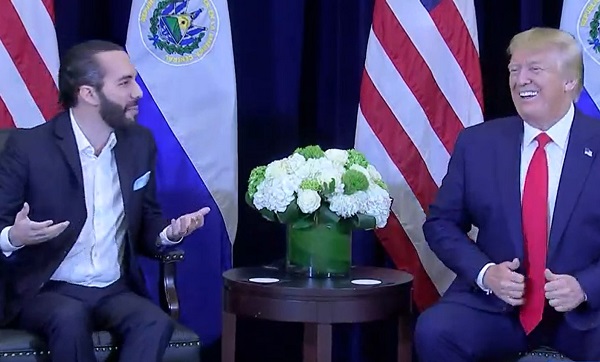
Salvadoran President Nayib Bukele and then-U.S. President Donald Trump, Sept. 25, 2019.

From the Daily Caller News Foundation
By Jason Hopkins
El Salvador President Nayib Bukele has agreed to imprison convicted criminals from any country that have been ordered deported out of the United States.
The extraordinary offer was made after Secretary of State Marco Rubio visited Bukele in San Salvador, the country’s capital city, to discuss a range of bilateral issues. The Central American leader not only agreed to take back his own country’s deportees, but also offered his “mega-prison” to house MS-13 members, Venezuelan Tren de Aragua gangbangers and any other criminal from around the world — including U.S. citizens.
The offer could prove crucial for the Trump White House as it moves forward with its detention and deportation operation after the unprecedented border crisis that was sparked during the previous administration. The 8.5 million border encounters that occurred at the U.S.-Mexico border during President Joe Biden’s era resulted in an unprecedented growth of the country’s illegal migrant population.
Dear Readers:
As a nonprofit, we are dependent on the generosity of our readers. Please consider making a small donation of any amount here. Thank you!
“We have offered the United States of America the opportunity to outsource part of its prison system,” Bukele posted on social media Monday night. “We are willing to take in only convicted criminals (including convicted U.S. citizens) into our mega-prison (CECOT) in exchange for a fee.”
“The fee would be relatively low for the U.S. but significant for us, making our entire prison system sustainable,” he continued.
The State Department confirmed the offer in a statement, adding that the “extraordinary gesture” has never been extended before by any other country.
“President Bukele agreed to take back all Salvadoran MS-13 gang members who are in the United States unlawfully,” said State Department spokesperson Tammy Bruce. “He also promised to accept and incarcerate violent illegal immigrants, including members of the Venezuelan Tren de Aragua gang, but also criminal illegal migrants from any country.”
The agreement follows an announcement in January by President Donald Trump that he would be utilizing a section of Guantanamo Bay to detain “the worst criminal illegal aliens.” The president said he would be sending up to 30,000 migrants with deportation orders to the Cuba-based naval base.
Previous administrations have utilized Guantanamo Bay for migrant detention in the past. The Clinton administration processed thousands of Haitians and housed Cuban asylum seekers at the naval base during the 1990s, and the Obama administration considered similar measures after the 2010 Haiti earthquake and the Biden administration also mulled the idea.
El Salvador, where the international crime syndicate MS-13 has a major presence, has long been plagued with violent crime. However, Bukele has made incredible strides in reducing his country’s crime rate since assuming office in 2019 through a no-nonsense policy of mass incarceration.
The Central American leader oversaw a 70% reduction of the country’s murder rate in 2023. When asked by the Daily Caller News Foundation in February 2024 how the U.S. could reduce crime rates in major cities, Bukele simply said “incarcerate the criminals.”
Sending deportees to El Salvador and Guantanamo Bay potentially solves two major hurdles for the Trump administration’s immigration enforcement agenda: recalcitrant countries that refuse to accept their deported citizens back and limited Immigration and Customs Enforcement (ICE) detention space. Racking up available bed space by the thousands can prevent ICE detention centers from being forced to release illegal migrants back into the community due to overcrowding.
Trump successfully coerced the Colombian president into taking back his county’s deportees after threatening him with stiff tariffs, and the Venezuelan government has also recently agreed to begin accepting their repatriated citizens.
Several high-profile criminal migrants were detained and released at the border before going on to commit heinous crimes in the U.S., such as Laken Riley’s killer Jose Ibarra and 12-year-old Jocelyn Nungaray’s alleged killers. More detention space can potentially help federal immigration authorities avoid releasing illegal migrants from custody.
Bukele “has agreed to the most unprecedented, extraordinary, extraordinary migratory agreement anywhere in the world,” Rubio said to the media after meeting with him at his lakeside country house outside San Salvador.
The historic offer from El Salvador immediately followed Rubio’s trip to Panama, in which he successfully prevented the key Central American country from renewing an infrastructure agreement with China, reducing the communist country’s influence in the region.

Censorship Industrial Complex
Foreign Leaders Caught Orchestrating Campaign To Censor American Right-Wing Media Companies
From the Daily Caller News Foundation
Labour Party files — including internal documents never before released — reveal a coordinated series of maneuvers, strategic deceptions and covert operations that helped deliver U.K. Prime Minister Keir Starmer to Downing Street, according to the book by investigative journalist Paul Holden. The campaign operated largely behind the scenes that mirrored the same tactics a corporate, pro-Israel faction inside the Labour Party used to crush dissent during Jeremy Corbyn’s rise, a strategy that dismantled the party’s left flank and reshaped British politics.
Holden’s reporting shows that these operatives built an array of anti-disinformation groups that presented themselves as neutral fact-checkers while aggressively targeting conservative outlets for demonetization, deplatforming and reputational damage. Internal documents and interviews indicate these organizations were never independent; they worked in lockstep with senior Labour figures who sought to contain populist movements on both sides of the Atlantic.
As a nonprofit, we are dependent on the generosity of our readers.
Please consider making a small donation of any amount here.
Thank you!
Labour officials celebrated an unexpected election surge in 2017, unaware that a faction inside their own party had been covertly diverting resources to undermine Jeremy Corbyn’s leadership. Holden’s investigation reveals that senior Labour bureaucrats secretly operated a parallel campaign from Ergon House, funneling money and support to anti-Corbyn candidates while starving the official operation of crucial funds.
A 2020 leaked internal report (860-page dossier) revealed deep factional divisions inside the Labour Party and showed that senior staff privately opposed Corbyn’s leadership and expressed hope that Labour would underperform in the 2017 election.
The book shows that the misuse of donations was far more extensive than previously known and may have breached election spending laws, especially in constituencies where diverted money was reported incorrectly. The party’s refusal to release campaign materials tied to this funding has intensified criticism of its transparency and raised questions about Starmer’s promise to restore trust in government.
After the 2017 election, strategist Morgan McSweeney began shaping Labour Together into an anti-Corbyn vehicle, using wealthy donors and newly created advocacy groups to amplify allegations that would weaken Corbyn’s support. Holden documents that McSweeney failed to report more than £700,000 (approximately $885,000 to $900,000) in donations despite being legally obligated to disclose them, a violation that later resulted in fines.
BBC News reported in 2022 that Labour Together was fined £14,250 (approximately $18,000) for failing to declare more than £730,000 in donations, confirming that key figures in Starmer’s political orbit had already breached U.K. election transparency laws.
By 2019, McSweeney had aligned himself with Starmer’s leadership ambitions, helping him run as a continuity candidate despite planning a sharp ideological shift once in power. Holden concludes that this project ultimately hollowed out Labour’s credibility, leaving the party mired in collapsing public confidence and confronting mounting questions about the integrity of its top advisers.
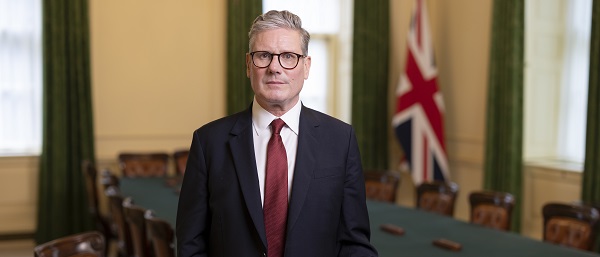
(Featured Image Media Credit: UK Prime Minister Keir Starmer/picture by Simon Dawson/Flickr)

From the Daily Caller News Foundation
During the latest marathon cabinet meeting on Dec. 2, Energy Secretary Chris Wright made news when he told President Donald Trump that “The biggest determinant of the price of energy is politicians, political leaders, and polices — that’s what drives energy prices.”
He’s right about that, and it is why the back-and-forth struggle over federal energy and climate policy plays such a key role in America’s economy and society. Just 10 months into this second Trump presidency, the administration’s policies are already having a profound impact, both at home and abroad.
While the rapid expansion of AI datacenters over the past year is currently being blamed by many for driving up electric costs, power bills were skyrocketing long before that big tech boom began, driven in large part by the policies of the Obama and Biden administration designed to regulate and subsidize an energy transition into reality. As I’ve pointed out here in the past, driving up the costs of all forms of energy to encourage conservation is a central objective of the climate alarm-driven transition, and that part of the green agenda has been highly effective.
Dear Readers:
As a nonprofit, we are dependent on the generosity of our readers.
Please consider making a small donation of any amount here.
Thank you!
President Trump, Wright, and other key appointees like Interior Secretary Doug Burgum and EPA Administrator Lee Zeldin have moved aggressively throughout 2025 to repeal much of that onerous regulatory agenda. The GOP congressional majorities succeeded in phasing out Biden’s costly green energy subsidies as part of the One Big Beautiful Bill Act, which Trump signed into law on July 4. As the federal regulatory structure eases and subsidy costs diminish, it is reasonable to expect a gradual easing of electricity and other energy prices.
This year’s fading out of public fear over climate change and its attendant fright narrative spells bad news for the climate alarm movement. The resulting cracks in the green facade have manifested rapidly in recent weeks.
Climate-focused conflict groups that rely on public fears to drive donations have fallen on hard times. According to a report in the New York Times, the Sierra Club has lost 60 percent of the membership it reported in 2019 and the group’s management team has fallen into infighting over elements of the group’s agenda. Greenpeace is struggling just to stay afloat after losing a huge court judgment for defaming pipeline company Energy Transfer during its efforts to stop the building of the Dakota Access Pipeline.
350.org, an advocacy group founded by Bill McKibben, shut down its U.S. operations in November amid funding woes that had forced planned 25 percent budget cuts for 2025 and 2026. Employees at EDF voted to form their own union after the group went through several rounds of budget cuts and layoffs in recent months.
The fading of climate fears in turn caused the ESG management and investing fad to also fall out of favor, leading to a flood of companies backtracking on green investments and climate commitments. The Net Zero Banking Alliance disbanded after most of America’s big banks – Goldman Sachs, J.P. Morgan Chase, Citigroup, Wells Fargo and others – chose to drop out of its membership.
The EV industry is also struggling. As the Trump White House moves to repeal Biden-era auto mileage requirements, Ford Motor Company is preparing to shut down production of its vaunted F-150 Lightning electric pickup, and Stellantis cancelled plans to roll out a full-size EV truck of its own. Overall EV sales in the U.S. collapsed in October and November following the repeal of the $7,500 per car IRA subsidy effective Sept 30.
The administration’s policy actions have already ended any new leasing for costly and unneeded offshore wind projects in federal waters and have forced the suspension or abandonment of several projects that were already moving ahead. Capital has continued to flow into the solar industry, but even that industry’s ability to expand seems likely to fade once the federal subsidies are fully repealed at the end of 2027.
Truly, public policy matters where energy is concerned. It drives corporate strategies, capital investments, resource development and movement, and ultimately influences the cost of energy in all its forms and products. The speed at which Trump and his key appointees have driven this principle home since Jan. 20 has been truly stunning.
David Blackmon is an energy writer and consultant based in Texas. He spent 40 years in the oil and gas business, where he specialized in public policy and communications.


Canadians will soon be versed in massive West Coast LPG mega-project

A look inside the ‘floatel’ housing B.C.’s LNG workforce
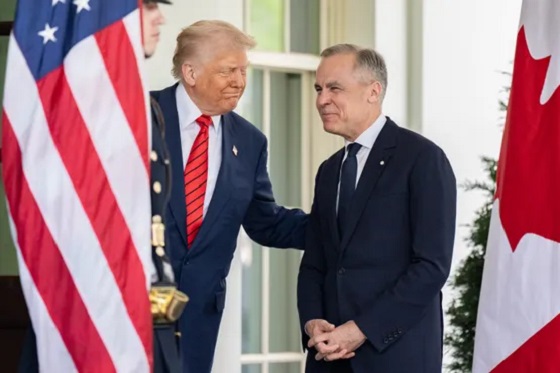
Canada Needs an Alternative to Carney’s One Man Show

FBI may have finally nabbed the Jan. 6 pipe bomber
-
Energy18 hours ago
A look inside the ‘floatel’ housing B.C.’s LNG workforce
-
International1 day ago
FBI may have finally nabbed the Jan. 6 pipe bomber
-
 COVID-191 day ago
University of Colorado will pay $10 million to staff, students for trying to force them to take COVID shots
-
 Business2 days ago
Canada’s climate agenda hit business hard but barely cut emissions
-
 espionage1 day ago
Digital messages reportedly allege Chinese police targeted dissident who died suspiciously near Vancouver
-
 Energy18 hours ago
ELZABETH MAY HAS IT WRONG: An Alberta to Prince Rupert Oil Pipeline Will Contribute to Greater Global Oil Tanker Safety
-
 National18 hours ago
Alberta will use provincial laws to stop Canadian gov’t from trying to confiscate legal firearms
-
 Censorship Industrial Complex2 days ago
Conservative MP Leslyn Lewis slams Liberal plan targeting religious exemption in hate speech bil