
Alberta
Energy East May be the Nation Building Mega-Project Canada Needs Right Now

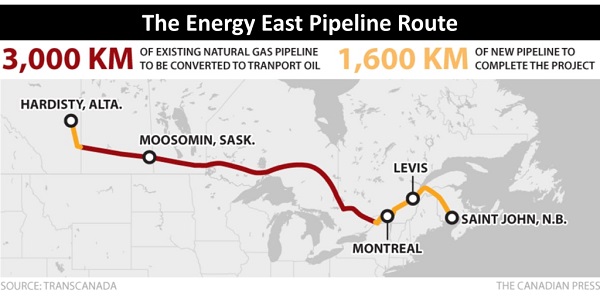
From EnergyNow.Ca
By Jim Warren
Is it Time to Put Politics Aside for Team Canada? – Jim Warren
People on the prairies who understand the value of a flourishing oil and gas sector are hopeful the election of a Conservative government will sweep away the barriers that blocked the Northern Gateway and Energy East pipelines. Some optimistic industry analysts suggest a project similar to Northern Gateway may be doable but concede that reviving Energy East would probably be a bridge too far.
It is getting difficult to recount exactly how many times Quebec’s demands for special treatment have disrupted national unity. Quebec’s rejection of Energy East was the most recent assault on national cohesion to anger large numbers of people on the prairies. It amounted to sticking a finger in the eye of the oil-producing provinces. And while the Poilievre Conservatives are set to win the next election, their victory won’t signal a big change in attitudes about the environment in Quebec.
Politicians from Quebec argue over which of their parties can claim it hates pipelines the most. Bloc Québécois leader, Yves-François Blanchet brags about the prominent role his party played in killing Energy East. His boasting actually drew the ire of Quebec Liberals and environmental groups in 2019. They claimed the Bloc was taking credit for their work. The 338Canada website, has the anti-oil Bloc Québécois winning 45 of the 78 federal seats in Quebec in the upcoming federal election.
Provincially, the Coalition Avenir Québec (CAQ) government is marginally more reasonable to deal with. It claims to stand for Quebec’s national autonomy as opposed to outright separation. Quebec premier, François Legault, says the west would do well to behave more like politicians from his province when dealing with Ottawa. He makes a good point.
Revisiting just how eminently reasonable the original Energy East proposal actually was suggests many Quebec politicians are immune to common sense. If the Energy East proposal wasn’t acceptable to the overly zealous activists who influence environmental policy in the province, why would we expect a different response in the near future?
There are, however, coercive options that might work. Premiers from Alberta and Saskatchewan have proposed withholding a portion of Quebec’s annual equalization payment in response to its lack of cooperation on building a pipeline to tidewater on the Atlantic coast. Unfortunately that option would require a constitutional amendment, and those have proven to be extremely difficult to engineer.
Alternatively, prairie governments might encourage Enbridge to shut down its Line 9 pipeline which has the capacity to transport up to 300 barrels per day (bpd) of western oil to Montreal. That sort of move would require getting industry players on side–including Enbridge and Suncor, who owns a 137,000 bpd capacity refinery in Montreal. It is encouraging to recall that Peter Lougheed faced little in the way of industry opposition in the 1970s when he cut oil shipments to Central Canada by 10%.
Quebec’s past behavior pretty much guarantees the province would threaten separation if confronted with the loss of its equalization welfare ($14 billion for fiscal 2023-24). They might be less concerned about getting a pipeline from the west turned off—they seem to prefer tanker ships over pipelines.
Many westerners are weary of Quebec’s separation blackmail. Some of those who have run out of patience say, “next time they threaten to go, just tell them not to let the door hit them on the ass on their way out.”
The cancellation of the Energy East pipeline was viewed on the prairies as rejection of a project that would generate greater national harmony. It was seen as a nation building exercise of benefit to Quebecers, people from the Maritimes, Ontario and Western Canada. Westerners mistakenly assumed even environmentally sanctimonious Quebecers would recognize the benefits of obtaining more of their oil from pipelines rather than via marginally risky railways and ocean going tankers.
Following the 2013 Lac-Mégantic rail disaster, people from western Canada’s oil patch naively assumed approval of Energy East was a no brainer. The disaster killed 47 people and destroyed downtown Lac- Mégantic. It was caused by the derailment and explosion of a train hauling oil tanker cars. It seemed reasonable to imagine Quebecers would happily purchase safer, less expensive Canadian oil transported by pipeline.
Energy East would have been the longest pipeline in North America. It was to run from Alberta to Saint John, New Brunswick. The plan was to convert 2,900 miles of existing natural gas pipeline into an oil pipeline, build 1,900 miles of new pipeline and make a $300 million upgrade to an Irving oil terminal in New Brunswick. It was a visionary project reminiscent of the building of the transcontinental railway and the original TransCanada pipeline.
The pipeline would be capable of transporting 1.1 million bpd. No more than 400,000 bpd would be required to replace the foreign oil being imported by tanker and rail. The remaining 600,000 barrels could be exported to new international customers for Canadian oil. The value of those new export revenues would conceivably approach $15 billion annually.
It is worth remembering the influential role Quebec Liberals played in opposing Energy East. Montreal’s Mayor Denis Coderre, was a former Liberal cabinet minister who led the Montreal Municipal Community (MMC) a coalition of 82 Montreal area municipal governments. As much as anything, the MMC’s strident opposition to Energy Easy in January of 2016 foretold TransCanada’s October 2017 cancellation of the pipeline.
Inspiration for cancelling the pipeline was provided by Quebec’s robust environmental lobby—led by activists like Steven Guilbeault. Polls conducted at the time showed the Quebec politicians who opposed Energy East had the support of 60% or more of the public. The pipeline was similarly denounced by premier Philippe Couillard and Quebec’s Liberal government at the time. While the southwest corner of B.C. has typically been thought of as the home of Canada’s Greens, in Quebec the Liberals are the party preferred by environmental activists.
Liberals in Ottawa remained officially neutral during the Energy East controversy but were unofficially cheering for the pipeline’s cancellation from the sidelines.
One of the biggest challenges to confront an effort to revive the project would be finding willing investors. TransCanada walked away financially bruised and who wants to be similarly burnt? And, the Trans Mountain example casts a dark shadow on the idea of a government-owned line.
Trying to convince Quebecers, especially young adults, about the value of new oil pipelines seems like a fool’s errand. Given that only 50% of 16-20 year-olds in Quebec have a driver’s license, it could prove difficult convincing them about the importance of petroleum to Canada’s transportation system and economic health.
No less discouraging is the fact that Quebec’s environmental movement remains dedicated to killing the petroleum and natural gas industries on behalf of combatting climate change.
Yet, oddly enough there have been surprising signals coming out of Quebec in recent years suggesting regular Quebecers don’t share the same level of anti-oil and anti-pipeline enthusiasm as their province’s politicians and environmentalists. Perhaps this is something worth looking into before giving up entirely on the idea of a pipeline to Atlantic tidewater.

Agriculture
Lacombe meat processor scores $1.2 million dollar provincial tax credit to help expansion

Alberta’s government continues to attract investment and grow the provincial economy.
The province’s inviting and tax-friendly business environment, and abundant agricultural resources, make it one of North America’s best places to do business. In addition, the Agri-Processing Investment Tax Credit helps attract investment that will further diversify Alberta’s agriculture industry.
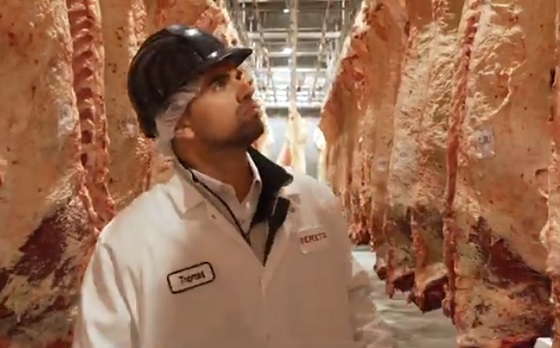
Beretta Farms is the most recent company to qualify for the tax credit by expanding its existing facility with the potential to significantly increase production capacity. It invested more than $10.9 million in the project that is expected to increase the plant’s processing capacity from 29,583 to 44,688 head of cattle per year. Eleven new employees were hired after the expansion and the company plans to hire ten more. Through the Agri-Processing Investment Tax Credit, Alberta’s government has issued Beretta Farms a tax credit of $1,228,735.
“The Agri-Processing Investment Tax Credit is building on Alberta’s existing competitive advantages for agri-food companies and the primary producers that supply them. This facility expansion will allow Beretta Farms to increase production capacity, which means more Alberta beef across the country, and around the world.”
“This expansion by Beretta Farms is great news for Lacombe and central Alberta. It not only supports local job creation and economic growth but also strengthens Alberta’s global reputation for producing high-quality meat products. I’m proud to see our government supporting agricultural innovation and investment right here in our community.”
The tax credit provides a 12 per cent non-refundable, non-transferable tax credit when businesses invest $10 million or more in a project to build or expand a value-added agri-processing facility in Alberta. The program is open to any food manufacturers and bio processors that add value to commodities like grains or meat or turn agricultural byproducts into new consumer or industrial goods.
Beretta Farms’ facility in Lacombe is a federally registered, European Union-approved harvesting and meat processing facility specializing in the slaughter, processing, packaging and distribution of Canadian and United States cattle and bison meat products to 87 countries worldwide.
“Our recent plant expansion project at our facility in Lacombe has allowed us to increase our processing capacities and add more job opportunities in the central Alberta area. With the support and recognition from the Government of Alberta’s tax credit program, we feel we are in a better position to continue our success and have the confidence to grow our meat brands into the future.”
Alberta’s agri-processing sector is the second-largest manufacturing industry in the province and meat processing plays an important role in the sector, generating millions in annual economic impact and creating thousands of jobs. Alberta continues to be an attractive place for agricultural investment due to its agricultural resources, one of the lowest tax rates in North America, a business-friendly environment and a robust transportation network to connect with international markets.
Quick facts
- Since 2023, there are 16 applicants to the Agri-Processing Investment Tax Credit for projects worth about $1.6 billion total in new investment in Alberta’s agri-processing sector.
- To date, 13 projects have received conditional approval under the program.
- Each applicant must submit progress reports, then apply for a tax credit certificate when the project is complete.
- Beretta Farms has expanded the Lacombe facility by 10,000 square feet to include new warehousing, cooler space and an office building.
- This project has the potential to increase production capacity by 50 per cent, thereby facilitating entry into more European markets.
Related information

From Premier Danielle Smith and Alberta.ca/Next
Let’s talk about an Alberta Pension Plan for a minute.
With our young Alberta workforce paying billions more into the CPP each year than our seniors get back in benefits, it’s time to ask whether we stay with the status quo or create our own Alberta Pension Plan that would guarantee as good or better benefits for seniors and lower premiums for workers.
I want to hear your perspective on this idea and please check out the video. Get the facts. Join the conversation.
Visit Alberta.ca/next

RFK Jr. says Hep B vaccine is linked to 1,135% higher autism rate

Blind to the Left: Canada’s Counter-Extremism Failure Leaves Neo-Marxist and Islamist Threats Unchecked
Why it’s time to repeal the oil tanker ban on B.C.’s north coast
Alberta Provincial Police – New chief of Independent Agency Police Service
-
 Energy1 day ago
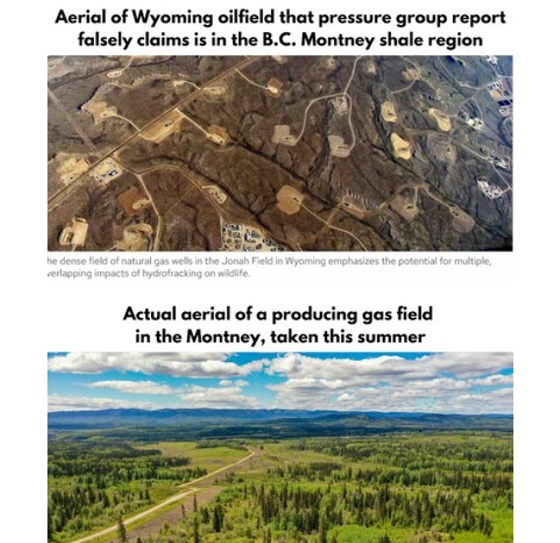
B.C. Residents File Competition Bureau Complaint Against David Suzuki Foundation for Use of False Imagery in Anti-Energy Campaigns
-
 COVID-191 day ago
Court compels RCMP and TD Bank to hand over records related to freezing of peaceful protestor’s bank accounts
-
 Alberta2 days ago
Alberta uncorks new rules for liquor and cannabis
-
 Crime2 days ago
Project Sleeping Giant: Inside the Chinese Mercantile Machine Linking Beijing’s Underground Banks and the Sinaloa Cartel
-
 C2C Journal24 hours ago
Canada Desperately Needs a Baby Bump
-
 International1 day ago
Trump transportation secretary tells governors to remove ‘rainbow crosswalks’
-
Alberta1 day ago
Alberta Next: Alberta Pension Plan
-
Agriculture11 hours ago
Lacombe meat processor scores $1.2 million dollar provincial tax credit to help expansion