
Carbon Tax
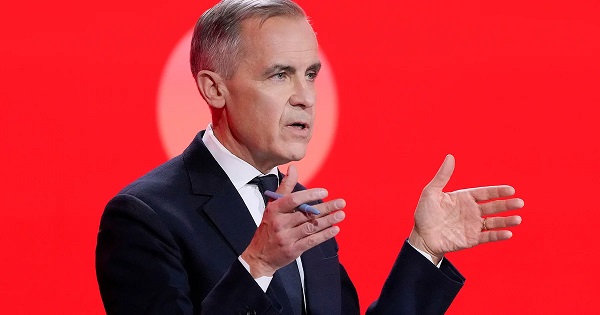
Don’t be fooled – He’s Still Carbon Tax Carney

 Dan McTeague
Carney and the Trudeaupians in his cabinet haven’t had some kind of massive conversion. They’ve not done any soul searching. There’s no repentance here for having made our lives harder and more expensive. They remain ideologically opposed to Affordable Energy.
Over the next several days you will see headline after headline proclaiming that the Carbon Tax is old news, because Mark Carney has repealed it. ‘Promises made, promises kept!’ will be the line spouted by our bought-and-paid-for media, desperate to prevent Pierre Poilievre from winning the election.
Of course, this will be the same media who has spent the past few years declaring that Canadians love, are positively infatuated with, Carbon Taxation. So forgive me for scoffing at their sudden about-face, clapping like trained seals when Justin Trudeau’s newly anointed heir waives his pen and proclaims to the electorate that the Carbon Tax is dead.
The thing is, it’s not. It’s still there. And it will still be there as long as Mark Carney is running the show.
And of course it will. Mark Carney is an environmentalist fanatic and lifelong Apostle of Carbon Taxation. Just listen carefully to everything he’s said since he threw his hat in the ring to take over as PM. He’s said that the Carbon Tax “served a purpose up until now,” but that it’s become “too divisive.” He was careful to always pledge to repeal the Consumer Carbon Tax, rather than the entire thing. And in the end he didn’t even do that, just zeroed it out for the time being.
Carney and the Trudeaupians in his cabinet haven’t had some kind of massive conversion. They’ve not done any soul searching. There’s no repentance here for having made our lives harder and more expensive. They remain ideologically opposed to Affordable Energy.
The fact is, the only reason they’re changing anything is because we noticed.
They’re determined that that won’t happen again. The Carbon Tax will live on, but as hidden as it can possibly be, buried under every euphemism and with every accounting trick they can think of.
Trust me, we at CAE would be taking a victory lap if the Carbon Tax were really dead. We did as much as anyone – and more than most! – to wake Canadians up to what it was doing to our quality of life, our ability to gas up our cars, heat our homes, and afford our groceries. When the day comes that this beast is actually slain, we will have quite the celebration.
But that day is not today.
What happened, instead, was that an elitist Green ideologue shuffled the deck chairs on the Titanic in the hopes that the working people of Canada would miss the Net-Zero iceberg bearing down on us.
Don’t be fooled!



The Canadian Taxpayers Federation is criticizing the Memorandum of Understanding between the federal and Alberta governments for including higher carbon taxes.
“Hidden carbon taxes will make it harder for Canadian businesses to compete and will push Canadian entrepreneurs to shift production south of the border,” said Franco Terrazzano, CTF Federal Director. “Politicians should not be forcing carbon taxes on Canadians with the hope that maybe one day we will get a major project built.
“Politicians should be scrapping all carbon taxes.”
The federal and Alberta governments released a memorandum of understanding. It includes an agreement that the industrial carbon tax “will ramp up to a minimum effective credit price of $130/tonne.”
“It means more than a six times increase in the industrial price on carbon,” Prime Minister Mark Carney said while speaking to the press today.
Carney previously said that by “changing the carbon tax … We are making the large companies pay for everybody.”
A Leger poll shows 70 per cent of Canadians believe businesses pass most or some of the cost of the industrial carbon tax on to consumers. Meanwhile, just nine per cent believe businesses pay most of the cost.
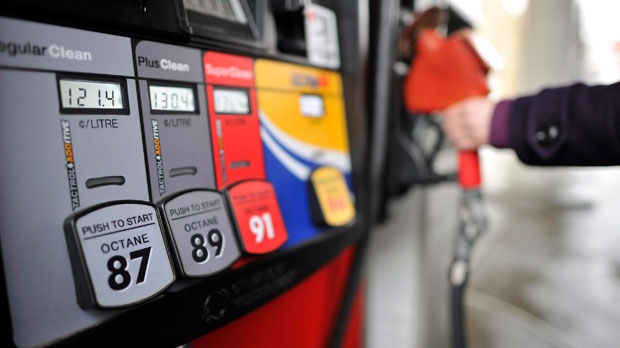
“It doesn’t matter what politicians label their carbon taxes, all carbon taxes make life more expensive and don’t work,” Terrazzano said. “Carbon taxes on refineries make gas more expensive, carbon taxes on utilities make home heating more expensive and carbon taxes on fertilizer plants increase costs for farmers and that makes groceries more expensive.
“The hidden carbon tax on business is the worst of all worlds: Higher prices and fewer Canadian jobs.”
From the Fraser Institute
The stiffer carbon tax will make Alberta’s oil sector more expensive and thus less competitive at a time when many analysts expect a surge in oil production. The costs of mandated carbon capture will similarly increase costs in the oilsands and make the province less cost competitive.
As we enter the final days of 2025, a “deal” has been struck between Carney government and the Alberta government over the province’s ability to produce and interprovincially transport its massive oil reserves (the world’s 4th-largest). The agreement is a step forward and likely a net positive for Alberta and its citizens. However, it’s not a second- or even third-best option, but rather a fourth-best option.
The agreement is deeply rooted in the development of a particular technology—the Pathways carbon capture, utilization and storage (CCUS) project, in exchange for relief from the counterproductive regulations and rules put in place by the Trudeau government. That relief, however, is attached to a requirement that Alberta commit to significant spending and support for Ottawa’s activist industrial policies. Also, on the critical issue of a new pipeline from Alberta to British Columbia’s coast, there are commitments but nothing approaching a guarantee.
Specifically, the agreement—or Memorandum of Understanding (MOU)—between the two parties gives Alberta exemptions from certain federal environmental laws and offers the prospect of a potential pathway to a new oil pipeline to the B.C. coast. The federal cap on greenhouse gas (GHG) emissions from the oil and gas sector will not be instituted; Alberta will be exempt from the federal “Clean Electricity Regulations”; a path to a million-barrel-per day pipeline to the BC coast for export to Asia will be facilitated and established as a priority of both governments, and the B.C. tanker ban may be adjusted to allow for limited oil transportation. Alberta’s energy sector will also likely gain some relief from the “greenwashing” speech controls emplaced by the Trudeau government.
In exchange, Alberta has agreed to implement a stricter (higher) industrial carbon-pricing regime; contribute to new infrastructure for electricity transmission to both B.C. and Saskatchewan; support through tax measures the building of a massive “sovereign” data centre; significantly increase collaboration and profit-sharing with Alberta’s Indigenous peoples; and support the massive multibillion-dollar Pathways project. Underpinning the entire MOU is an explicit agreement by Alberta with the federal government’s “net-zero 2050” GHG emissions agenda.
The MOU is probably good for Alberta and Canada’s oil industry. However, Alberta’s oil sector will be required to go to significantly greater—and much more expensive—lengths than it has in the past to meet the MOU’s conditions so Ottawa supports a west coast pipeline.
The stiffer carbon tax will make Alberta’s oil sector more expensive and thus less competitive at a time when many analysts expect a surge in oil production. The costs of mandated carbon capture will similarly increase costs in the oilsands and make the province less cost competitive. There’s additional complexity with respect to carbon capture since it’s very feasibility at the scale and time-frame stipulated in the MOU is questionable, as the historical experience with carbon capture, utilization and storage for storing GHG gases sustainably has not been promising.
These additional costs and requirements are why the agreement is the not the best possible solution. The ideal would have been for the federal government to genuinely review existing laws and regulations on a cost-benefit basis to help achieve its goal to become an “energy superpower.” If that had been done, the government would have eliminated a host of Trudeau-era regulations and laws, or at least massively overhauled them.
Instead, the Carney government, and now with the Alberta government, has chosen workarounds and special exemptions to the laws and regulations that still apply to everyone else.
Again, it’s very likely the MOU will benefit Alberta and the rest of the country economically. It’s no panacea, however, and will leave Alberta’s oil sector (and Alberta energy consumers) on the hook to pay more for the right to move its export products across Canada to reach other non-U.S. markets. It also forces Alberta to align itself with Ottawa’s activist industrial policy—picking winning and losing technologies in the oil-production marketplace, and cementing them in place for decades. A very mixed bag indeed.

Kenneth P. Green
Senior Fellow, Fraser Institute


Canadians will soon be versed in massive West Coast LPG mega-project
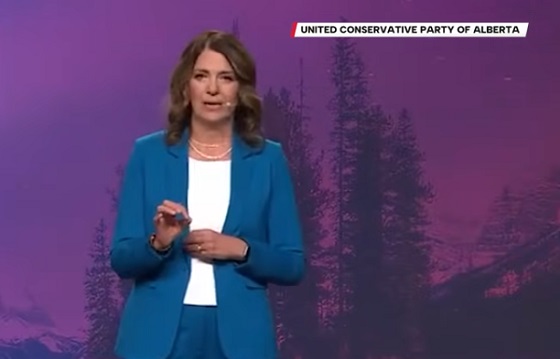
Keynote address of Premier Danielle Smith at 2025 UCP AGM

‘No Critical Thinking’: Parents Sound Alarm As Tech Begins To ‘Replace The Teacher’

Net Zero goal is a fundamental flaw in the Ottawa-Alberta MOU
-
 National1 day ago
Canada Needs an Alternative to Carney’s One Man Show
-
 Alberta14 hours ago
This new Canada–Alberta pipeline agreement will cost you more than you think
-
 Daily Caller1 day ago
Tech Mogul Gives $6 Billion To 25 Million Kids To Boost Trump Investment Accounts
-
 Business1 day ago
Recent price declines don’t solve Toronto’s housing affordability crisis
-
 Automotive13 hours ago
Power Struggle: Governments start quietly backing away from EV mandates
-
 Energy13 hours ago
Unceded is uncertain
-
 Business1 day ago
Canada’s future prosperity runs through the northwest coast
-
 armed forces2 days ago
Global Military Industrial Complex Has Never Had It So Good, New Report Finds