
Business
DOJ charges 7 Chinese spies with targeting US political leaders, major businesses


From LifeSiteNews
By Matt Lamb
The hackers ‘spent approximately 14 years targeting U.S. and foreign critics, businesses, and political officials’ as part of a massive Chinese espionage operation, according to the DOJ.
Hackers targeted defense contractors, American political leaders, and U.S. companies with malware as part of a surveillance operation for the Chinese Communist Party, the Department of Justice (DOJ) alleges.
The DOJ released details on the indictment of seven Chinese individuals who have been charged with “conspiracy to commit computer intrusions and conspiracy to commit wire fraud,” according to a Monday news release.
The individuals are part of a People’s Republic of China (PRC) group who “spent approximately 14 years targeting U.S. and foreign critics, businesses, and political officials in furtherance of the PRC’s economic espionage and foreign intelligence objectives,” according to the DOJ.
Officials unsealed the indictment on Monday, though charges were originally filed in January.
The indictment provides further insight into how the CCP targets American companies and political leaders for retribution and influence using computer viruses.
The CCP and its Ministry of State Security “sought to obtain information on political, economic and security policies that might affect the PRC, along with military, scientific and technical information of value to the PRC,” the indictment states. “Among other things, the MSS and its state security departments focused on surreptitiously identifying and influencing the foreign policy of other countries, including the United States.”
The hackers used a front company called Wuhan XRZ beginning in at least 2010. They would send fake emails to U.S. senators, business leaders, and information technology companies looking to gain access. They were successful in hacking defense contractors, information technology providers, and universities, among other victims.
The DOJ itself was targeted, along the Commerce Department, the Treasury Department, and the White House.
The Justice Department alleges:
These computer network intrusion activities resulted in the confirmed and potential compromise of work and personal email accounts, cloud storage accounts and telephone call records belonging to millions of Americans, including at least some information that could be released in support of malign influence targeting democratic processes and institutions, and economic plans, intellectual property, and trade secrets belonging to American businesses, and contributed to the estimated billions of dollars lost every year as a result of the PRC’s state-sponsored apparatus to transfer U.S. technology to the PRC.
The “Conspirators,” as they are called in the filing, began sending out phishing emails in at least 2015, according to the DOJ. The emails would look like they were from “prominent American journalists” with excerpts from news sites.
“If the recipient activated the tracking link by opening the email, information about the recipient, including the recipient’s location, IP addresses, network schematics and specific devices used to access the pertinent email accounts, was transmitted to a server controlled by the Conspirators,” the DOJ stated. “The Conspirators used this method to enable more direct and sophisticated targeting of recipients’ home routers and other electronic devices, including those of high ranking U.S. government officials and politicians and election campaign staff from both major U.S. political parties.”

In just a few months in 2018, the hackers “sent more than 10,000 malicious email messages” to “high-ranking U.S. government officials and their advisors, including officials involved in international policy and foreign trade issues.”
They also targeted campaign staff for “a presidential campaign” in 2020. The filing does not state which campaign.
European Union and United Kingdom leaders who were part of the anti-Communist Inter Parliamentary Alliance on China were also targeted.
Other victims included: “a nuclear power engineering company,” a defense contractor, an aerospace contractor, and “a leading American manufacturer of software and computer services based in California.”
Telecommunications companies, law firms, and steel companies were also targeted.
The CCP impersonated real steel companies in order to gain access to their emails during a battle over tariffs on China. After the Trump administration announced new steel tariffs in 2018, the hackers “registered a malicious domain impersonating the legitimate domain of one of the largest steel producers in the United States (the ‘American Steel Company’)” as well as the International Steel Trade Forum.
“These malicious domains allowed the Conspirators to communicate with malware they installed on the network of the American Steel Company to access and surveil the victim,” the DOJ stated.
They also targeted the Norwegian government in 2018 because it was considering awarding the Nobel Prize to Hong Kong democracy activists.
The PRC is a “malicious nation state,” a federal prosecutor stated in the DOJ news release.
“These allegations pull back the curtain on China’s vast illegal hacking operation that targeted sensitive data from U.S. elected and government officials, journalists, and academics; valuable information from American companies; and political dissidents in America and abroad. Their sinister scheme victimized thousands of people and entities across the world, and lasted for well over a decade,” U.S. Attorney Breon Peace for the Eastern District of New York stated in the news release.
“America’s sovereignty extends to its cyberspace. Today’s charges demonstrate my office’s commitment to upholding and protecting that jurisdiction, and to putting an end to malicious nation state cyber activity.”



From the Canadian Taxpayers Federation
Author: Jay Goldberg
The Canadian Taxpayers Federation is criticizing the Trudeau and Ford governments to for giving $5 billion to the Honda Motor Company.
“The Trudeau and Ford governments are giving billions to yet another multinational corporation and leaving middle-class Canadians to pay for it,” said Jay Goldberg, CTF Ontario Director. “Prime Minister Justin Trudeau is sending small businesses bigger a bill with his capital gains tax hike and now he’s handing out billions more in corporate welfare to a huge multinational.
“This announcement is fundamentally unfair to taxpayers.”
The Trudeau government is giving Honda $2.5 billion. The Ford government announced an additional $2.5 billion subsidies for Honda.

The federal and provincial governments claim this new deal will create 1,000 new jobs, according to media reports. Even if that’s true, the handout will cost taxpayers $5 million per job. And according to Globe and Mail investigation, the government doesn’t even have a proper process in place to track whether promised jobs are actually created.
The Parliamentary Budget Officer has also called into question the government’s claims when it made similar multi-billion-dollar handouts to other multinational corporations.
“The break-even timeline for the $28.2 billion in production subsidies announced for Stellantis-LGES and Volkswagen is estimated to be 20 years, significantly longer than the government’s estimate of a payback within five years for Volkswagen,” wrote the Parliamentary Budget Officer said.
“If politicians want to grow the economy, they should cut taxes and red tape and cancel the corporate welfare,” said Franco Terrazzano, CTF Federal Director. “Just days ago, Trudeau said he wants the rich to pay more, so he should make rich multinational corporations pay for their own factories.”

News release from the Coalition of Concerned Manufacturers and Businesses of Canada
“We must focus on practical solutions and upgrading our recycling infrastructure, not ridiculous restrictions that will harm our health care system, sanitary food supply, increase costs and endanger Canadians’ safety, among other downsides.”
This week Ottawa welcomes 4,000 delegates from the United Nations to discuss how they will oversee a reduction and even possible elimination of plastics from our lives. The key problem is no one has ever figured out how they will replace this essential component of our modern economy and society. The Coalition of Concerned Manufacturers and Businesses of Canada (CCMBC) has launched an information campaign to discuss the realities of plastic, how it contributes massively to our society and the foolishness of those who think plastics can be eliminated or greatly reduced without creating serious problems for key industries such as health care, sanitary food provision, many essential consumer products and safety/protective equipment, among others. CCMBC President Catherine Swift said “The key goal should be to keep plastics in the economy and out of the environment, not eliminate many valuable and irreplaceable plastic items. The plastics and petrochemical industries represent about 300,000 jobs and tens of billions contribution to GDP in Canada, and are on a growth trend.”
The UN campaign to ban plastics to date has been thwarted by reality and facts. UN efforts to eliminate plastics began in 2017, motivated by such terrible images as rivers with massive amounts of floating plastic and animals suffering from negative effects of plastic materials. Although these images were dramatic and disturbing, they do not represent the big picture of what is really happening and do not take into account the many ways plastics are hugely positive elements of modern society. Swift added “Furthermore, Canada is not one of the problem countries with respect to plastics waste. Developing countries are the main culprits and any solution must involve helping the leading plastics polluters find workable solutions and better recycling technology and practices.”
The main goal of plastic is to preserve and protect. Can you imagine health care without sanitary, flexible, irreplaceable and recyclable plastic products? How would we keep our food fresh, clean and healthy without plastic wraps and packaging? Plastic replaces many heavier and less durable materials in so many consumer products too numerous to count. Plastics help the environment by reducing food waste, replacing heavier materials in automobiles and other products that make them more energy-efficient. Many plastics are infinitely recyclable and innovations are taking place to improve them constantly. What is also less known is that most of the replacements for plastics are more expensive and actually worse for the environment.
Swift stated “Environment Minister Steven Guilbeault has been convinced by the superficial arguments that plastics are always bad despite the facts. He has pursued a campaign against all plastics as a result, without factoring in the reality of the immense value of plastic products and that nothing can replace their many attributes. Fortunately, the Canadian Federal court overturned his absurd ban on a number of plastic products on the basis that it was unscientific, impractical and impinged upon provincial jurisdiction.” Sadly, Guilbeault and his Liberal cohorts plan to appeal this legal decision despite its common-sense conclusions. Opinion polls of Canadians show that a strong majority would prefer this government abandon its plastics crusade at this point, but history shows these Liberals prefer pursuing their unrealistic and costly ideologies instead of policies that Canadians support.
The bottom line is that plastics are an essential part of our modern society and opposition has been based on erroneous premises and ill-informed environmentalist claims. Swift concluded “Canada’s record on plastics is one of the best in the world. This doesn’t mean the status quo is sufficient, but we must focus on practical solutions and upgrading our recycling infrastructure, not ridiculous restrictions that will harm our health care system, sanitary food supply, increase costs and endanger Canadians’ safety, among other downsides.” The current Liberal government approach is one that has no basis in fact or science and emphasizes virtue-signaling over tangible and measurable results. Swift noted “The UN’s original founding purpose after World War II was to prevent another world war. Given our fractious international climate, they should stick to their original goal instead of promoting social justice warrior causes that are unhelpful and expensive.”
The CCMBC was formed in 2016 with a mandate to advocate for proactive and innovative policies that are conducive to manufacturing and business retention and safeguarding job growth in Canada.
SOURCE Coalition of Concerned Manufacturers and Businesses of Canada



Maxime Bernier warns Canadians of Trudeau’s plan to implement WEF global tax regime
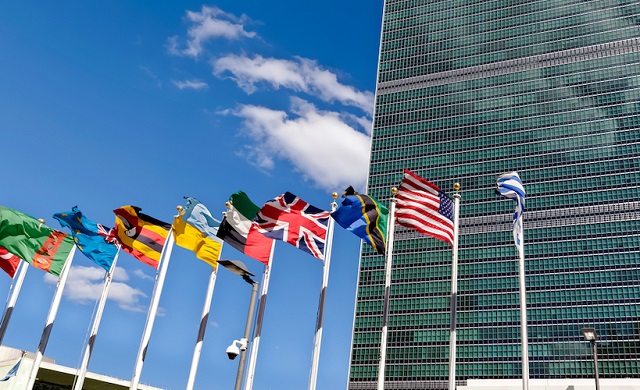
UN attacks stay-at-home motherhood as ‘gender inequality’

Pfizer reportedly withheld presence of cancer-linked DNA in COVID jabs from FDA, Health Canada
Desperate Liberals move to stop MPs from calling Trudeau ‘corrupt’
-
COVID-1913 hours ago
Pfizer reportedly withheld presence of cancer-linked DNA in COVID jabs from FDA, Health Canada
-
 Censorship Industrial Complex1 day ago
Jordan Peterson, Canadian lawyer warn of ‘totalitarian’ impact of Trudeau’s ‘Online Harms’ bill
-
 Alberta1 day ago
Alberta rejects unconstitutional cap on plastic production
-
 Alberta1 day ago
Alberta official reveals ‘almost all’ wildfires in province this year have been started by humans
-
 Bruce Dowbiggin1 day ago
Come For The Graduate Studies, Stay For The Revolution
-
Business2 days ago
Taxpayers criticize Trudeau and Ford for Honda deal
-
 Business2 days ago
Don’t be fooled by high-speed rail
-
 Alberta1 day ago
Political parties will be part of municipal elections in Edmonton and Calgary pilot projects