
Business
Disney settles wrongful termination lawsuit with conservative actress Gina Carano


From LifeSiteNews
Lucasfilm, owned by Disney, issued a statement opening the door to reviving the role Carano lost on ‘The Mandalorian’ for dissenting from woke orthodoxy.
Conservative actress Gina Carano and leftist entertainment giant Disney have settled the former’s wrongful termination lawsuit, with the latter issuing a statement opening the door to reviving the Star Wars role she lost for dissenting from woke orthodoxy.
In February 2021, the Disney-owned Lucasfilm terminated its association with Carano following online activists’ uproar over a social media post in which the former MMA fighter warned that “to get to the point where Nazi soldiers could easily round up thousands of Jews, the government first made their own neighbors hate them simply for being Jews. How is that any different from hating someone for their political views?”
In response, Lucasfilm issued a statement saying Carano, who co-starred as heroic mercenary Cara Dune in the popular Star Wars streaming series The Mandalorian and had been slated to helm her own spinoff, “is not currently employed by Lucasfilm and there are no plans for her to be in the future. Nevertheless, her social media posts denigrating people based on their cultural and religious identities are abhorrent and unacceptable.” No such denigration in her remarks had ever been identified, but The Hollywood Reporter quoted one source as saying Lucasfilm had “been looking for a reason to fire her for two months, and today was the final straw.”
The move sparked a backlash against Disney among conservatives, and with the exception of small projects such as a role in a streaming movie produced by conservative outlet The Daily Wire, Carano’s acting career languished.
In February 2024, Carano took tech mogul Elon Musk up on his public offer to finance lawsuits for those “canceled” over their free speech on Twitter/X, and filed a wrongful termination suit against the company, alleging Disney “bullied Ms. Carano, trying to force her to conform to their views about cultural and political issues, and when that bullying failed, they fired her.”
On Thursday, Variety reported that the parties have reached a settlement in the suit. While no details of the terms have been released, Lucasfilm issued a statement that “The Walt Disney Company and Lucasfilm are pleased to announce that we have reached an agreement with Gina Carano to resolve the issues in her pending lawsuit against the companies. Ms. Carano was always well respected by her directors, co-stars and staff, and she worked hard to perfect her craft while treating her colleagues with kindness and respect. With this lawsuit concluded, we look forward to identifying opportunities to work together with Ms. Carano in the near future.”
The statement falls short of an explicit retraction or apology, but hints at the possibility of bringing back Carano as Dune in some capacity. Moreover, Carano herself was pleased by the outcome, first posting “and the truth shall set you free,” then issuing a full statement of her own.
“I believe [this] is the best outcome for all parties involved. I hope this brings some healing to the force,” Carano said, before thanking Musk, her attorneys at Schaerr|Jaffe, her fans for their support, and God “for His love and grace in this outcome.”
“I am excited to flip the page and move onto the next chapter. My desires remain in the arts, which is where I hope you will join me,” she said. “Yes, I’m smiling.”

This article supplied by Troy Media.
Canadians are told dairy farmers need protection. The newest numbers tell a different story
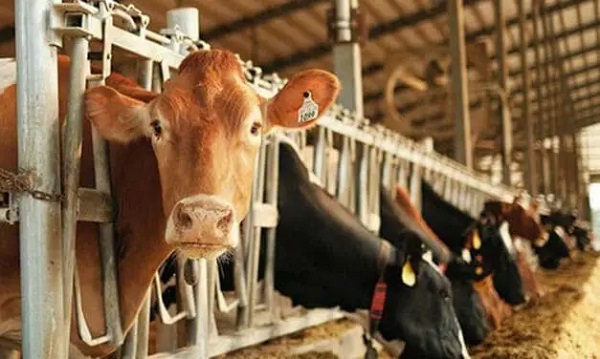
Every once in a while, someone inside a tightly protected system decides to say the quiet part out loud. That is what Joel Fox, a dairy farmer from the Trenton, Ont., area, did recently in the Ontario Farmer newspaper.
In a candid open letter, Fox questioned why established dairy farmers like himself continue to receive increasingly large government payouts, even though the sector is not shrinking but expanding. For readers less familiar with the system, supply management is the federal framework that controls dairy production through quotas and sets minimum prices to stabilize farmer income.
His piece, titled “We continue to privatize gains, socialize losses,” did not come from an economist or a critic of supply management. It came from someone who benefits from it. Yet his message was unmistakable: the numbers no longer add up.
Fox’s letter marks something we have not seen in years, a rare moment of internal dissent from a system that usually speaks with one voice. It is the first meaningful crack since the viral milk-dumping video by Ontario dairy farmer Jerry Huigen, who filmed himself being forced to dump thousands of litres of perfectly good milk because of quota rules. Huigen’s video exposed contradictions inside supply management, but the system quickly closed ranks until now. Fox has reopened a conversation that has been dormant for far too long.
In his letter, Fox admitted he would cash his latest $14,000 Dairy Direct Payment Program cheque, despite believing the program wastes taxpayer money. The Dairy Direct Payment Program was created to offset supposed losses from trade agreements like the Comprehensive Economic and Trade Agreement (CETA), the Comprehensive and Progressive Agreement for Trans-Pacific Partnership (CPTPP) and the Canada–United States–Mexico Agreement (CUSMA).
During those negotiations, Ottawa promised compensation because the agreements opened a small share of Canada’s dairy market, roughly three to five per cent, to additional foreign imports. The expectation was that this would shrink the domestic market. But those “losses” were only projections based on modelling and assumptions about future erosion in market share. They were predictions, not actual declines in production or demand. In reality, domestic dairy demand has strengthened.
Which raises the obvious question: why are we compensating dairy farmers for producing less when they are, in fact, producing more?
This month, dairy farmers received another one per cent quota increase, on top of several increases totalling four to five per cent in recent years. Quota only goes up when more milk is needed.
If trade deals had actually harmed the sector, quota would be going down, not up. Instead, Canada’s population has grown by nearly six million since 2015, processors have expanded and consumption has held steady. The market is clearly expanding.
Understanding what quota is makes the contradiction clearer. Quota is a government-created financial asset worth $24,000 to $27,000 per kilogram of butterfat. A mid-sized dairy farm may hold about $2.5 million in quota. Over the past few years, cumulative quota increases of five per cent or more have automatically added $120,000 to $135,000 to the value of a typical farm’s quota, entirely free.
Larger farms see even greater windfalls. Across the entire dairy system, these increases represent hundreds of millions of dollars in newly created quota value, likely exceeding $500 million in added wealth, generated not through innovation or productivity but by a regulatory decision.
That wealth is not just theoretical. Farm Credit Canada, a federal Crown corporation, accepts quota as collateral. When quota increases, so does a farmer’s borrowing power. Taxpayers indirectly backstop the loans tied to this government-manufactured asset. The upside flows privately; the risk sits with the public.
Yet despite rising production, rising quota values, rising equity and rising borrowing capacity, Ottawa continues issuing billions in compensation. Between 2019 and 2028, nearly $3 billion will flow to dairy farmers through the Dairy Direct Payment Program. Payments are based on quota holdings, meaning the largest farms receive the largest cheques. New farmers, young farmers and those without quota receive nothing. Established farms collect compensation while their asset values grow.
The rationale for these payments has collapsed. The domestic market did not shrink. Quota did not contract. Production did not fall. The compensation continues only because political promises are easier to maintain than to revisit.
What makes Fox’s letter important is that it comes from someone who gains from the system. When insiders publicly admit the compensation makes no economic sense, policymakers can no longer hide behind familiar scripts. Fox ends his letter with blunt honesty: “These privatized gains and socialized losses may not be good for Canadian taxpayers … but they sure are good for me.”
Canada is not being asked to abandon its dairy sector. It is being asked to face reality. If farmers are producing more, taxpayers should not be compensating them for imaginary declines. If quota values keep rising, Ottawa should not be writing billion-dollar cheques for hypothetical losses.
Fox’s letter is not a complaint; it is an opportunity. If insiders are calling for honesty, policymakers should finally be willing to do the same.
Dr. Sylvain Charlebois is a Canadian professor and researcher in food distribution and policy. He is senior director of the Agri-Food Analytics Lab at Dalhousie University and co-host of The Food Professor Podcast. He is frequently cited in the media for his insights on food prices, agricultural trends, and the global food supply chain.
Troy Media empowers Canadian community news outlets by providing independent, insightful analysis and commentary. Our mission is to support local media in helping Canadians stay informed and engaged by delivering reliable content that strengthens community connections and deepens understanding across the country.
This article supplied by Troy Media.
 By Gwyn Morgan
Trump is forcing the Canadian government to confront what it has long avoided: an end to supply management
U.S. President Donald Trump’s deeply harmful tariff rampage has put the Canada-U.S.-Mexico Agreement (CUSMA) under renewed strain. At the centre of that uncertainty is Canada’s supply management system, an economically costly and politically protected regime Ottawa has long refused to reform.
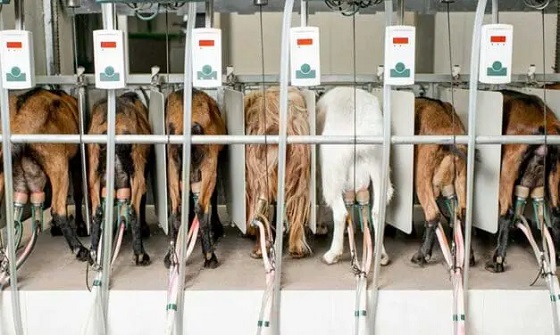
Supply management uses quotas and fixed prices for milk, eggs and poultry with the intention of matching supply with demand while restricting imports. Producers need quota in order to produce and sell output legally. Given the thousands of farmers spread across the country, combined with the fact that the quotas are specific to milk, eggs, chickens and turkey, the bureaucracy (and number of bureaucrats) required is huge and extremely costly. Department of Agriculture and Agri-Food 2024-25 transfer payments included $4.8 billion for “Supply Management Initiatives.”
The bureaucrats often get it wrong. Canada’s most recent chicken production cycle saw one of the worst supply shortfalls in more than 50 years. Preset quota limits stopped farmers from responding to meet demand, leaving consumers with higher grocery bills for 11th-hour imports. The reality is that accurately predicting demand is impossible.
The dysfunction doesn’t stop with chicken. Egg imports under the shortage allocation program had already topped 14 million dozen by mid-year. Our trading partners are taking full advantage. Chile, for example, is on track to double chicken exports.
The cost to consumers is considerable. Pre-pandemic research estimates the average Canadian family pays $300 to $444 extra for food as a result of supply management. And since, as a share of their income, lower-income Canadians spend three times as much as middle-income Canadians and almost five times as much as upper-income Canadians, the impact on them is proportionally much greater.
It’s no surprise that farmers are anxious to protect their monopoly. In most cases, they have paid hefty sums for their quota. If the price of their product were allowed to fall to free-market levels, the value of their quota would go to zero. In addition, the Dairy Farmers of Canada argue that supply management means “the right amount of food is produced,” producers get a “fair return,” and import restrictions guarantee access to “homegrown food,” all of which is debatable.
All price-fixing systems create problems. Dairy cattle are not machines. A cow’s milk production varies. If a farmer gets more milk than his quota, the excess must be dumped. When governments limit the supply of any item, its value always rises. Dairy quotas, by their very nature, have become a valuable commodity, selling for more than $25,000 per “cow equivalent.” That means a 100-head dairy farm is worth at least $2,500,000 in quota alone, a value that exists only because of the legislated ability to charge higher-than-market prices.
Dairy isn’t the only sector where government-regulated quotas have become very valuable. The West Coast fishery is another. Commercial fishery quotas for salmon and halibut have become valuable commodities worth millions of dollars, completely out of reach for independent fishers, turning them into de facto employees of quota holders.
While of relatively limited national importance, supply management is of major political significance in Quebec. As George Mason University and Montreal Economic Institute economist Vincent Geloso notes, “In 17 ridings provincially, people under supply management are strong enough to change the outcome of the election.”
That brings us back to the upcoming CUSMA negotiations. Under CUSMA, the U.S. gets less than five per cent of Canada’s agricultural products market. Given that President Trump has been a long-standing critic of supply management, especially in dairy, it’s certain to be targeted.
Looking to pre-empt concessions, supply-managed farmer associations lobbied the federal government to pass legislation keeping supply management off the table in any future trade negotiations. This makes voters in those 17 Quebec ridings happy, but it’s certain to enrage Trump, starting the CUSMA negotiations off on a decidedly adversarial note. As Concordia University economist Moshe Lander says: “The government seems willing even to accept tariffs and damage to the Canadian economy rather than put dairy supply management on the table.”
Parliament can pass whatever laws it likes, but Trump has made it clear that ending supply management, especially in dairy, is one of his main goals in the CUSMA review. It’s hard to see how a deal can be made without substantial reform. That will make life difficult for the federal Liberals. But the president will be doing Canadian consumers a big favour.
Gwyn Morgan is a retired business leader who has been a director of five global corporations.
Troy Media empowers Canadian community news outlets by providing independent, insightful analysis and commentary. Our mission is to support local media in helping Canadians stay informed and engaged by delivering reliable content that strengthens community connections and deepens understanding across the country.


Terror in Australia: 12 killed after gunmen open fire on Hanukkah celebration

Death by a thousand clicks – government censorship of Canada’s internet

Hero bystander disarms shooter in Australian terror attack

Inflation Reduction Act, Green New Deal Causing America’s Energy Crisis
-
 Alberta22 hours ago
Danielle Smith slams Skate Canada for stopping events in Alberta over ban on men in women’s sports
-
 Health2 days ago
Saskatchewan woman approved for euthanasia urged to seek medical help in Canada rather than US
-
 Indigenous2 days ago
Residential school burials controversy continues to fuel wave of church arsons, new data suggests
-
 International2 days ago
FBI didn’t think it had cause to raid Trump but DOJ did it anyway
-
 Health2 days ago
Canadian gov’t considers sharing census data on gender-confused children
-
 Crime24 hours ago
The Uncomfortable Demographics of Islamist Bloodshed—and Why “Islamophobia” Deflection Increases the Threat
-
 Energy1 day ago
Liberals Twisted Themselves Into Pretzels Over Their Own Pipeline MOU
-
 Alberta2 days ago
Canada’s New Green Deal