
International
Daughter devastated to learn of mother’s assisted suicide through WhatsApp, and she’s not alone


From LifeSiteNews
An Irish mother with mental health problems killed herself under Switzerland’s permissive euthanasia regime without telling her family. Similar horror stories are happening in Canada, and the UK may be next.
Last month, Megan Royal discovered that her mother had ended her life by assisted suicide when she received a WhatsApp message from Swiss suicide center Pegasos, letting her know that her mother’s ashes would be sent to her via mail.
Fifty-eight-year-old Maureen Slough was from Cavan, Ireland, and told her family that she would be vacationing with a friend in Lithuania. Instead, the recently retired civil servant traveled to Switzerland, where the facility says she died by lethal injection, listening to a song by Elvis Presley. Her family, including her “partner” Mick Lynch, who had spoken to her the day she died, had no idea that she was planning assisted suicide.
Slough, who had suffered through the deaths of two of her daughters, attempted suicide in 2024, and her daughter Megan Royal says she was suffering mental anguish. “She had told us she was going to Lithuania, but she had confided in two people that she had other plans,” Royal told the press. “And after a series of concerned phone calls she said she would come home, but then we got the WhatsApp message to say she had died.”
The suicide cost €15,000. Several weeks later, Royal and Lynch received goodbye letters from Maureen in the mail. Royal is heartbroken and outraged.
“They should not have allowed her to make that decision on her own,” she said. “This group did not contact me, even though my mother had nominated me as next of kin. They waited until afterwards and then told me she had died listening to an Elvis Presley song.” Pegasos claims that they were provided with a letter from Royal affirming her knowledge of the suicide, verified through an email address. Royal received no email; the family says the letter was likely forged.
According to UK Right to Life, Slough’s brother Philip, a U.K. solicitor, “has written to the Foreign, Commonwealth and Development Office, urging them to investigate the matter with the Swiss authorities … he said that Pegasos had failed to follow its own policy of informing family, adding ‘it appears my sister provided Pegasos with letters of complaint to medical authorities in Éire in respect of bogus medical conditions, and that these documents were considered by Pegasos in support of her application.’”
He continued: “While I understand that Swiss law permits assisted dying, the Pegasos clinic has faced numerous criticisms in the UK for their practices with British nationals, and the circumstances in which my sister took her life are highly questionable.” Assisted suicide has been legal in Switzerland since 1941 and is only illegal for the ambiguous reason of “selfish motives.” Switzerland has long been a destination for suicide tourism, and UK Right to Life noted that “Pegasos was at the centre of a similar controversy earlier this year when a British mother, Anne, ended her life at the Pegasos assisted suicide clinic in Switzerland without informing her family.”
Many are already observing that if Kim Leadbeater’s assisted suicide bill becomes law in the United Kingdom, similar scenarios could soon be a reality in the UK. MP Danny Kruger attempted to table an amendment earlier this year requiring people seeking assisted suicide to sign a document declaring whether they had informed their family of their plan; it was ignored.
“That is the saddest thing, which was hinted at quite strongly – in fact, stated explicitly – in some of the evidence sessions,” Kruger told the House. “It has been suggested that wanting a loved one to live is seen by doctors as a form of coercion that should be resisted; that trying to argue a loved one out of an assisted death is the coercion that we need to guard against and, on that basis, we should not be making any expectation that families are informed.”
“What a tragic thing for us to say,” he continued. “To enable doctors to issue lethal drugs that kill people without their family knowing is an absolutely tragic thing. I beg the Committee to consider what on earth we are doing allowing that.”
Kruger is not exaggerating. At a press conference in British Columbia for MP Tamara Jansen’s Bill C-218, which would ban euthanasia for those suffering from mental illness, Alicia Duncan told the gut-wrenching story of discovering that her mother had been euthanized after being hospitalized for a mental health crisis – and finding out about her mother’s death via text message.
If the House of Lords passes Kim Leadbeater’s assisted suicide bill – and if MP Tamara Jansen’s “Right to Recover Act” fails to pass this fall – stories like that of Maureen Slough will become excruciatingly common. Parliamentarians must act to protect the vulnerable. If they do not, children discovering that their parents have died by suicide and that their ashes are in the mail will no longer be a horrifying aberration, but a social norm.



The White House on Thursday declared a decisive turn in the inflation fight, pointing to new data showing core inflation has fallen to its lowest level in nearly five years — a milestone the administration says validates President Donald Trump’s economic reset after inheriting what it calls a historic cost-of-living crisis from the Biden era. In a statement accompanying the report, White House Press Secretary Karoline Leavitt said inflation “came in far lower than market expectations,” drawing a sharp contrast with the 9 percent peak under President Joe Biden and arguing the numbers reflect sustained relief for American households. “Core inflation is at a new multi-year low, as prices for groceries, medicine, gas, airfare, car rentals, and hotels keep falling,” Leavitt said, adding that lower prices and rising paychecks are expected to continue into the new year.
According to the White House, core inflation — widely viewed by economists as the most reliable gauge because it strips out volatile food and energy costs — is now down roughly 70 percent from its Biden-era high. Officials noted that if inflation continues at the pace of the last two months, it would be running at an annualized rate of about 1.2 percent, well below the Federal Reserve’s 2 percent target. The report also highlighted broad-based price moderation across consumer staples and services, with declines in groceries, dairy, fruits and vegetables, prescription drugs, clothing, airfares, natural gas, car and truck rentals, and hotel prices. Average gas prices have fallen to multi-year lows, while rent inflation has dropped to its lowest level since October 2021, a shift the administration attributes in part to tougher enforcement against illegal immigration and reduced pressure on housing demand.
Wages, the White House says, are rising alongside easing prices. Private-sector workers are on track to see real wages increase by about $1,300 in President Trump’s first full year back in office, clawing back purchasing power lost during the inflation surge of the previous administration. Gains are strongest among blue-collar workers, with annualized real earnings up roughly $1,800 for construction workers and $1,600 for manufacturing employees. Administration officials also took aim at critics who warned Trump’s tariff policies would reignite inflation, arguing the data shows no demonstrable inflationary impact despite repeated predictions from Wall Street and academic economists.
NEC Director Kevin Hassett on the latest inflation report: "It was just an absolute blockbuster report… We looked at 61 forecasts, and this number came in better than every single one of them." 🔥 pic.twitter.com/rBJpkmjuNa
— Rapid Response 47 (@RapidResponse47) December 18, 2025
Even commentators across the media spectrum acknowledged the strength of the report. CNBC’s Steve Liesman called it “a very good number,” while CNN’s Matt Egan said it was “another step in the right direction.” Harvard economist Ken Rogoff described the reading as “a better number than anyone was expecting,” adding, “There’s no other way to spin it.” Bloomberg’s Chris Anstey noted the figure came in two-tenths below the lowest estimate in a survey of 62 economists, calling it “remarkable,” while The Washington Post’s Andrew Ackerman wrote that inflation “cooled unexpectedly,” easing pressure on household budgets.
For the White House, the message was blunt: the inflation era is over. Officials framed Thursday’s report as proof that Trump has followed through on his promise to defeat the cost-of-living crisis he inherited, laying what they called the groundwork for a strong year ahead. As the president told the nation this week, the administration insists the progress is real — and that, in his words, the best is yet to come.

From the Daily Caller News Foundation
I’ve written frequently here in recent years about the financial fiasco that has hit Ford Motor Company and other big U.S. carmakers who made the fateful decision to go in whole hog in 2021 to feed at the federal subsidy trough wrought on the U.S. economy by the Joe Biden autopen presidency. It was crony capitalism writ large, federal rent seeking on the grandest scale in U.S. history, and only now are the chickens coming home to roost.
Ford announced on Monday that it will be forced to take $19.5 billion in special charges as its management team embarks on a corporate reorganization in a desperate attempt to unwind the financial carnage caused by its failed strategies and investments in the electric vehicles space since 2022.
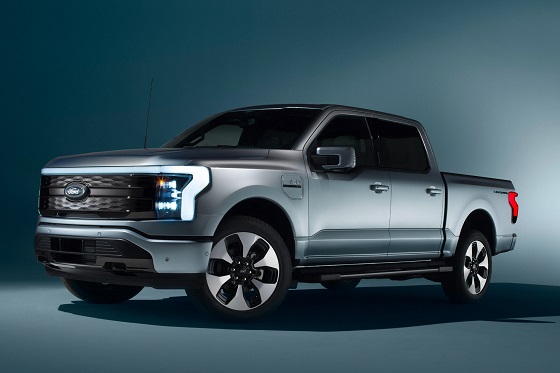
Cancelled is the Ford F-150 Lightning, the full-size electric pickup that few could afford and fewer wanted to buy, along with planned introductions of a second pricey pickup and fully electric vans and commercial vehicles. Ford will apparently keep making its costly Mustang Mach-E EV while adjusting the car’s features and price to try to make it more competitive. There will be a shift to making more hybrid models and introducing new lines of cheaper EVs and what the company calls “extended range electric vehicles,” or EREVs, which attach a gas-fueled generator to recharge the EV batteries while the car is being driven.
Dear Readers:
As a nonprofit, we are dependent on the generosity of our readers.
Please consider making a small donation of any amount here.
Thank you!
“The $50k, $60k, $70k EVs just weren’t selling; We’re following customers to where the market is,” Farley said. “We’re going to build up our whole lineup of hybrids. It’s gonna be better for the company’s profitability, shareholders and a lot of new American jobs. These really expensive $70k electric trucks, as much as I love the product, they didn’t make sense. But an EREV that goes 700 miles on a tank of gas, for 90% of the time is all-electric, that EREV is a better solution for a Lightning than the current all-electric Lightning.”
It all makes sense to Mr. Farley, but one wonders how much longer the company’s investors will tolerate his presence atop the corporate management pyramid if the company’s financial fortunes don’t turn around fast.
To Ford’s and Farley’s credit, the company has, unlike some of its competitors (GM, for example), been quite transparent in publicly revealing the massive losses it has accumulated in its EV projects since 2022. The company has reported its EV enterprise as a separate business unit called Model-E on its financial filings, enabling everyone to witness its somewhat amazing escalating EV-related losses since 2022:
• 2022 – Net loss of $2.2 billion
• 2023 – Net loss of $4.7 billion
• 2024 – Net loss of $5.1 billion
Add in the company’s $3.6 billion in losses recorded across the first three quarters of 2025, and you arrive at a total of $15.6 billion net losses on EV-related projects and processes in less than four calendar years. Add to that the financial carnage detailed in Monday’s announcement and the damage from the company’s financial electric boogaloo escalates to well above $30 billion with Q4 2025’s damage still to be added to the total.
Ford and Farley have benefited from the fact that the company’s lineup of gas-and-diesel powered cars have remained strongly profitable, resulting in overall corporate profits each year despite the huge EV-related losses. It is also fair to point out that all car companies were under heavy pressure from the Biden government to either produce battery electric vehicles or be penalized by onerous federal regulations.
Now, with the Trump administration rescinding Biden’s harsh mandates and canceling the absurdly unattainable fleet mileage requirements, Ford and other companies will be free to make cars Americans actually want to buy. Better late than never, as they say, but the financial fallout from it all is likely just beginning to be made public.
- David Blackmon is an energy writer and consultant based in Texas. He spent 40 years in the oil and gas business, where he specialized in public policy and communications.


Terror in Australia: 12 killed after gunmen open fire on Hanukkah celebration

Death by a thousand clicks – government censorship of Canada’s internet

Hero bystander disarms shooter in Australian terror attack

Schools should go back to basics to mitigate effects of AI
-
 Alberta1 day ago
Danielle Smith slams Skate Canada for stopping events in Alberta over ban on men in women’s sports
-
 Health2 days ago
Saskatchewan woman approved for euthanasia urged to seek medical help in Canada rather than US
-
 Indigenous2 days ago
Residential school burials controversy continues to fuel wave of church arsons, new data suggests
-
 International2 days ago
FBI didn’t think it had cause to raid Trump but DOJ did it anyway
-
 International23 hours ago
TOTAL AND COMPLETE BLOCKADE: Trump cuts off Venezuela’s oil lifeline
-
 Crime1 day ago
The Uncomfortable Demographics of Islamist Bloodshed—and Why “Islamophobia” Deflection Increases the Threat
-
 COVID-1922 hours ago
Senator Demands Docs After ‘Blockbuster’ FDA Memo Links Child Deaths To COVID Vaccine
-
 Energy1 day ago
Liberals Twisted Themselves Into Pretzels Over Their Own Pipeline MOU