
MAiD
Canadian psychiatrist sounds alarm over Trudeau gov’t plan to expand euthanasia to the mentally ill


From LifeSiteNews
” someone not dying because of their condition, such as a mental disorder alone, seeking death is, by definition, suicidal. “
Dr. Harvey Chochinov, the well known professor of psychiatrisy from the University of Manitoba and the developer of dignity therapy, wrote an article that was published in the National Post on December 30, 2023 titled: Intensive compassionate caring — not MAiD — is the most effective way to address mental illness.
Chochinov writes:
It’s time to put the brakes on Medical Assistance in Dying (MAID) in Canada for those whose sole underlying medical condition is mental illness.
The federal government has tasked the Special Joint Committee on Medical Assistance in Dying to determine if Canada is ready to extend MAID eligibility, starting in March 2024, to patients with mental illness alone. Despite those convinced it is time, and safe, to launch what amounts to ‘psychiatric euthanasia,’ the special committee must pay attention to a murmur of protest that has grown to a roar: Ottawa, we’ve got a problem.
Current MAID eligibility requires a person have a grievous and irremediable medical condition. Unlike some cancers, and many neurodegenerative disorders, no mental disorder can be described as irremediable. To be sure, there are individuals whose mental affliction won’t improve, despite myriad treatments or psychosocial interventions. But there is currently no way to predict which patients won’t get better.
Studies of prognostic accuracy show psychiatrists are wrong half the time. I have cared for patients struggling with chronic suicidality; patients I worried might one day take their lives. I recall a woman with mind-numbing depression, who teetered precariously between life and death. One day, after years of countless drug trials, hospitalizations, electroconvulsive therapy, and various psychosocial interventions, she arrived for her appointment — three weeks into starting a new antidepressant — with a grin on her face.
‘The door is purple,’ she declared. I told her the door had always been purple, to which she replied, ‘I know, but now I care.’
Before that moment, no one — not me, not her friends or family and not anyone on The Special Joint Committee on Medical Assistance in Dying, nor any MAID assessor — could have predicted her recovery.
Chochinov then states that intensive, unwavering, compassionate care and caring — not MAID — offers the most effective way to address this kind of suffering.
The other reason not to launch psychiatric euthanasia is our inability to determine suicidality from those requesting MAID whose sole underlying medical condition is mental illness. According to the Canadian Association for Suicide Prevention, someone not dying because of their condition, such as a mental disorder alone, seeking death is, by definition, suicidal.
Similarly, the first item listed by the American Association of Suicidology differentiating physician hastened death and suicide is the patient must be dying. That certainly does not characterize patients who are mentally ill.
The euthanasia expansionists told the Special Joint Committee on Medical Assistance in Dying that “suicidality and having a reason to want to die are not at all the same.” Chochinov responds by stating:
We can say ‘six’ and ‘half-dozen’ are not the same as many times as we like. If we repeat it frequently, consistently and without equivocation, it might even sound convincing, but that doesn’t make it true.
Patients struggling with suicidality often have a reason to want to die, based on, for example, self-loathing, feeling like a burden or becoming worn down pursuing care and support that could sustain them. In those instances, the line between MAID and suicide simply vanishes.
Avoiding discrimination does not mean everyone is treated the same, but rather, that everyone gets equal access to what they need to thrive.
Time and again, committee members have asked witnesses when Canada’s psychiatric euthanasia program can be launched. I would suggest they behave like NASA. When a potentially catastrophic problem is identified before blast-off, space engineers don’t set an arbitrary new launch date, no more so than Health Canada announces a random release date of a new drug discovered to have unacceptable side-effects.
Ottawa, we have a problem.
The federal government would be well advised to scrap this mission. But if it insists on moving forward, launch should proceed only when the problems are solved, and not a moment sooner.
Reprinted with permission from Euthanasia Prevention Coalition.

From LifeSiteNews
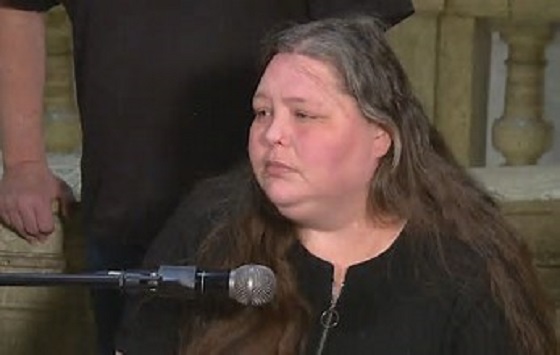
Jolene Van Alstine, approved for state-sanctioned euthanasia after enduring long wait times to receive care for a rare parathyroid disease, is in need of a passport to enter the U.S.
Well-known American media personality Glenn Beck says he has been in touch with the U.S. State Department to help a Canadian woman in Saskatchewan reconsider euthanasia after she sought assisted suicide due to long medical wait times to address her health problems.
As reported by LifeSiteNews on Tuesday, Canadian woman Jolene Van Alstine was approved to die by state-sanctioned euthanasia because she has had to endure long wait times to get what she considers to be proper care for a rare parathyroid disease.
Van Alstine’s condition, normocalcemic primary hyperparathyroidism (nPHPT), causes her to experience vomiting, nausea, and bone pain.
Her cause caught the attention of Beck and many other prominent Americans and Canadians on X.
In an update today on X, Beck said, “Jolene does not have a passport to gain legal entry into the U.S., but my team has been in touch with President (Donald) Trump’s State Department.”
“All I can say for now is they are aware of the urgent life-saving need, and we had a very positive call,” he added.
Beck had said before that he was in “contact with Jolene and her husband” and that he had “surgeons who emailed us standing by to help her.”
As of press time, neither the State Department nor other officials have not yet confirmed Beck’s claim that he has been in touch with them.
As a result of Van Alstine’s frustrations with the healthcare system, she applied for Canada’s Medical Assistance in Dying (MAiD) and was approved for January 7.
As reported by LifeSiteNews, over 23,000 Canadians have died while on wait lists for medical care as Prime Minister Mark Carney’s Liberal government is focused on euthanasia expansions.
A new Euthanasia Prevention Coalition report revealed that Canada has euthanized 90,000 people since 2016, the year it was legalized.
As reported by LifeSiteNews recently, a Conservative MP’s private member’s bill that, if passed, would ban euthanasia for people with mental illness received the full support of the Euthanasia Prevention Coalition.
From LifeSiteNews
Jolene Van Alstine was approved for euthanasia after tiring of waiting years for surgery in Canada
A Canadian woman is looking to die by state-sanctioned euthanasia because she has had to endure long wait times to get what she considers to be proper care for a rare parathyroid disease.
The woman is Jolene Van Alstine, whose condition, normocalcemic primary hyperparathyroidism (nPHPT), causes her to experience vomiting, nausea, and bone pain.
As noted in a recent CBC report, Van Alstine claims she is not able to get proper surgery to remove her parathyroid in her home province of Saskatchewan, as there are no surgeons in that province who can perform that type of surgery.
She has said her “friends have stopped visiting me” and she is “isolated” and living “alone lying on the couch for eight years, sick and curled up in a ball, pushing for the day to end.”
“I go to bed at six at night because I can’t stand to be awake anymore,” she said.
As a result of her frustrations with the healthcare system, Van Alstine applied for Canada’s Medical Assistance in Dying (MAiD). She was approved for the procedure on January 7, 2026.
Saskatchewan Health Minister Jeremy Cockrill met with Van Alstine last month to try to see if he could help her, but what they talked about remains confidential.
“The Government of Saskatchewan expresses its sincere sympathy for all patients who are suffering with a difficult health diagnosis,” the government said.
As reported by LifeSiteNews, over 23,000 Canadians have died while on wait lists for medical care as Prime Minister Mark Carney’s Liberal government is focused on euthanasia expansions.
A new Euthanasia Prevention Coalition report revealed that Canada has euthanized 90,000 people since 2016, the year it was legalized.
Americans offering Jolene surgery help now say they have made contact with her
Van Alstine’s story has gone viral on the social media platform X, catching the attention of well-known American personalities, some who have claimed they can help her.
“If there is any surgeon in America who can do this, I’ll pay for this patient to come down here for treatment,” Glenn Beck wrote Tuesday on X.
“THIS is the reality of ‘compassionate’ progressive healthcare. Canada must END this insanity and Americans can NEVER let it spread here.”
According to Beck in a subsequent X post, he has had “surgeons who emailed us standing by to help her.”
“We are in contact with Jolene and her husband! Please continue to pray for her health,” he wrote on X.
“Will update more soon.”
As reported by LifeSiteNews recently, a Conservative MP’s private member’s bill that, if passed, would ban euthanasia for people with mental illness received the full support of the Euthanasia Prevention Coalition.
Lobby groups have pushed for MAiD to be expanded to minors.
Desiring to expand the procedure to even more Canadians, former Prime Minister Justin Trudeau’s government sought to expand from just the chronically and terminally ill to those suffering solely from mental illness. The current Liberal government appears to want to continue with the MAiD regime.
However, in February, after pushback from pro-life, medical, and mental health groups as well as most of Canada’s provinces, the federal government delayed the mental illness expansion until 2027.


Trump Deals Biden’s EV Dreams A Death Blow
Liberal bill “targets Christians” by removing religious exemption in hate-speech law

Wisdom of Our Elders: The Contempt for Memory in Canadian Indigenous Policy

Canada invests $34 million in Chinese drones now considered to be ‘high security risks’
-
C2C Journal22 hours ago
Wisdom of Our Elders: The Contempt for Memory in Canadian Indigenous Policy
-
 Business1 day ago
Conservative MP warns Liberals’ national AI plan could increase gov’t surveillance
-
 Business2 days ago
Looks like the Liberals don’t support their own Pipeline MOU
-
 Sports19 hours ago
Egypt, Iran ‘completely reject’ World Cup ‘Pride Match’ plan
-
 Alberta21 hours ago
Alberta introducing three “all-season resort areas” to provide more summer activities in Alberta’s mountain parks
-
 Business2 days ago
Canada Can Finally Profit From LNG If Ottawa Stops Dragging Its Feet
-
 Business1 day ago
Storm clouds of uncertainty as BC courts deal another blow to industry and investment
-
 Alberta2 days ago
They never wanted a pipeline! – Deputy Conservative Leader Melissa Lantsman