
COVID-19
Canadian gov’t admits it gambled in deal with COVID vaccine maker that lost $150 million

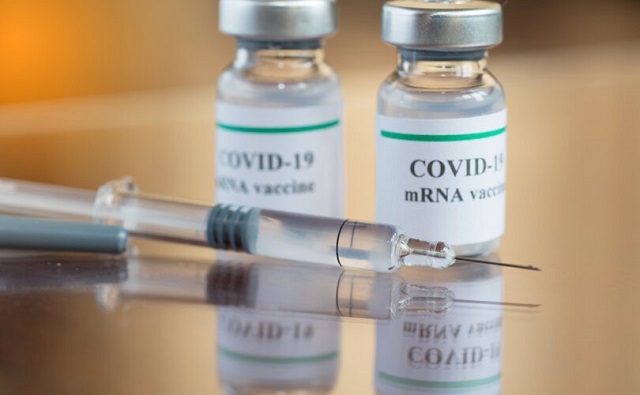
From LifeSiteNews
A contract with Medicago Inc. called for 76 million doses of its own COVID shot to be made, but not one was ever delivered.
Canada’s Public Works department admitted that it took a massive gamble with taxpayer money that resulted in a loss of $150 million of taxpayer money after Quebec-based Medicago Inc.’s plan to build a COVID jab factory using federal funding failed to materialize.
On Monday, the Department of Public Works said it took a “risk” in subsidizing Medicago’s factory, which of note is in the Québec City riding of its own Minister Jean-Yves Duclos.
“We took a risk of putting contracts with various suppliers for enough vaccines for all Canadians,” admitted Joelle Paquette, who serves as the director general with the public works department while testifying before the House of Commons health committee on Monday.
Medicago’s failed contract called for 76 million doses of its own COVID jab to be made. However, not one was ever delivered. Medicago is a subsidiary of Japan-based Mitsubishi Chemical Group.
Last month, LifeSiteNews reported on how the House of Commons health committee has been demanding answers into how more than $300 million of taxpayer money was lost on failed COVID jab ventures with pharmaceutical companies.
It was recently revealed that the Public Health Agency of Canada (PHAC) lost $150 million on an unfulfilled COVID jab contract with an undisclosed entity in 2022. In addition, $173 million given to Medicago Inc., which said it would be shutting down in 2023 due to a failed development of its own plant-based COVID shot, is now lost.
Health Canada only approved mRNA-based COVID shots made in other countries, such as Pfizer’s and Moderna’s, as well as one from Johnson & Johnson.
In September, Health Canada approved a revised Moderna mRNA-based COVID shot despite research showing that 1 in 35 recipients of the booster ended up with myocardial damage.
In 2021, Duclos had gloated to the House of Commons that he had the “privilege of having Medicago in my riding.”
During the House of Commons health committee meeting on Monday, Conservative Party of Canada (CPC) MP Rick Perkins asked, “Who owns the intellectual property (regarding the Medicago plant)?”
In reply, Paquette said, “Medicago owns the intellectual property.”
Perkins said that it is “just unbelievable” how the failed contract was allowed to proceed, with apparently no accountability.
Paquette admitted that the contact was not normal.
“We did not know at the time which vaccines would actually be authorized,” said Paquette, adding that there was “no vaccine that existed at the time we put these contracts in place. We took a risk.”
Andrea Andrachuk, another director general with the Department of Public Works, said that the $150 million was given to Medicago under a 2020 Advance Purchase Agreement. However, this contract was voided after Medicago announced last February that it was closing the plant.
Andrachuk noted how “Medicago was also facing product challenges and delivery date challenges” and that talks were underway to “revisit the contract.”
“The parent company Mitsubishi announced it was going to discontinue its activities in North America,” she said.
However, as part of the payment terms, a “150 million non-refundable advance payment” was made to Japan-based Medicago in “accordance with the Advance Purchase Agreement,” Andrachuk added.
“Medicago met all terms for the payment,” Andrachuk noted.
However, MPs were told that the terms of the Advance Purchase Agreement were secret. This prompted Bloc Québécois MP Julie Vignola to ask, “Could you tell us something about those conditions?”
In response, Andrachuk said, “No I cannot,” claiming that at the time there was “a lot of risk.”
“We didn’t know which vaccines if any would get Health Canada approval and even if they did, when they would be available,” Andrachuk claimed.
The government of Prime Minister Justin Trudeau spent some $8 billion on vaccines, with Pfizer alone getting a large chunk of that money. Health Canada ordered 238 million COVID injections from Pfizer Canada, which includes some 30 million for 2023 and 2024.
LifeSiteNews recently reported on how the details of the Canadian federal government’s COVID-19 vaccine contract with Pfizer for millions of doses of the mRNA-based experimental shots was recently disclosed after been hidden for over three years.
The contract with Pfizer shows the government agreed to accept the unknown long-term safety and efficacy of the shots. The details of the Pfizer contract do not disclose how much the government spent on the jabs.
The Trudeau government also signed COVID-19 contracts with AstraZeneca, Johnson & Johnson, Medicago, Moderna, Novavax, and Sanofi. According to industry rates, the average price of a shot when sold to the United States was $19.50.
Trudeau’s government pushed COVID jabs on people with help of provincial governments
The COVID shots were heavily promoted by the Trudeau government, with the help of all provincial governments. During the so-called COVID pandemic, Trudeau referred to those who chose not to get the experimental COVID shots as terrible people.
In 2021, Trudeau said Canadians “vehemently opposed to vaccination” do “not believe in science,” are “often misogynists, often racists,” and questioned whether Canada should continue to “tolerate these people.”
In April, he came under fire after claiming he did not “force” anyone to take the COVID-19 shots.
There is mounting evidence that mRNA-based COVID injections carry extreme risks, including for children.
A recent study done by researchers at the Canada-based Correlation Research in the Public Interest found that 17 countries have a “definite causal link” between peaks in all-cause mortality and the fast rollouts of the COVID shots and boosters.
LifeSiteNews reported last month how the Polyomavirus Simian Virus 40 (SV40), which is a monkey-linked DNA sequence known to cause cancer when it was used in old polio vaccines, has been confirmed by Health Canada to be present in the Pfizer COVID shot, a fact that was not disclosed by the vaccine maker to officials.
Canada’s Conservative Party, although silent early on during the COVID crisis, later came out opposing COVID mandates.
A recent bill championed by party leader Pierre Poilievre that would have given Canadians back their “bodily autonomy” by banning future jab mandates was voted down after Trudeau’s Liberals and other parties rejected it.
Adverse effects from the first round of COVID shots have resulted in a growing number of Canadians filing for financial compensation over injuries from the jabs via the federal Vaccine Injury Program (VISP).
VISP has already paid over $6 million to those injured by COVID injections, with 2,000 claims remaining to be settled.

COVID-19
A new study proves, yet again, that the mRNA Covid jabs should NEVER have been approved for young people.
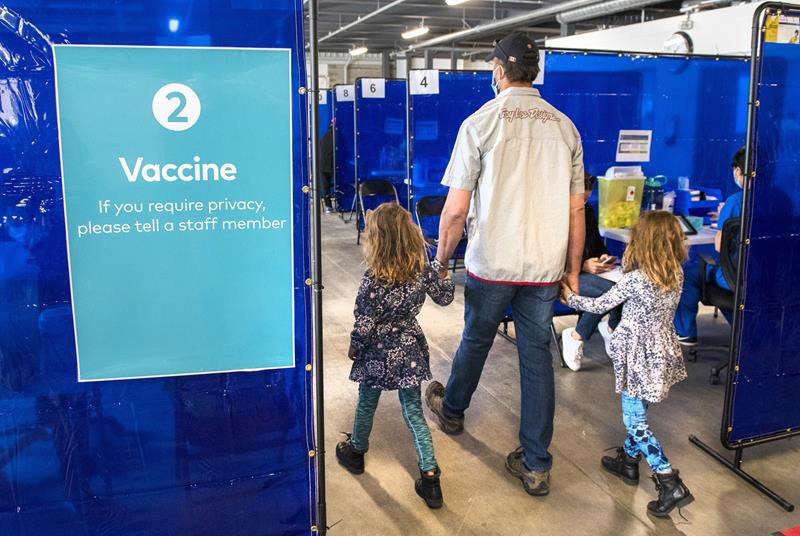

2.7 million Spanish children and teenagers. ZERO Covid deaths.
Here’s some news from Spanish researchers: contrary to what American health bureaucrats said for years to justify the increasingly insane mRNA “vaccine” experiment, Covid doesn’t kill kids.
—
(More facts, fewer guesses. For pennies a day.)
—
Yes, making categorical statements like “Covid doesn’t kill kids” is foolish.
Look hard enough, and there will be an exception, perhaps a child terminally ill with cancer pushed over the edge by Covid.
But the Spanish study, which was peer-reviewed and published in The Pediatric Infectious Disease Journal, proves yet again that Covid’s risk is too low to measure — not just not to healthy children, but to all children. It is the strongest evidence yet that the oft-repeated claim that Covid has killed 2,100 American children is fiction.¹
The researchers examined medical records from 2.7 million Spanish children and teenagers from mid-2021 through the end of 2022, a period in which the Omicron variant infected almost everyone worldwide with Covid. The vast majority of those kids and adolescents, about 2.2 million, had not been vaccinated.
Yet none of those 2.7 million died of Covid.
None. As in zero.
—
(Good thing we closed the schools!)
 |
(SOURCE)
—
There really isn’t much more to say about the paper, except that the authors couldn’t find any difference for Covid hospitalization rates between vaccinated and unvaccinated kids under 12.
For adolescents 12-17, they calculated about 38,000 mRNA jabs were required to avoid one Covid hospitalization — an absurdly high number given the known short-term side effects of the shots and the potential long-term risks of exposing young people to mRNA.
At this point, any physician who recommends Covid jabs for kids (as a handful, mostly in blue states, still are) should be sued for malpractice.
—
One final note: this week’s immigration articles have gotten a LOT of likes and comments, more than any recent Covid or mRNA pieces. More new subscribers too.
I expect that will be true again today, though I hope you’ll prove me wrong. I understand. We all have moved on.
But when studies like this new one come out, covering them is crucial.
Nearly 1.5 billion people received mRNA Covid jabs worldwide, including perhaps 100 million kids and teenagers in the United States, Canada, Japan, Europe, and elsewhere. And the American public health establishment and legacy media outlets continue to push mRNA on children and fight even modest efforts to tighten restrictions on mRNA Covid jabs.
Witness the furious pushback Food and Drug Administration chief medical officer Dr. Vinay Prasad received in late November after he reported FDA reviewers found Covid shots had killed children.
So, even as I write about immigration, healthcare fraud, and other topics vital to you, I believe I have a duty to continue to update the factual record about the mRNAs. Duty is not too strong a word. In June 2023, I covered a paper from South Korean researchers about cardiac deaths of young adults who had received the mRNA jabs.
It is no exaggeration to say no one else — no other journalist or scientist covering Covid or the jabs — paid attention to that paper at the time . But now, in the wake of Prasad’s bombshell memo, I’ve again raised that paper. Even the mRNA fanatics at the Atlantic have been forced to acknowledge it.
It’s impossible to know if these articles will matter today, tomorrow, or years from now. But as long as the mRNA companies and their public health handmaidens keep pushing this troubled technology, I’ll keep trying to build the most complete possible record.
—
(And I hope you will support me.)
(More facts, fewer guesses. For pennies a day.)
That 2,100 death figure, which the American Academy of Pediatrics loves to quote, appears to come from a 2023 paper from the National Academy of Medicine paper that in turn relies on Centers for Disease Control data. But the CDC figures no distinction between “with” and “from” Covid deaths, which are particularly important in groups at low baseline risk from Covid. Further, the fact that the number hasn’t been updated in almost three years suggests that the people quoting it know it’s nonsense and don’t want to double-check it, much less try to update it.
What, kids just stopped dying from Covid in 2023 after getting mowed down during the first three years of the epidemic?
|
|||
 Share
Share
|
|||||
|
|||||
| Independent, citizen-funded journalism |

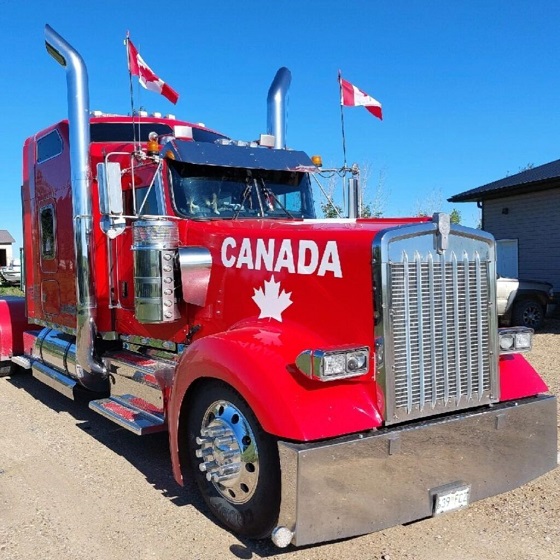
From LifeSiteNews
A judge ruled that the Ontario Court of Justice is already ‘satisfied’ with Chris Barber’s sentence and taking away his very livelihood would be ‘disproportionate.’
A Canadian judge has dismissed a demand from Canadian government lawyers to seize Freedom Convoy leader Chris Barber’s “Big Red” semi-truck.
On Friday, Ontario Court of Justice Judge Heather Perkins-McVey denied the Crown’s application seeking to forfeit Barber’s truck.
She ruled that the court is already “satisfied” with Barber’s sentence and taking away his very livelihood would be “disproportionate.”
“This truck is my livelihood,” said Barber in a press release sent to LifeSiteNews.
“Trying to permanently seize it for peacefully protesting was wrong, and I’m relieved the court refused to allow that to happen,” he added.
Criminal defense lawyer Marwa Racha Younes was welcoming of the ruling as well, stating, “We find it was the right decision in the circumstances and are happy with the outcome.”
John Carpay, president of the Justice Centre for Constitutional Freedoms (JCCF), said the decision is “good news for all Canadians who cherish their Charter freedom to assemble peacefully.”
READ: Freedom Convoy protester appeals after judge dismissed challenge to frozen bank accounts
“Asset forfeiture is an extraordinary power, and it must not be used to punish Canadians for participating in peaceful protest,” he added in the press release.
As reported recently by LifeSiteNews, the Canadian government claimed that Barber’s truck is an “offence-related property” relating to his involvement in the 2022 protests against Canada’s COVID mandates.
At this time, the court ruling ends any forfeiture proceedings for the time being, however Barber will continue to try and appeal his criminal conviction and house arrest sentence.
Barber’s truck, a 2004 Kenworth long-haul he uses for business, was a focal point in the 2022 protests. He drove it to Ottawa, where it was parked for an extended period of time, but he complied when officials asked him to move it.
On October 7, 2025, after a long trial, Ontario Court Justice Perkins-McVey sentenced Barber and Tamara Lich, the other Freedom Convoy leader, to 18 months’ house arrest. They had been declared guilty of mischief for their roles as leaders of the 2022 protest against COVID mandates, and as social media influencers.
Lich and Barber have filed appeals of their own against their house arrest sentences, arguing that the trial judge did not correctly apply the law on their mischief charges.
Government lawyers for the Crown have filed an appeal of the acquittals of Lich and Barber on intimidation charges.
The pair’s convictions came after a nearly two-year trial despite the nonviolent nature of the popular movement.

Trump confirms first American land strike against Venezuelan narco networks

Disclosures reveal Minnesota politician’s husband’s companies surged thousands-fold amid Somali fraud crisis
The Canadian Energy Centre’s biggest stories of 2025

Maduro says he’s “ready” to talk
-
International2 days ago
Maduro says he’s “ready” to talk
-
 Energy20 hours ago
The U.S. Just Removed a Dictator and Canada is Collateral Damage
-
International1 day ago
Trump Says U.S. Strike Captured Nicolás Maduro and Wife Cilia Flores; Bondi Says Couple Possessed Machine Guns
-
 Business1 day ago
Vacant Somali Daycares In Viral Videos Are Also Linked To $300 Million ‘Feeding Our Future’ Fraud
-
 Bruce Dowbiggin2 days ago
The Rise Of The System Engineer: Has Canada Got A Prayer in 2026?
-
 International20 hours ago
US Justice Department Accusing Maduro’s Inner Circle of a Narco-State Conspiracy
-
 Daily Caller8 hours ago
Scathing Indictment Claims Nicolás Maduro Orchestrated Drug-Fueled ‘Culture Of Corruption’ Which Plagued Entire Region
-
International1 day ago
“Captured and flown out”: Trump announces dramatic capture of Maduro