
COVID-19
Canada’s health dept. admits there’s no evidence ArriveCan app ‘saved lives’ as previously claimed

From LifeSiteNews
The Public Health Agency of Canada had previously used the claim that the app saved lives to justify the $54 million cost.
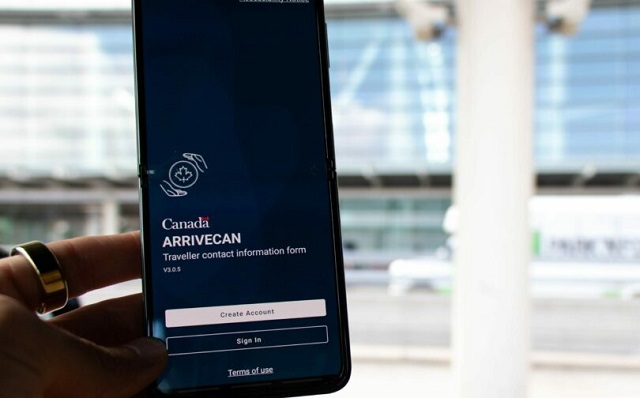
The Public Health Agency of Canada was forced to acknowledge that it has no evidence that the $54 million ArriveCan app program saved lives during the COVID-19 pandemic despite using that as an argument to justify the high cost, according to information obtained by Blacklock’s Reporter.
“The Agency cannot quantify the exact number of lives indirectly saved through ArriveCan,” the Agency wrote to the House of Commons government operations committee. “Without the use of restrictive measures and without high levels of vaccination Canada could have experienced higher numbers of infections and hospitalizations.”
The ArriveCan app was mandated by the federal government under the leadership of Prime Minister Justin Trudeau in 2020. All travelers entering Canada had to use the ArriveCAN app to submit their travel and contact information, as well as any COVID vaccination details, before crossing the border or boarding a flight.
In fall 2021, the government banned the vaccine free from traveling by air, rail or sea domestically and internationally. The requirement was suspended October 1, 2022.
“It cost $54 million and it was value for money,” Doan asserted. “As far as I am concerned, it saved lives.”
However, Conservatives pressed for a more complete answer along with data to support the claim.
“Would you provide something in writing to us quantifying that statement?” Conservative MP Kelly McCauley questioned. “We have heard repeatedly from people on the witness stand about how it has miraculously saved lives. Can you let us know how many?”
“Having studied public health, I would think that finding that evidence is going to be very difficult,” Liberal MP Marcus Powlowski, a medical doctor, responded.
The app has since become a controversial topic in Canadian politics, as numerous reports have surfaced revealing that the Trudeau government suppressed information regarding the program.
In October, the Trudeau government was exposed for hiding a Royal Canadian Mounted Police investigation into the app from auditors. An investigation of the ArriveCan app began last November after the House of Commons voted 173-149 for a full audit of the controversial app.
Similarly, in November, Doan was threatened with contempt for refusing to give clear answers to questions from MPs regarding his involvement with the much-maligned app.
The program, described by a Canadian border agent as “tyranny,” cost taxpayers $54 million, which MPs pointed out was a suspiciously high expense.
Top constitutional lawyers have said ArriveCAN violates an individual’s constitutional rights, adding that people’s civil liberties on paper have been rendered “meaningless effectively in the real world” because of COVID.


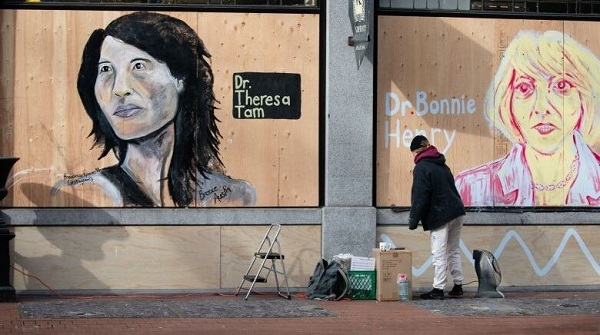
Breaking: Drs. Bonnie Henry and Theresa Tam have been appointed to the Order of Canada in recognition of their role in the country’s response to the COVID-19 pandemic.
And so the game of covid liar’s poker has more winners. It’s like awarding the captain of the Titanic the Nobel Prize for his work on floatation. As we now know these two— and the other WHO finger puppets in Canada— made the Covid 19 episode worse, not better, with their prescription for panic, positives and punishment. Even as they knew the truth about the limits of the virus and the efficacy of vaccines they continued to spew fallacious PCR data on the extent of the sickness and who was at risk.
Put simply, to protect vulnerable seniors they said kids were also at great risk. Which was unconscionable.
In this they encouraged Justin Trudeau in his worst instincts, combining his father’s insouciant disregard for civil rights (sending in the police) with his mother’s mental stability. Propped up by Team Tam and its U.S. allies such as Anthony Fauci, this hysteria peaked with a sequestered PM crushing the Truckers Convoy’s vaccine protest with emergency measures and destruction of civil liberties.
Lest you wonder, this overreach was recognized at the time. Justice Maclean wrote at the trial of Convoy organizers, “Defendants & other persons remain at liberty to engage in a peaceful, lawful & safe protest”. On Feb. 16, he continued a no-honking order, again writing: “Defendants & other persons remain at liberty to engage in a peaceful, lawful & safe protest.”
The leaders of the Convoy, lynched by Canadian media’s phoney claims of right-wing American interference, are still fighting jail time on charges of nuisance. While violent criminals are routinely released on bail or absolved.
Justice Richard Mosley later concluded that while the convoy was a disruption of public order, it didn’t constitute a national emergency and invoking the act “does not bear the hallmarks of reasonableness — justification, transparency and intelligibility.” But in real time Team Tam made no attempts to correct the wilder misgivings about Covid (lockdowns, mandatory vaccines). Trudeau was given a hall pass. Needless to say the purchased media made things infinitely worse regurgitating these mistakes.
In short, they knew better but hid the truth. But why pick on Henry and Tam? Under Trudeau and his wingman Jagmeet Singh this was the golden age of lies and prevarications in Canada and the U.S. No apologies were ever offered when the truth emerged.
As we’ve noted before, Trudeau cried with a teddy bear carefully positioned over 751 alleged unmarked graves in a known Catholic cemetery that the local Cowessess band abandoned. The Liberal government knew the claim of 215 “children’s graves” was false, and still ran with it to get Trudeau his photo-op. Naturally the CBC Media Party played (and still plays) accomplice in this farce as the Canadian flag was lowered to half-mast for six months and Trudeau ratted out Canada at the UN as a genocidal state.
There were more, plenty more Trudeau scandals that media endorsed and then stood by even as the truth was revealed. SNC Lavalin. We Charity. Arrive Can app. Firing indigenous justice minister. Chinese drug infiltration/ money laundering. Nazi Celebrated in Parliament. Welcome To Canada immigration. Nova Scotia massacre. McKinsey Consultation. Blackface. And so on.
And were there apologies when it came time to make the Trudeau Liberals accountable? No, they staged a media circus over Donald Trump’s assertion of 51st state. All the fake news and deliberate lies went poof, allowing Mark Carney to seamlessly assume the PM job.

Lest We Forget Pt. 2 it was not exclusive to Canada. As we are now learning: Barack Obama and Joe Biden sat in an August 3, 2016 Situation Room briefing and said, yeah, let the highest officials in our administration fabricate evidence to frame the opposing party candidate Donald Trump. Obama. Biden. Comey. McCabe. Strzok. Page. Rice. Etc.
Knowingly using the faked Clinton campaign ‘Steele Dossier’ hoax, they launched a federal investigation into the Trump presidential campaign that lasted three years after Trump was sworn in as the nation’s 45th President. Arresting and jailing his partners and colleagues. Inventing fake stories for their media enablers. Let’s repeat that. Saint Obama knew there was criminal activity in the process but let his henchmen try to fix an election.

And when the ruse was uncovered no one apologized. No one in authority was fired or jailed. The Pulitzer Prizes awarded to the NT Times and Washington Post for disseminating the DEMs scandal were not rescinded. Nor were they given back by the lying newspapers.
The concerted frauds of the same U.S. DOJ, FBI and State Departments were fed by media and accepted by gullible publics in Canada and America. The fantastical 2020 election results were likewise drummed into the public irrespective of the sudden “appearance” of 27 million new votes during a pandemic.
It was all a fitting preamble to the 2020-2024 Biden senility scandal with Democrats running a man they knew was in full dementia. In the 2020 election Biden was hidden from public view, the better to let media attack Trump for spurious charges launched by partisan DNC attorneys in Georgia, New York and DC. Even then it took the suppression of Hunter Biden’s incriminating laptop just prior to the election to get his father elected.

The dance of denial continued in Biden’s term as he physically and mentally deteriorated before the American public. But inquiries about who was running the government if not Biden were harshly suppressed. Media lackeys noted he was sharp as a tack mentally and in tip-top physical condition when he wasn’t falling down stairs.
It took the stunning 2024 debate debacle with Trump to strip away the lies about Biden’s health, now said to be advanced prostate cancer and Parkinson’s. The media, caught in their own lies about Biden’s condition, offered no apologies and tried to blame Biden’s stutter for the performance.. Right.
These were the two greatest U.S. hoaxes from people who’d cried hoax incessantly. They were hardly the only abuse of public trust. Some of the perpetrators are said to now be under investigation— even as they hand out awards to each other. The media’s credibility is shattered and yet they still blame others. Jaded voters are taking a “we’ll see” approach. But expectations of any change in DC or Ottawa are limited.
As Stephen Taylor posted on X: “Turns out for Liberals, ‘elbows up’ just means ‘noses up’ like it always has.”
Bruce Dowbiggin @dowbboy is the editor of Not The Public Broadcaster A two-time winner of the Gemini Award as Canada’s top television sports broadcaster, his new book Deal With It: The Trades That Stunned The NHL And Changed hockey is now available on Amazon. Inexact Science: The Six Most Compelling Draft Years In NHL History, his previous book with his son Evan, was voted the seventh-best professional hockey book of all time by bookauthority.org . His 2004 book Money Players was voted sixth best on the same list, and is available via brucedowbigginbooks.ca.

|
A Canadian court has ordered the release of documents that could shed light on how federal authorities and law enforcement worked together to freeze the bank accounts of a protester involved in the Freedom Convoy.
Both the RCMP and TD Bank are now required to provide records related to Evan Blackman, who took part in the 2022 demonstrations and had his accounts frozen despite not being convicted of any crime at the time.
The Justice Centre for Constitutional Freedoms (JCCF) announced the Ontario Court of Justice ruling. The organization is representing Blackman, whose legal team argues that the actions taken against him amounted to a serious abuse of power.
“The freezing of Mr. Blackman’s bank accounts was an extreme overreach on the part of the police and the federal government,” said his lawyer, Chris Fleury. “These records will hopefully reveal exactly how and why Mr. Blackman’s accounts [were] frozen.”
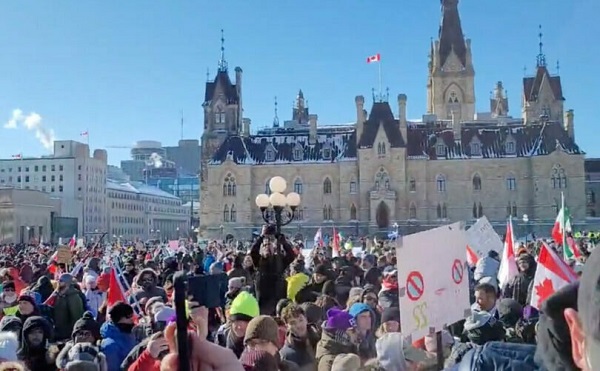
Blackman was arrested during the mass protests in Ottawa, which drew thousands of Canadians opposed to vaccine mandates and other pandemic-era restrictions.
Although he faced charges of mischief and obstructing police, those charges were dismissed in October due to a lack of evidence. Despite this, prosecutors have appealed, and a trial is set to begin on August 14.
At the height of the protests, TD Bank froze three of Blackman’s accounts following government orders issued under the Emergencies Act. Then-Prime Minister Justin Trudeau had invoked the act to grant his government broad powers to disrupt the protest movement, including the unprecedented use of financial institutions to penalize individuals for their support or participation.
In 2024, a Federal Court Justice ruled that Trudeau’s decision to invoke the act had not been justified.
Blackman’s legal team plans to use the newly released records to demonstrate the extent of government intrusion into personal freedoms.
According to the JCCF, this case may be the first in Canada where a criminal trial includes a Charter challenge over the freezing of personal bank accounts under emergency legislation.
|
USAID Quietly Sent Thousands Of Viruses To Chinese Military-Linked Biolab
Canada’s euthanasia regime is already killing the disabled. It’s about to get worse
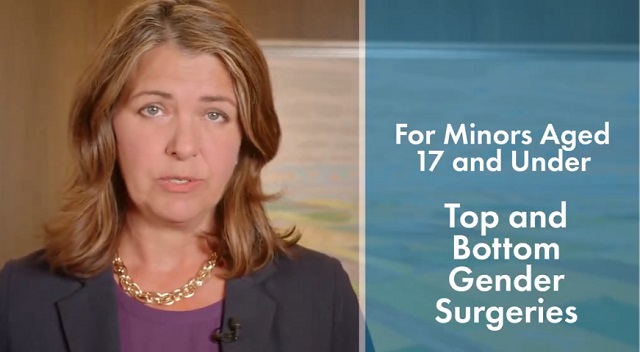
‘Far too serious for such uninformed, careless journalism’: Complaint filed against Globe and Mail article challenging Alberta’s gender surgery law
Canadian pro-freedom group sounds alarm over Liberal plans to revive internet censorship bill
-
 Business17 hours ago
Most Canadians say retaliatory tariffs on American goods contribute to raising the price of essential goods at home
-
 National1 day ago
Women and girls beauty pageant urges dismissal of transgender human rights complaint
-
 Alberta18 hours ago
Cross-Canada NGL corridor will stretch from B.C. to Ontario
-
 International2 days ago
Support for the Ukraine war continues because no one elected is actually in charge.
-
 Business2 days ago
Trump slaps Brazil with tariffs over social media censorship
-
 Business2 days ago
CBC six-figure salaries soar
-
 Business19 hours ago
B.C. premier wants a private pipeline—here’s how you make that happen
-
 Addictions2 days ago
Can addiction be predicted—and prevented?