
Business
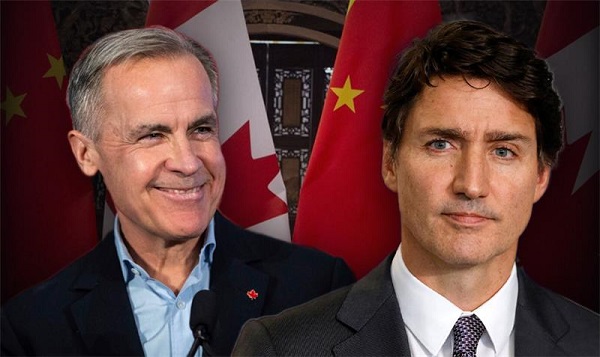
Canada’s Future Is On The Line If We Cozy Up To China

From the Frontier Centre for Public Policy
A recent Globe and Mail column’s push for closer ties with China overlooks the risks. Canada’s future depends on trusted democratic allies, not autocrats
The recent Globe and Mail column, “Let’s free ourselves of the U.S. and forge closer ties with China”, by Julian Karaguesian and Robin Shaban, reveals a troubling lack of historical awareness and strategic judgment.
Marketed as a call for Canadian economic independence, it amounts to an argument for deeper dependence on an authoritarian regime that uses coercive diplomacy, illicit finance and political interference to erode democratic sovereignty.
Canadians should reject the notion that closer alignment with Beijing strengthens our independence. The opposite is demonstrably true.
The authors praise China’s economic dynamism and technological progress but ignore the context in which these gains were made. They are not the result of fair-market innovation, but of systematic intellectual property theft, forced technology transfers and vast state subsidies that distort global competition.
These practices are well documented by sources such as the U.S. Department of Justice’s China Initiative, CSIS’s 2023 Public Report, and a 2023 U.K. Parliament report issued under the Five Eyes alliance—a security and intelligence-sharing partnership among Canada, the U.S., U.K., Australia and New Zealand.
Proposing deeper technological engagement with a regime known for embedding backdoors in products like Huawei hardware, which Canadian security agencies have flagged as a national security risk, and for weaponizing supply chains is dangerously naïve. This isn’t innovation; it’s strategic infiltration that introduces unacceptable risks into Canada’s economic infrastructure.
Equating Canada’s alliance with the U.S. to strategic subservience misrepresents the nature of cooperation in a rules-based international order. While the U.S. is imperfect, it remains our most reliable economic and security partner—anchored in shared democratic norms, integrated defence under NORAD and institutions that ensure transparency and accountability. These foundations stand in sharp contrast to the opaque and coercive practices of the Chinese state.
Beijing has made clear it does not operate as a predictable or principled partner. Its use of retaliatory diplomacy—such as the politically motivated detention of Michael Kovrig and Michael Spavor, bans on Canadian agricultural exports and the expansion of United Front influence operations (covert and overt efforts by the Chinese Communist Party to sway public opinion and policy abroad)—demonstrates a pattern of intimidation.
According to CSIS and allied intelligence agencies, the Chinese Communist Party is not merely pursuing commercial access but long-term political leverage.
The ongoing 2024 Public Inquiry into Foreign Interference has only underscored how these efforts aim to compromise Canada’s sovereignty from within. To dismiss such conduct as standard trade practice is either willfully blind or dangerously misinformed.
Claims that the U.S. is an unreliable ally ignore the structural depth of our relationship. Disagreements exist, but they don’t undermine the durability of a partnership rooted in integrated supply chains under USMCA, shared strategic interests and the open debate that defines liberal democracy.
Canada’s prosperity depends on this alliance—not on transactional deals with authoritarian states.
Replacing that alliance with exposure to a regime that jails dissidents, manipulates international institutions and conducts cyberespionage on Canadian citizens is not diversification. It’s submission.
Canada should not trade the open architecture of the Atlantic alliance for Beijing’s authoritarian opacity. Strategic autonomy cannot be built on intimidation and coercion. We must engage the world, but with eyes open and principles intact.
Scott McGregor is an intelligence consultant and co-author of The Mosaic Effect. He is a senior fellow at the Council on Countering Hybrid Warfare. He writes here for the Frontier Centre for Public Policy.



Europe calls it transparency, but it looks a lot like teaching the internet who’s allowed to speak.
|
When the European Commission fined X €120 million on December 5, officials could not have been clearer. This, they said, was not about censorship. It was just about “transparency.”
They repeat it so often you start to wonder why.
The fine marks the first major enforcement of the Digital Services Act, Europe’s new censorship-driven internet rulebook.
It was sold as a consumer protection measure, designed to make online platforms safer and more accountable, and included a whole list of censorship requirements, fining platforms that don’t comply.
The Commission charged X with three violations: the paid blue checkmark system, the lack of advertising data, and restricted data access for researchers.
None of these touches direct content censorship. But all of them shape visibility, credibility, and surveillance, just in more polite language.
Musk’s decision to turn blue checks into a subscription feature ended the old system where establishment figures, journalists, politicians, and legacy celebrities got verification.
The EU called Musk’s decision “deceptive design.” The old version, apparently, was honesty itself. Before, a blue badge meant you were important. After, it meant you paid. Brussels prefers the former, where approved institutions get algorithmic priority, and the rest of the population stays in the queue.
The new system threatened that hierarchy. Now, anyone could buy verification, diluting the aura of authority once reserved for anointed voices.
Reclaim The Net is sustained by its readers.
Your support fuels the fight for privacy, free speech and digital civil liberties while giving you access to exclusive content, practical how to guides, premium features and deeper dives into freedom-focused tech.
Become a supporter here.
However, that’s not the full story. Under the old Twitter system, verification was sold as a public service, but in reality it worked more like a back-room favor and a status purchase.
The main application process was shut down in 2010, so unless you were already famous, the only way to get a blue check was to spend enough money on advertising or to be important enough to trigger impersonation problems.
Ad Age reported that advertisers who spent at least fifteen thousand dollars over three months could get verified, and Twitter sales reps told clients the same thing. That meant verification was effectively a perk reserved for major media brands, public figures, and anyone willing to pay. It was a symbol of influence rationed through informal criteria and private deals, creating a hierarchy shaped by cronyism rather than transparency.
Under the new X rules, everyone is on a level playing field.
Government officials and agencies now sport gray badges, symbols of credibility that can’t be purchased. These are the state’s chosen voices, publicly marked as incorruptible. To the EU, that should be a safeguard.
The second and third violations show how “transparency” doubles as a surveillance mechanism. X was fined for limiting access to advertising data and for restricting researchers from scraping platform content. Regulators called that obstruction. Musk called it refusing to feed the censorship machine.
The EU’s preferred researchers aren’t neutral archivists. Many have been documented coordinating with governments, NGOs, and “fact-checking” networks that flagged political content for takedown during previous election cycles.
They call it “fighting disinformation.” Critics call it outsourcing censorship pressure to academics.
Under the DSA, these same groups now have the legal right to demand data from platforms like X to study “systemic risks,” a phrase broad enough to include whatever speech bureaucrats find undesirable this month.
The result is a permanent state of observation where every algorithmic change, viral post, or trending topic becomes a potential regulatory case.
The advertising issue completes the loop. Brussels says it wants ad libraries to be fully searchable so users can see who’s paying for what. It gives regulators and activists a live feed of messaging, ready for pressure campaigns.
The DSA doesn’t delete ads; it just makes it easier for someone else to demand they be deleted.
That’s how this form of censorship works: not through bans, but through endless exposure to scrutiny until platforms remove the risk voluntarily.
The Commission insists, again and again, that the fine has “nothing to do with content.”
That may be true on a direct level, but the rules shape content all the same. When governments decide who counts as authentic, who qualifies as a researcher, and how visibility gets distributed, speech control doesn’t need to be explicit. It’s baked into the system.
Brussels calls it user protection. Musk calls it punishment for disobedience. This particular DSA fine isn’t about what you can say, it’s about who’s allowed to be heard saying it.
TikTok escaped similar scrutiny by promising to comply. X didn’t, and that’s the difference. The EU prefers companies that surrender before the hearing. When they don’t, “transparency” becomes the pretext for a financial hammer.
The €120 million fine is small by tech standards, but symbolically it’s huge.
It tells every platform that “noncompliance” means questioning the structure of speech the EU has already defined as safe.
In the official language of Brussels, this is a regulation. But it’s managed discourse, control through design, moderation through paperwork, censorship through transparency.
And the louder they insist it isn’t, the clearer it becomes that it is.
|
|
|
|
Reclaim The Net Needs Your
With your help, we can do more than hold the line. We can push back. We can expose censorship, highlight surveillance overreach, and amplify the voices of those being silenced.
If you have found value in our work, please consider becoming a supporter.
Your support does more than keep us independent. It also gives you access to exclusive content, deep dive exploration of freedom focused technology, member-only features, and practical how-to posts that help you protect your rights in the real world.
You help us expand our reach, educate more people, and continue this fight.
Please become a supporter today.
Thank you for your support.
|

Yakk Stack

(Only 5 Days Left!) Claim Yours Before It’s GONE FOREVER
Hey, all.
Imagine this…you’re slicing into that fresh loaf from Loblaws or just making a Wonder-ful sammich, the one you’ve bought hundreds of times over the years, and suddenly… ka-ching!
A fat check lands in your mailbox.
Not from a lottery ticket, not from a side hustle – from the very store that’s been quietly owing you money for two decades of illegal price fixing.
Sound too good to be true?
It’s real.
It’s court-approved.
And right now, on December 7, 2025, you’ve got exactly 5 days to grab your share before the door slams shut. Don’t let this slip away – keep reading, feel that spark of possibility ignite, and let’s get you paid.
Back in 2001, you were probably juggling work, kids, or just surviving on that weekly grocery run. Little did you know, while you were reaching for the President’s Choice white bread or those golden rolls, Loblaws and their cronies were playing a sneaky game of price-fixing. They jacked up the cost of packaged bread across Canada – every loaf, every bun, every sneaky sandwich slice. For 20 years. From coast to coast to coast.
And now…the courts have spoken. $500 million in settlements to make it right. That’s not pocket change – that’s your money, recycled back into your life.
Given the number of people who will be throwing in a claim…this ain’t gunna be life-changing cash…but also, given the cost of food in Canada, it’s better than sweet fuck all, which you will receive by NOT doing this.
If you’re a Canadian resident (yep, that’s you, unless you’re in Quebec with your own sweet deal), and you’ve ever bought bread for your family – not for resale, just real life – between January 1, 2001, and December 31, 2021… you’re in.
No receipts needed.
No fancy proofs.
Just you, confirming your story, and boom – eligible.
Quick check: Were you under 18 back then?
Or an exec at Loblaw?
Nah, skip it.
But for the rest of us everyday schleps…Jackpot.
Again…the clock’s ticking on this.
Claims opened on September 11, 2025, and slam shut on December 12, 2025.
That’s this Friday.
Payments roll out in 2026, 6-12 months later, straight to your bank or mailbox.
Here’s what you need to do…
- Breathe deep, click → HEREQuebec frens →HERE
- 10 second form that’s completed by your autofill…30 seconds off of a mobile device.
- Hit submit and wait for that sweet cash to hit your account.
Again…this won’t be life saving money and most certainly ain’t gunna hit your account before Christmas.
And before you go out an Griswald yourself into a depost on pool in the backyard…you may only end up with enough cash for the Jam-of-the-Month…the gift that truly does give, all year round…just be a little patient.
If you end up with a couple of backyard steaks in time for summer…
Some treats for the children or grandchildren…
Maybe just a donation to the foodbank…
This is what’s owed to you. Your neighbors. Friends. Family.
Take advantage!


A look inside the ‘floatel’ housing B.C.’s LNG workforce

Trump Deals Biden’s EV Dreams A Death Blow

Alberta will use provincial laws to stop Canadian gov’t from trying to confiscate legal firearms

FBI may have finally nabbed the Jan. 6 pipe bomber
-
Automotive2 days ago
Trump Deals Biden’s EV Dreams A Death Blow
-
Business1 day ago
Loblaws Owes Canadians Up to $500 Million in “Secret” Bread Cash
-
 Automotive2 days ago
Canada’s EV Mandate Is Running On Empty
-
 Business1 day ago
Why Does Canada “Lead” the World in Funding Racist Indoctrination?
-
 Dan McTeague1 day ago
Will this deal actually build a pipeline in Canada?
-
 Censorship Industrial Complex23 hours ago
US Condemns EU Censorship Pressure, Defends X
-
 Media1 day ago
They know they are lying, we know they are lying and they know we know but the lies continue
-
 Focal Points17 hours ago
Common Vaccines Linked to 38-50% Increased Risk of Dementia and Alzheimer’s