
Frontier Centre for Public Policy
Canada Lets Child-Porn Offenders Off Easy While Targeting Bible Believers


From the Fr0ntier Centre for Public Policy
By Lee Harding
Judges struck down one-year minimum prison sentences for child pornography possession. Meanwhile, the chair of the Parliamentary Human Rights Committee publicly stated that religious scriptures condemning homosexuality are “hateful.” Lee Harding says the 1982 Charter has led to an inversion of Canadian values.
Light sentences for child-porn possession collide with federal signals that biblical texts could be prosecuted as hate
Was Canada’s 1982 Charter meant to condemn the Bible as hate literature or to weaken sentencing for child pornography? Like it or not, that is the direction post-Charter Canada is moving.
For Halloween, the black-robed justices at the Supreme Court of Canada ruled that a one-year mandatory sentence for accessing or possessing child sexual abuse materials amounted to “cruel and unusual punishment.” The judgment upheld a similar ruling from the Quebec Court of Appeal.
A narrow 5-4 majority leaned on a hypothetical. If an 18-year-old received a sexually explicit image from a 17-year-old girlfriend, that image would technically be child porn. If prosecuted, the recipient could face a one-year minimum sentence. On that basis, the judges rejected the entire minimum sentence law.
But the real case before them was far more disturbing. Two Quebec men possessed images and videos that were clearly the result of abuse. One had 317 unique images of child porn, with 90 per cent showing girls aged three to six years old forced into penetration and sodomy by adults or other minors. The other had 531 images and 274 videos of girls aged five to 10 engaged in sexual acts, including anal and vaginal penetration and, in some cases, multiple children.
The sentences were light. The first offender received 90 days of intermittent imprisonment, served concurrently, plus 24 months of probation. The second received nine months of imprisonment and the same probation period. How is this acceptable?
The judgment did not emerge without warning. Daniel A. Lang, a Liberal campaign chair appointed to the Senate by Lester B. Pearson, saw this coming more than 40 years ago. On April 23, 1981, he expressed concerns that the new Constitution could be used to erode basic decency laws. He pointed to the U.S. experience and predicted that Canada could face a wave of cases challenging laws on “obscenity, pornography and freedom of speech,” leading to the “negation of federal or provincial legislation.”
His warning has come true. If Parliament wants to restore mandatory minimum sentences, it can do so by passing a new law that removes the obscure scenario judges used to strike them down. Section 33, the notwithstanding clause, gives elected officials the power to override court rulings for up to five years at a time.
This reflects Canada’s own system. In the British tradition Canada inherited, Parliament—not the courts—is the ultimate authority. British common law developed over centuries through conventions and precedents shaped by elected lawmakers. Section 33 protects that balance by ensuring Parliament can still act when judges disagree.
There is a democratic check as well. If a government uses Section 33 and voters believe it made the wrong call, they can remove that government at the next election. A new government can then follow the judges’ views or let the old law expire after five years. That accountability is precisely why Section 33 strengthens democracy rather than weakening it.
Yet today, Ottawa is working to limit that safeguard. In September, the Carney Liberals asked the Supreme Court to rule on new limits to how legislatures can use Section 33. Five premiers wrote to Carney to oppose the move. Former Newfoundland and Labrador premier Brian Peckford, the last living signatory to the agreement that produced the 1982 Constitution Act, has also condemned the attempt as wrongful.
The judges will likely approve the new limits. Why would they refuse a chance to narrow the one tool elected governments have to get around their rulings? For decades, the Supreme Court has made a habit of striking down laws, telling Parliament it is wrong and forcing political change.
And while minimum sentences for child-porn offenders fall, the Carney cabinet is focused on something else entirely: prosecuting Bible believers for alleged hate.
The quiet part was said out loud by Montreal lawyer Marc Miller, former minister of immigration and citizenship and chair of the Parliamentary Human Rights Committee. On Oct. 30, he told the committee, “In Leviticus, Deuteronomy, Romans, there’s other passages, there’s clear hatred towards, for example, homosexuals.”
The former minister added, “There should perhaps be discretion for prosecutors to press charges … [T]here are clearly passages in religious texts that are clearly hateful.”
That is the former minister’s view. Instead of Bible thumpers, we now have Charter thumpers who use their “sacred” document to justify whatever interpretation suits their cause and wield it against their ideological opponents. When wokeness hardens into dogma, disagreement becomes heresy. And we know what happens to heretics.
A country that lets child-porn offenders off easy while it hunts down Bible believers for fines and possible prison has lost its way. Most Canadians would reject this trade-off, but their rulers do not, whether in cabinet or on the judges’ bench. A dark shadow is settling over the country.
Lee Harding is a research fellow for the Frontier Centre for Public Policy


From the Frontier Centre for Public Policy
New script, same budget playbook. Nothing in the Carney budget breaks from the Trudeau years
Prime Minister Mark Carney’s first budget talks reform but delivers the same failed spending habits that defined the Trudeau years.
While speaking in the language of productivity, infrastructure and capital formation, the diction of grown-up economics, it still follows the same spending path that has driven federal budgets for years. The message sounds new, but the behaviour is unchanged.
Time will tell, to be fair, but it feels like more rhetoric, and we have seen this rhetoric lead to nothing before.
The government insists it has found a new path, one where public investment leads private growth. That sounds bold. However, it is more a rebranding than a reform. It is a shift in vocabulary, not in discipline. The government’s assumptions demand trust, not proof, and the budget offers little of the latter.
Former prime ministers Jean Chrétien and Paul Martin did not flirt with restraint; they executed it. Their budget cuts were deep, restored credibility, and revived Canada’s fiscal health when it was most needed. Ottawa shrank so the country could grow. Budget 2025 tries to invoke their spirit but not their actions. The contrast shows how far this budget falls short of real reform.
Former prime minister Stephen Harper, by contrast, treated balanced budgets as policy and principle. Even during the global financial crisis, his government used stimulus as a bridge, not a way of life. It cut taxes widely and consistently, limited public service growth and placed the long-term burden on restraint rather than rhetoric. Carney’s budget nods toward Harper’s focus on productivity and capital assets, yet it rejects the tax relief and spending controls that made his budgets coherent.
Then there is Justin Trudeau, the high tide of redistribution, vacuous identity politics and deficit-as-virtue posturing. Ottawa expanded into an ideological planner for everything, including housing, climate, childcare, inclusion portfolios and every new identity category.
The federal government’s latest budget is the first hint of retreat from that style. The identity program fireworks are dimmer, though they have not disappeared. The social policy boosterism is quieter. Perhaps fiscal gravity has begun to whisper in the prime minister’s ear.
However, one cannot confuse tone for transformation.
Spending still rises at a pace the government cannot justify. Deficits have grown. The new fiscal anchor, which measures only day-to-day spending and omits capital projects and interest costs, allows Ottawa to present a balanced budget while still adding to the deficit. The budget relies on the hopeful assumption that Ottawa’s capital spending will attract private investment on a scale economists politely describe as ambitious.
The housing file illustrates the contradiction. New funding for the construction of purpose-built rentals and a larger federal role in modular and subsidized housing builds announced in the budget is presented as a productivity measure, yet continues the Trudeau-era instinct to centralize housing policy rather than fix the levers that matter. Permitting delays, zoning rigidity, municipal approvals and labour shortages continue to slow actual construction. These barriers fall under provincial and municipal control, meaning federal spending cannot accelerate construction unless those governments change their rules. The example shows how federal spending avoids the real obstacles to growth.
Defence spending tells the same story. Budget 2025 offers incremental funding and some procurement gestures, but it avoids the core problem: Canada’s procurement system is broken. Delays stretch across decades. Projects become obsolete before contracts are signed. The system cannot buy a ship, an aircraft or an armoured vehicle without cost overruns and missed timelines. The money flows, but the forces do not get the equipment they need.
Most importantly, the structural problems remain untouched: no regulatory reform for major projects, no tax-competitiveness agenda and no strategy for shrinking a federal bureaucracy that has grown faster than the economy it governs. Ottawa presides over a low-productivity country but insists that a new accounting framework will solve what decades of overregulation and policy clutter have created. The budget avoids the hard decisions that make countries more productive.
From an Alberta vantage, the pivot is welcome but inadequate. The economy that pays for Confederation receives more rhetorical respect, yet the same regulatory thicket that blocks pipelines and mines remains intact. The government praises capital formation but still undermines the key sectors that generate it.
Budget 2025 tries to walk like Chrétien and talk like Harper while spending like Trudeau. That is not a transformation. It is a costume change. The country needed a budget that prioritized growth rooted in tangible assets and real productivity. What it got instead is a rhetorical turn without the courage to cut, streamline or reform.
Canada does not require a new budgeting vocabulary. It requires a government willing to govern in the country’s best interests.
Marco Navarro-Genie is vice-president of research at the Frontier Centre for Public Policy and co-author with Barry Cooper of Canada’s COVID: The Story of a Pandemic Moral Panic (2023).
From the Frontier Centre for Public Policy
By David Redman
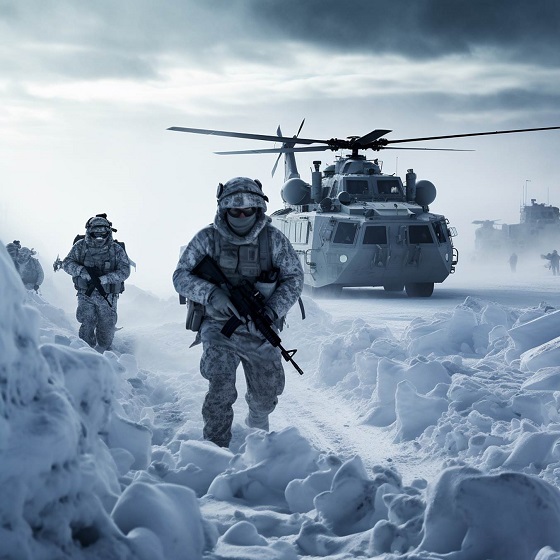
Canada’s Defence Mobilization Plan blurs legal lines, endangers untrained civil servants, and bypasses provinces. The Plan raises serious questions about military overreach, readiness, and political motives behind rushed federal emergency planning.
The new defence plan looks simple on paper. The risks are anything but.
Canadians have grown used to bad news about the Canadian Armed Forces (CAF), but the newly revealed defence mobilization plan is in a category of its own.
After years of controversy over capability, morale, and leadership challenges, the military’s senior ranks now appear willing to back a plan that misunderstands emergency law, sidelines provincial authority, and proposes to place untrained civil servants in harm’s way.
The document is a Defence Mobilization Plan (DMP), normally an internal framework outlining how the military would expand or organize its forces in a major crisis.
The nine-page plan was dated May 30, 2025, but only reached public view when media outlets reported on it. One article reports that the plan would create a supplementary force made up of volunteer public servants from federal and provincial governments. Those who join this civil defence corps would face less restrictive age limits, lower fitness requirements, and only five days of training per year. In that time, volunteers would be expected to learn skills such as shooting, tactical movement, communicating, driving a truck, and flying a drone. They would receive medical coverage during training but not pensionable benefits.
The DMP was circulated to 20 senior commanders and admirals, including leaders at NORAD, NATO, special forces, and Cybercom. The lack of recorded objection can reasonably raise concerns about how thoroughly its implications were reviewed.
The legal context explains much of the reaction. The Emergencies Act places responsibility for public welfare and public order emergencies on the provinces and territories unless they request federal help. Emergency response is primarily a provincial role because provinces oversee policing, natural disaster management, and most front-line public services. Yet the DMP document seems to assume federal and military control in situations where the law does not allow it. That is a clear break from how the military is expected to operate.
The Emergency Management Act reinforces that civilian agencies lead domestic emergencies and the military is a force of last resort. Under the law, this means the CAF is deployed only after provincial and local systems have been exhausted or cannot respond. The Defence Mobilization Plan, however, presents the military as a routine responder, which does not match the legal structure that sets out federal and provincial roles.
Premiers have often turned to the military first during floods and fires, but those political habits do not remove the responsibility of senior military leaders to work within the law and respect their mandate.
Capacity is another issue. Combat-capable personnel take years to train, and the institution is already well below its authorized strength. Any task that diverts resources from readiness weakens national defence, yet the DMP proposes to assign the military new responsibilities and add a civilian component to meet them.
The suggestion that the military and its proposed civilian force should routinely respond to climate-related events is hard to square with the CAF’s defined role. It raises the question of whether this reflects policy misjudgment or an effort to apply military tools to problems that are normally handled by civilian systems.
The plan also treats hazards unrelated to warfighting as if the military is responsible for them. Every province and territory already has an emergency management organization that monitors hazards, coordinates responses and manages recovery. These systems use federal support when required, but the military becomes involved only when they are overwhelmed. If Canada wants to revive a 1950s-style civil defence model, major legislative changes would be needed. The document proceeds as if no such changes are required.
The DMP’s training assumptions deepen the concerns. Suggesting that tasks such as “shooting, moving, communicating, driving a truck and flying a drone” can be taught in a single five-day block does not reflect the standards of any modern military. These skills take time to learn and years to master.
The plan also appears aligned with the government’s desire to show quick progress toward NATO’s defence spending benchmark of two percent of GDP and eventually five percent. Its structure could allow civil servants’ pay and allowances to be counted toward defence spending.
Any civil servant who joins this proposed force would be placed in potentially hazardous situations with minimal training. For many Canadians, that level of risk will seem unreasonable.
The fact that the DMP circulated through senior military leadership without signs of resistance raises concerns about accountability at the highest levels. That the chief of the defence staff reconsidered the plan only after public criticism reinforces those concerns.
The Defence Mobilization Plan risks placing civil servants in danger through a structure that appears poorly conceived and operationally weak. The consequences for public trust and institutional credibility are becoming difficult to ignore.
David Redman had a distinguished military career before becoming the head of the Alberta Emergency Management Agency in 2004. He led the team in developing the 2005 Provincial Pandemic Influenza Plan. He retired in 2013. He writes here for the Frontier Centre for Public Policy.


Terror in Australia: 12 killed after gunmen open fire on Hanukkah celebration

Death by a thousand clicks – government censorship of Canada’s internet

Hero bystander disarms shooter in Australian terror attack

Inflation Reduction Act, Green New Deal Causing America’s Energy Crisis
-
 Alberta20 hours ago
Danielle Smith slams Skate Canada for stopping events in Alberta over ban on men in women’s sports
-
 Health2 days ago
Saskatchewan woman approved for euthanasia urged to seek medical help in Canada rather than US
-
 Indigenous2 days ago
Residential school burials controversy continues to fuel wave of church arsons, new data suggests
-
 International1 day ago
FBI didn’t think it had cause to raid Trump but DOJ did it anyway
-
 Health2 days ago
Canadian gov’t considers sharing census data on gender-confused children
-
 Crime22 hours ago
The Uncomfortable Demographics of Islamist Bloodshed—and Why “Islamophobia” Deflection Increases the Threat
-
 Energy1 day ago
Liberals Twisted Themselves Into Pretzels Over Their Own Pipeline MOU
-
 COVID-1911 hours ago
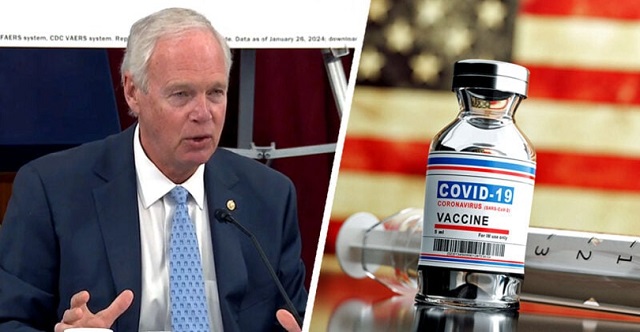
Senator Demands Docs After ‘Blockbuster’ FDA Memo Links Child Deaths To COVID Vaccine