
Energy
Canada is no energy superpower


This article supplied by Troy Media.
 By Bill Whitelaw
And pretending otherwise is a fool’s game
Canada is not an energy superpower. Not even close.
The term has become a convenient political crutch, used as a slogan to signal ambition without doing the hard work of building a unified national strategy. It’s a hollow label, unsupported by clarity, coherence, or consensus.
But what does an energy superpower actually mean?
An energy superpower is a nation that not only exploits vast energy resources but also possesses the infrastructure, political unity, and global influence to shape international energy markets.
Right now, Canada has none of these. Instead, we are mired in political disarray, inconsistent energy policies, and missed opportunities.
This misleading label is further complicated by Canada’s political fragmentation. Provincial policies are often at odds with one another, preventing any coherent national energy strategy. Alberta’s economy remains heavily reliant on oil and gas, yet its policies clash with those of Ottawa, which is pushing for a green transition. Meanwhile, Quebec has imposed a complete ban on new oil and gas development, deepening the divide.
This disunity makes it impossible to speak of Canada as an energy superpower.
How can we be a superpower when we can’t even agree on our own energy future? The result is a country torn between expanding fossil fuel production and pivoting to renewable energy, but with no clear path forward on either front.
Moreover, the term energy superpower is also misleading because it suggests that Canada is already a leader in the global energy market. But we are not. We lack the internal coherence and strategic focus necessary to claim this title.
Rather than being based on a solid, coherent energy strategy, the superpower narrative is little more than wishful thinking—a convenient narrative used by politicians to appeal to certain voter bases, but without addressing the hard realities that true energy leadership requires.
These political rifts and contradictions translate directly into real-world consequences.
Canada has failed to build the infrastructure needed to efficiently move resources. Take, for example, the Trans Mountain pipeline, which has faced years of delays and massive cost overruns, and the stalled East Coast LNG projects.
These serve as prime examples of our inability to capitalize on our energy potential.
The Trans Mountain expansion was initially pegged at $7.4 billion, but it ballooned to over $34 billion by 2023, with no guarantee that the government will recoup that investment. Meanwhile, critical LNG export projects in Eastern Canada remain stuck in regulatory limbo, with no consensus between provinces or between the provinces and the federal government. These delays and cost overruns show that, despite having some of the world’s largest oil reserves, Canada has been unable to turn its potential into action.
Even the energy sector itself is deeply fragmented. Industry groups such as the Canadian Association of Petroleum Producers, Clean Energy Canada, and the Transition Accelerator all propose vastly different roadmaps for the country’s energy future. Some are focused on expanding oil sands and pipelines, while others push for a transition to clean energy. But there is no unified national strategy, and this lack of coordination, coupled with the failure to reconcile these conflicting viewpoints, undermines any claim that Canada is on track to become an energy superpower.
If we continue down this path, the superpower narrative will not unite the country. It will fracture it further, reinforcing existing polarization and distracting us from the real work that needs to be done.
Instead of embracing a vague label of “superpower,” Canada needs to prioritize real, substantive action: infrastructure development, clear policy frameworks, and consensus-building among provinces and stakeholders.
For Canada to become a true energy superpower, we need to invest in projects that support long-term energy security, environmental sustainability, and economic growth. This means not just exploiting resources, but doing so with the necessary infrastructure to transport and refine them efficiently.
We also need to build a national consensus that recognizes the importance of all energy sources—fossil fuels, renewables, and critical minerals—and how they can work together to support both domestic needs and international export markets.
Canada must stop using the energy superpower label until we’ve demonstrated the political coherence and infrastructure needed to back it up. Until then, we need to focus on building consensus and strategy for the future, so that when we do claim the title, it will be earned, not merely wished for.
Bill Whitelaw is a director and advisor to many industry boards, including the Canadian Society for Evolving Energy, which he chairs. He speaks and comments frequently on the subjects of social licence, innovation and technology, and energy supply networks.
Troy Media empowers Canadian community news outlets by providing independent, insightful analysis and commentary. Our mission is to support local media in helping Canadians stay informed and engaged by delivering reliable content that strengthens community connections and deepens understanding across the country


Tsawwassen Speaker Squiqel Tony Jacobs arrives for a legislative sitting. THE CANADIAN PRESS/Darryl Dyck
From Resource Works
Cowichan case underscores case for fast-tracking treaties
If there are any doubts over the question of which route is best for settling aboriginal title and reconciliation – the courts or treaty negotiations – a new economic snapshot on the Tsawwassen First Nation should put the question to rest.
Thanks to a modern day treaty, implemented in 2009, the Tsawwassen have leveraged land, cash and self-governance to parlay millions into hundreds of millions a year, according to a new report by Deloitte on behalf of the BC Treaty Commission.
With just 532 citizens, the Tsawwassen First Nation now provides $485 million in annual employment and 11,000 permanent retail and warehouse jobs, the report states.
Deloitte estimates modern treaties will provide $1 billion to $2 billion in economic benefits over the next decade.
“What happens, when you transfer millions to First Nations, it turns into billions, and it turns into billions for everyone,” Sashia Leung, director of international relations and communication for the BC Treaty Commission, said at the Indigenous Partnership Success Showcase on November 13.
“Tsawwassen alone, after 16 years of implementing their modern treaty, are one of the biggest employers in the region.”

BC Treaty Commission’s Sashia Leung speaks at the Indigenous Partnerships Success Showcase 2025.
Nisga’a success highlights economic potential
The Nisga’a is another good case study. The Nisga’a were the first indigenous group in B.C. to sign a modern treaty.
Having land and self-governance powers gave the Nisga’a the base for economic development, which now includes a $22 billion LNG and natural gas pipeline project – Ksi Lisims LNG and the Prince Rupert Gas Transmission line.
“This is what reconciliation looks like: a modern Treaty Nation once on the sidelines of our economy, now leading a project that will help write the next chapter of a stronger, more resilient Canada,” Nisga’a Nation president Eva Clayton noted last year, when the project received regulatory approval.
While the modern treaty making process has moved at what seems a glacial pace since it was established in the mid-1990s, there are some signs of gathering momentum.
This year alone, three First Nations signed final treaty settlement agreements: Kitselas, Kitsumkalum and K’omoks.
“That’s the first time that we’ve ever seen, in the treaty negotiation process, that three treaties have been initialed in one year and then ratified by their communities,” Treaty Commissioner Celeste Haldane told me.
Courts versus negotiation
When it comes to settling the question of who owns the land in B.C. — the Crown or First Nations — there is no one-size-fits-all pathway.
Some First Nations have chosen the courts. To date, only one has succeeded in gaining legal recognition of aboriginal title through the courts — the Tsilhqot’in.
The recent Cowichan decision, in which a lower court recognized aboriginal title to a parcel of land in Richmond, is by no means a final one.
That decision opened a can of worms that now has private land owners worried that their properties could fall under aboriginal title. The court ruling is being appealed and will almost certainly end up having to go to the Supreme Court.
This issue could, and should, be resolved through treaty negotiations, not the courts.
The Cowichan, after all, are in the Hul’qumi’num treaty group, which is at stage 5 of a six-stage process in the BC Treaty process. So why are they still resorting to the courts to settle title issues?
The Cowichan title case is the very sort of legal dispute that the B.C. and federal governments were trying to avoid when it set up the BC Treaty process in the mid-1990s.
Accelerating the process
Unfortunately, modern treaty making has been agonizingly slow.
To date, there are only seven modern implemented treaties to show for three decades of works — eight if you count the Nisga’a treaty, which predated the BC Treaty process.
Modern treaty nations include the Nisga’a, Tsawwassen, Tla’amin and five tribal groups in the Maa-nulth confederation on Vancouver Island.
It takes an average of 10 years to negotiate a final treaty settlement. Getting a court ruling on aboriginal title can take just as long and really only settles one question: Who owns the land?
The B.C. government has been trying to address rights and title through other avenues, including incremental agreements and a tripartite reconciliation process within the BC Treaty process.
It was this latter tripartite process that led to the Haida agreement, which recognized Haida title over Haida Gwaii earlier this year.
These shortcuts chip away at issues of aboriginal rights and title, self-governance, resource ownership and taxation and revenue generation.
Modern treaties are more comprehensive, settling everything from who owns the land and who gets the tax revenue from it, to how much salmon a nation is entitled to annually.
Once modern treaties are in place, it gives First Nations a base from which to build their own economies.
The Tsawwassen First Nation is one of the more notable case studies for the economic and social benefits that accrue, not just to the nation, but to the local economy in general.
The Tsawwassen have used the cash, land and taxation powers granted to them under treaty to create thousands of new jobs. This has been done through the development of industrial, commercial and residential lands.
This includes the development of Tsawwassen Mills and Tsawwassen Commons, an Amazon warehouse, a container inspection centre, and a new sewer treatment plant in support of a major residential development.
“They have provided over 5,000 lease homes for Delta, for Vancouver,” Leung noted. “They have a vision to continue to build that out to 10,000 to 12,000.”
Removing barriers to agreement
For First Nations, some of the reticence in negotiating a treaty in the past was the cost and the loss of tax exemptions. But those sticking points have been removed in recent years.
First Nations in treaty negotiations were originally required to borrow money from the federal government to participate, and then that loan amount was deducted from whatever final cash settlement was agreed to.
That requirement was eliminated in 2019, and there has been loan forgiveness to those nations that concluded treaties.
Another sticking point was the loss of tax exemptions. Under Section 87 of Indian Act, sales and property taxes do not apply on reserve lands.
But under modern treaties, the Indian Act ceases to apply, and reserve lands are transferred to title lands. This meant giving up tax exemptions to get treaty settlements.
That too has been amended, and carve-outs are now allowed in which the tax exemptions can continue on those reserve lands that get transferred to title lands.
“Now, it’s up to the First Nation to determine when and if they want to phase out Section 87 protections,” Haldane said.
Haldane said she believes these recent changes may account for the recent progress it has seen at the negotiation table.
“That’s why you’re seeing K’omoks, Kitselas, Kitsumkalum – three treaties being ratified in one year,” she said. “It’s unprecedented.”
The Mark Carney government has been on a fast-tracking kick lately. But we want to avoid the kind of uncertainty that the Cowichan case raises, and if the Carney government is looking for more things to fast-track that would benefit First Nations and the Canadian economy, perhaps treaty making should be one of them.
Resource Works News


Canada and Alberta’s new net-zero energy deal is being promoted as progress, but it also brings rising costs. In this video, I break down the increase to Alberta’s industrial carbon price, how those costs can raise fuel, heating, and grocery prices, and why taxpayer-funded carbon-capture projects and potential pipeline delays could add even more. Here’s what this agreement could mean for Canadians.
Watch Nataliya Bankert’s latest video.


From Underdog to Top Broodmare

Canadians will soon be versed in massive West Coast LPG mega-project
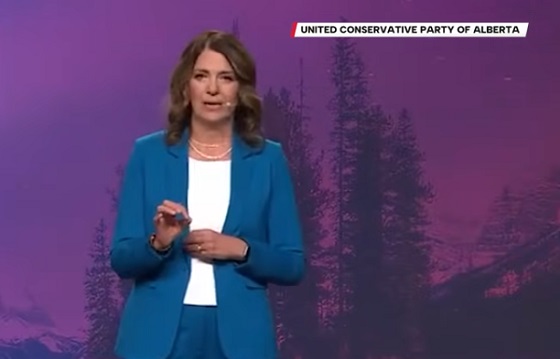
Keynote address of Premier Danielle Smith at 2025 UCP AGM

‘No Critical Thinking’: Parents Sound Alarm As Tech Begins To ‘Replace The Teacher’
-
 Business19 hours ago
Recent price declines don’t solve Toronto’s housing affordability crisis
-
 Daily Caller18 hours ago
Tech Mogul Gives $6 Billion To 25 Million Kids To Boost Trump Investment Accounts
-
 National17 hours ago
Canada Needs an Alternative to Carney’s One Man Show
-
 Alberta2 days ago
New era of police accountability
-
 National2 days ago
Media bound to pay the price for selling their freedom to (selectively) offend
-
 C2C Journal2 days ago
Learning the Truth about “Children’s Graves” and Residential Schools is More Important than Ever
-
 armed forces2 days ago
Global Military Industrial Complex Has Never Had It So Good, New Report Finds
-
 Automotive4 hours ago
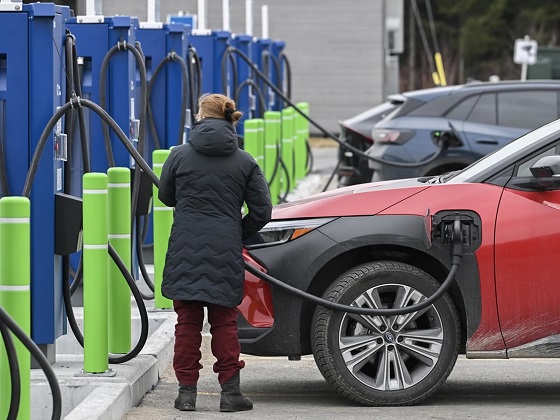
Power Struggle: Governments start quietly backing away from EV mandates