
Crime
Bukele Defends El Salvador’s Gang Reforms

From Armstrong Economics
By Martin Armstrong
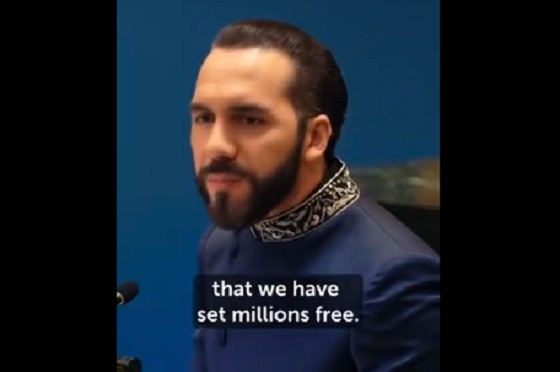
Here are 23 seconds of my speech at the UN.
23 segundos de mi discurso en la ONU. pic.twitter.com/Lh3demxfUi
— Nayib Bukele (@nayibbukele) September 24, 2024
The United Nations would like the world to adhere to its lax crime laws. Generate civil unrest to destabilize nations to create a need for order, a New World Order, that will be more powerful and effective than the government. El Salvador’s Nayib Bukele began an anti-gang crusade when he entered office. Affiliated with a gang? Straight to prison.
Now, the self-proclaimed humanitarians at the Untied Nations called Bukele’s crusade extreme and demanded that he loosen his laws. “Some say that we have imprisoned thousands, but the reality is that we have freed millions. Now it is the good guys who live free, without fear, with their freedoms and human rights fully respected,” Bukele said to the counsel.
Over 82,000 gang members were arrested. Sadly, those who were not arrested fled to open border nations like the United States where they will not be deported because they are seeking asylum for their crimes. Donald Trump accurately said that declining crime in South America directly correlated to the rising crime we see in the United States.
But, it is the duty of each leader to put his or her country first. “We made our nation that was the homicide capital of the world, the safest country in the entire Western Hemisphere . It was the greatest challenge that our nation has overcome,” he added. The governor affirmed that El Salvador used to be the “most violent country in the world without war or the country of the maras” (gangs), but this changed with his crusade.” The president proudly noted that he has returned the streets of El Salvador back to the people.
Again, El Salvador cannot prevent the exodus of criminals from its border that are surging into the United States. Bukele would have had those criminals imprisoned, but Joe Biden and Kamala Harris have openly welcomed into America. The blatant corruption has been noted by everyone.
“In El Salvador we do not imprison our opposition, we do not censor opinions, we do not confiscate property of those who think differently, we do not arrest people for their expressing ideas,” the president said as a direct criticism to the Build Back Better nations that are openly silencing and arresting any politician who dares speak out against the Great Reset and New World Order agendas.
The nations with leaders brave enough to go against the global cabal are excelling. We cannot be angered by leaders who uphold the integrity of their office and put their own people and domestic policy first and foremost.


From The Center Square
By
Rhode Island officials said the suspected gunman in the Brown University mass shooting has been found dead of an apparent self-inflicted gunshot wound, more than 50 miles away in a storage facility in southern New Hampshire.
The shooter was identified as Claudio Manuel Neves-Valente, a 48-year-old Brown student and Portuguese national. Neves-Valente was found dead with a satchel containing two firearms inside in the storage facility, authorities said.
“He took his own life tonight,” Providence police chief Oscar Perez said at a press conference, noting that local, state and federal law officials spent days poring over video evidence, license plate data and hundreds of investigative tips in pursuit of the suspect.
Perez credited cooperation between federal state and local law enforcement officials, as well as the Providence community, which he said provided the video evidence needed to help authorities crack the case.
“The community stepped up,” he said. “It was all about groundwork, public assistance, interviews with individuals, and good old fashioned policing.”
Rhode Island Attorney General Peter Neronha said the “person of interest” identified by private videos contacted authorities on Wednesday and provided information that led to his whereabouts.
“He blew the case right open, blew it open,” Neronha said. “That person led us to the car, which led us to the name, which led us to the photograph of that individual.”
“And that’s how these cases sometimes go,” he said. “You can feel like you’re not making a lot of progress. You can feel like you’re chasing leaves and they don’t work out. But the team keeps going.”
The discovery of the suspect’s body caps an intense six-day manhunt spanning several New England states, which put communities from Providence to southern New Hampshire on edge.
“We got him,” FBI special agent in charge for Boston Ted Docks said at Thursday night’s briefing. “Even though the suspect was found dead tonight our work is not done. There are many questions that need to be answered.”
He said the FBI deployed around 500 agents to assist local authorities in the investigation, in addition to offering a $50,000 reward. He says that officials are still looking into the suspect’s motive.
Two students were killed and nine others were injured in the Brown University shooting Saturday, which happened when an undetected gunman entered the Barus and Holley building on campus, where students were taking exams before the holiday break. Providence authorities briefly detained a person in the shooting earlier in the week, but then released them.
Investigators said they are also examining the possibility that the Brown case is connected to the killing of a Massachusetts Institute of Technology professor in his hometown.
An unidentified gunman shot MIT professor Nuno Loureiro multiple times inside his home in Brookline, about 50 miles north of Providence, according to authorities. He died at a local hospital on Tuesday.
Leah Foley, U.S. attorney for Massachusetts, was expected to hold a news briefing late Thursday night to discuss the connection with the MIT shooting.


From the Daily Caller News Foundation
A woman who survived the Hanukkah terrorist attack at Bondi Beach in Australia said on Monday that police officers seemed less concerned about stopping the attack than they were about keeping her from fighting back.
A father and son of Pakistani descent opened fire on a Hanukkah celebration Sunday, killing at least 15 people and wounding 40, with one being slain on the scene by police and the other wounded and taken into custody. Vanessa Miller told Erin Molan about being separated from her three-year-old daughter during Monday’s episode of the “Erin Molan Show.”
“I tried to grab one of their guns,” Miller said. “Another one grabbed me and said ‘no.’ These men, these police officers, they know who I am. I hope they are hearing this. You are weak. You could have saved so many more people’s lives. They were just standing there, listening and watching this all happen, holding me back.”
Dear Readers:
As a nonprofit, we are dependent on the generosity of our readers.
Please consider making a small donation of any amount here.
Thank you!
WATCH:
“Two police officers,” Miller continued. “Where were the others? Not there. Nobody was there.”
New South Wales Minister of Police Yasmin Catley did not immediately respond to a request for comment from the Daily Caller News Foundation about Miller’s comments.
Australian Prime Minister Anthony Albanese vowed to enact further restrictions on guns in response to the attack at Bondi Beach, according to the Associated Press. The new restrictions would include a limit on how many firearms a person could own, more review of gun licenses, limiting the licenses to Australian citizens and “additional use of criminal intelligence” to determine if a license to own a firearm should be granted.
Sajid Akram, 50, and Naveed Akram, 24, reportedly went to the Philippines, where they received training prior to carrying out the Sunday attack, according to the Australian Broadcasting Corporation. Naveed Akram’s vehicle reportedly had homemade ISIS flags inside it.
Australia passed legislation that required owners of semi-automatic firearms and certain pump-action firearms to surrender them in a mandatory “buyback” following a 1996 mass shooting in Port Arthur, Tasmania, that killed 35 people and wounded 23 others. Despite the legislation, one of the gunmen who carried out the attack appeared to use a pump-action shotgun with an extended magazine.


Largest fraud in US history? Independent Journalist visits numerous daycare centres with no children, revealing massive scam
Why Japan wants Western Canadian LNG

“Magnitude cannot be overstated”: Minnesota aid scam may reach $9 billion

Be Careful What You Wish For In 2026: Mark Carney With A Majority
-
 International2 days ago
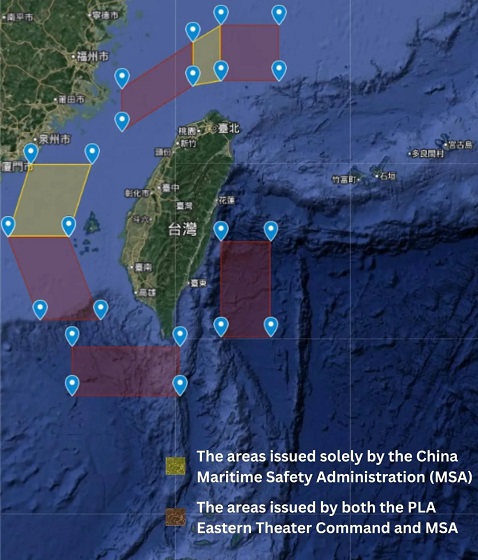
China Stages Massive Live-Fire Encirclement Drill Around Taiwan as Washington and Japan Fortify
-
 Energy2 days ago
Rulings could affect energy prices everywhere: Climate activists v. the energy industry in 2026
-
 Business13 hours ago
Disclosures reveal Minnesota politician’s husband’s companies surged thousands-fold amid Somali fraud crisis
-
 Digital ID2 days ago
The Global Push for Government Mandated Digital IDs And Why You Should Worry
-
 Alberta14 hours ago
The Canadian Energy Centre’s biggest stories of 2025
-
 Business1 day ago
Canada needs serious tax cuts in 2026
-
 Business1 day ago
DOOR TO DOOR: Feds descend on Minneapolis day cares tied to massive fraud
-
 Business13 hours ago
Resurfaced Video Shows How Somali Scammers Used Day Care Centers To Scam State