
Daily Caller
BP Dumping Key Green Energy Business

 From the Daily Caller News Foundation
By Owen Klinsky
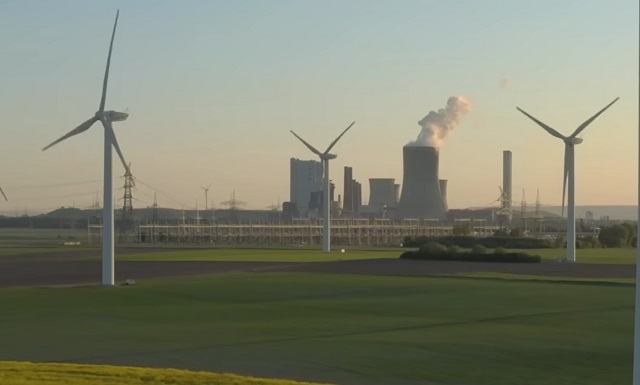
European energy company BP has announced plans to sell its U.S. onshore wind business as it aims to concentrate on its core oil and gas business and improve investor sentiment, according to the Financial Times.
BP, along with its rival Shell, has looked to scale back on green initiatives over the past few years, rejecting further cuts to oil production in June 2023. Now, the company is looking to sell its roughly $2 billion U.S. onshore wind portfolio, which consists of stakes in ten operating wind farms and has a total net generating capacity of 1.3 gigawatts, the FT reported.
“We believe the business is likely to be of greater value for another owner,” William Lin, BP’s executive vice president for gas & low carbon energy, told Bloomberg. “This planned divestment is part of our strategy of continuing to simplify our portfolio and focus on value.”
The move comes as BP’s share price sits near a two-year low, and as the company is in the process of “shifting capital away from transition themes and back to the core business,” Biraj Borkhataria, head of European energy research at RBC Europe Ltd XYZ, told Bloomberg. It also comes as the U.S. onshore wind industry has struggled more broadly as installations have slowed due to elevated interest rates and permitting challenges, with BloombergNEF lowering its projections for new onshore wind by 22% through 2030.
BP’s offshore wind (OSW) efforts have also run into challenges, with the company writing down the value of its OSW portfolio by $1.1 billion last year, and the company’s former renewables chief, Anja-Isabel Dotzenrath, telling the FT, “offshore wind in the US is fundamentally broken.”
BP’s competitor Shell has also pivoted away from a renewables transition in recent years, with its CEO Wael Sawan describing cutting oil production as “dangerous and irresponsible.”
“I disagree with him, respectfully,” Sawan said in July 2023 in reference to UN Secretary General Antonio Guterrdaes’ comment that new oil and gas investments are “economic and moral madness.” “What would be dangerous and irresponsible is actually cutting out oil and gas production so that the cost of living, as we saw last year, starts to shoot up again.”
The onset of the Russia-Ukraine war in Feb. 2022 drove energy prices skywards, with gas surpassing $5 a gallon in June 2022, up from roughly $1.80 in April 2020, according to the Federal Reserve Bank of St. Louis.
BP did not immediately respond to a request for comment.

Daily Caller
Scathing Indictment Claims Nicolás Maduro Orchestrated Drug-Fueled ‘Culture Of Corruption’ Which Plagued Entire Region
From the Daily Caller News Foundation
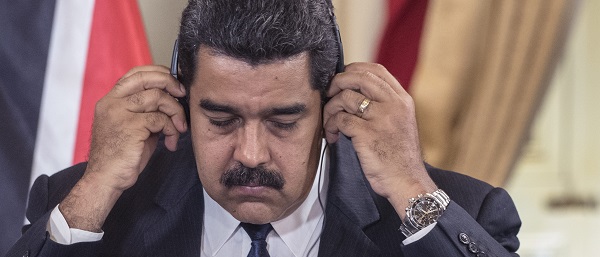
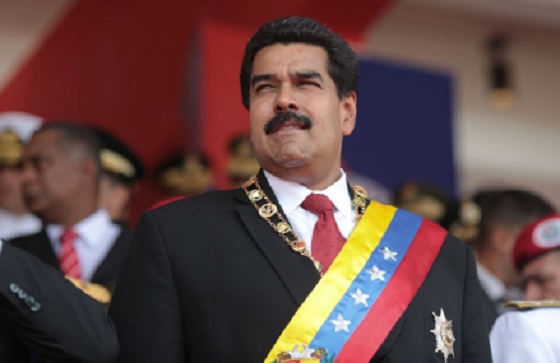
Ousted socialist Venezuelan dictator Nicolás Maduro was the mastermind of a pervasive drug-fueled “culture of corruption” which extended all the way to the U.S.’s backyard, according to the scathing indictment against him, his wife, his son, and others, released Saturday.
Hours after President Donald Trump announced Maduro’s capture and removal from power, Attorney General Pam Bondi confirmed the deposed despot and his wife, Cilia Flores, were indicted in the Southern District of New York on four charges, including narco-terrorism conspiracy, and “will soon face the full wrath of American justice” on U.S. soil. A grand jury found Maduro “and corrupt members of his regime enabled corruption fueled by drug trafficking throughout” the Latin American region, including in Mexico and Central America, and empowered notorious crime syndicates such as Tren de Aragua (TdA), according to the unsealed indictment.
Signed by Trump-appointed U.S. Attorney Jay Clayton, the 25-page indictment names six defendants, including the deposed Maduro, Flores, and Maduro’s 35-year-old son from his first marriage, Nicolás “Nicolasito” Maduro Guerra. It also names as defendants TdA leader Niño Guerrero and two high-profile members of Maduro’s United Socialist Party, Diosdado Cabello Rondón and Ramón Rodríguez Chacín.
Dear Readers:
As a nonprofit, we are dependent on the generosity of our readers.
Please consider making a small donation of any amount here.
Thank you!
Maduro, “like former President [Hugo] Chávez before him[,] participates in, perpetuates, and protects a culture of corruption in which powerful Venezuelan elites enrich themselves through drug trafficking and the protection of their partner drug traffickers,” the indictment alleges. “The profits of that illegal activity flow to corrupt rank-and-file civilian, military, and intelligence officials, who operate in a patronage system run by those at the top-referred to as the Cartel de Los Soles or Cartel of the Suns, a reference to the sun insignia affixed to the uniforms of high-ranking Venezuelan military officials.”
The Trump administration’s State Department announced it was designating the Cartel de Los Soles as a Foreign Terrorist Organization (FTO) in November 2025. Secretary of State Marco Rubio wrote in a statement at the time the cartel “is headed by Nicolás Maduro and other high-ranking individuals of the illegitimate Maduro regime who have corrupted Venezuela’s military, intelligence, legislature, and judiciary.”
The indictment also notes the South American nation “sits in a geographically valuable location for drug traffickers” and that, around the time Chávez came to power in 1999, “Venezuela became a safe haven” for them.
“In that environment, cocaine trafficking flourished,” the indictment continues, citing State Department estimates from arund 2020, with between 200 and 250 tons of the drug being trafficked through the country each year.
The charging document goes on to allege Maduro, his wife, son, and political allies had “partnered with narcotics traffickers and narco-terrorist groups, who dispatched processed cocaine from Venezuela to the United States via transshipment points in the Caribbean and Central America, such as Honduras, Guatemala, and Mexico.”
“Through this drug trafficking, [Maduro] and corrupt members of his regime enabled corruption fueled by drug trafficking throughout the region,” the indictment continues. “The transshipment points in Honduras, Guatemala, and Mexico similarly relied on a culture of corruption, in which cocaine traffickers operating in those countries paid a portion of their own profits to politicians who protected and aided them. In turn, these politicians used the cocaine-fueled payments to maintain and augment their political power.”
Maduro and his regime also “facilitated the empowerment and growth of violent narco-terrorist groups fueling their organizations with cocaine profits,” according to the indictment.
The charging document notably identifies organizations which collaborated with the Maduro regime: Colombian communist militant groups Revolutionary Armed Forces of Colombia (FARC) and National Liberation Army (ELN); Mexican syndicates the Sinaloa Cartel and Los Zetas; and Guerrero’s TdA.
The indictment also alleges Maduro Guerra, the captured dictator’s son, personally “worked to ship hundreds of kilograms of cocaine from Venezuela to Miami, Florida” around the year 2017. Maduro Guerra is a member of his father’s political party and served as a Deputy to the Venezuelan National Assembly since 2021.
“During this time, MADURO GUERRA spoke with his drug trafficking partners about, among other things, shipping low-quality cocaine to New York because it could not be sold in Miami, arranging a 500-kilogram shipment of cocaine to be unloaded from a cargo container near Miami, and using scrap metal containers to smuggle cocaine into the ports of New York,” the document reads.

From the Daily Caller News Foundation
President Donald Trump said during a Saturday press conference that the United States would “run” Venezuela until a “judicious” transition could take place in the country.
Trump announced in a Saturday morning post to Truth Social that U.S. military forces carried out a law enforcement operation capturing Venezuelan President Nicolás Maduro and his wife in Caracas early Saturday morning. During his press conference later that day, Trump said that the United States would also seek to repair the infrastructure of Venezuela’s oil industry.
“We are going to run the country until such time as we can do a safe, proper and judicious transition. So, we don’t want to be involved with having somebody else get in and we have the same situation that we had for the last long period of years,” Trump said. “So, we are going to run the country until such time as we can do a safe, proper and judicious transition, and it has to be judicious because that’s what we’re all about.”
“We want peace, liberty and justice for the great people of Venezuela and that includes many from Venezuela that are now living in the United States and want to go back to their country. It’s their homeland,” Trump continued.
Many Congressional Democrats accused Trump of illegally engaging in a “regime change” operation. Trump said that Venezuela could be “making money” once its infrastructure was repaired.
“We’re there now, but we’re going to stay until such time as the proper transition can take place,” Trump said during the press conference. “We’re going to run it essentially until such time as a proper transition can take place.”
“As everyone knows the oil business in Venezuela has been a bust, a total bust for a long period of time. They were pumping almost nothing by comparison to what they could have been pumping and what could have taken place,” Trump continued. “We’re going to have our very large United States oil companies, the biggest anywhere in the world, go in, spend billions of dollars, fix the badly broken infrastructure, the oil infrastructure, and start making money for the country.”

Trump confirms first American land strike against Venezuelan narco networks

The U.S. Just Removed a Dictator and Canada is Collateral Damage
Trump Says U.S. Strike Captured Nicolás Maduro and Wife Cilia Flores; Bondi Says Couple Possessed Machine Guns
Maduro says he’s “ready” to talk
-
Energy1 day ago
The U.S. Just Removed a Dictator and Canada is Collateral Damage
-
International2 days ago
Trump Says U.S. Strike Captured Nicolás Maduro and Wife Cilia Flores; Bondi Says Couple Possessed Machine Guns
-
 International1 day ago
US Justice Department Accusing Maduro’s Inner Circle of a Narco-State Conspiracy
-
Daily Caller22 hours ago
Scathing Indictment Claims Nicolás Maduro Orchestrated Drug-Fueled ‘Culture Of Corruption’ Which Plagued Entire Region
-
 Business2 days ago
Vacant Somali Daycares In Viral Videos Are Also Linked To $300 Million ‘Feeding Our Future’ Fraud
-
International2 days ago
“Captured and flown out”: Trump announces dramatic capture of Maduro
-
 Haultain Research1 day ago
Trying to Defend Maduro’s Legitimacy
-
 Opinion16 hours ago
Hell freezes over, CTV’s fabrication of fake news and our 2026 forecast is still searching for sunshine