
DEI
Biden FBI shut down diversity office before Trump administration could review it


From LifeSiteNews
The Federal Bureau of Investigation (FBI) has shuttered its Office of Diversity & Inclusion (ODI) ahead of the executive branch’s handover from Joe Biden to Donald Trump, in what critics suspect was a move to destroy records before they could be reviewed by the former agency heads’ political opponents.
“We believe that differences in thought and belief, in race and religion, in orientation, and in ability contribute to more effective decision making, drive innovation, and enhance the employee experience,” the FBI declares, as reported by Fox News. “We know that a more diverse workforce allows us to connect with and maintain the trust of the American people. We also understand we have work to do. We stand committed, as today’s FBI, to fostering a culture of inclusivity and diversity.”
The bureau confirmed to Fox this week that it actually closed the office in December, without elaborating why. But while the elimination of the office is welcome news to conservatives, questions remain.
“We demand that the FBI preserve and retain all records, documents, and information on the now closing DEI Office—Never should have been opened and, if it was, should have closed long ago,” Trump said on Truth Social. “Why is it that they’re closing one day before the Inauguration of a new Administration? The reason is, CORRUPTION!”
The infusion of left-wing “diversity” priorities into every facet of government has been one of the most controversial aspects of the outgoing administration, as has the politicization of law enforcement agencies such as the FBI, from targeting peaceful pro-life activists for federal prosecution, to meeting with social media companies to collude on what speech the government wants censored, to branding “radical-traditionalist” Catholics as an alleged potential threat.
Fox notes that the FBI still has numerous identity-based entities, such as the American Indian and Alaska Native Advisory Committee, Asian Pacific American Advisory Committee, Black Affairs Diversity Committee, Bureau Equality, Hispanic Advisory Board, Near and Middle East Advisory Committee, Persons with Disabilities Advisory Committee, Veterans Affairs Advisory Committee, Women’s Advisory Committee, Blacks in Government, FBI African American Millennials, FBI Family, FBI Jewish Americans, FBI Latinos for Empowerment Advancement and Development, “FBI Pride,” Federal Asian Pacific American Council, and Federally Employed Women.

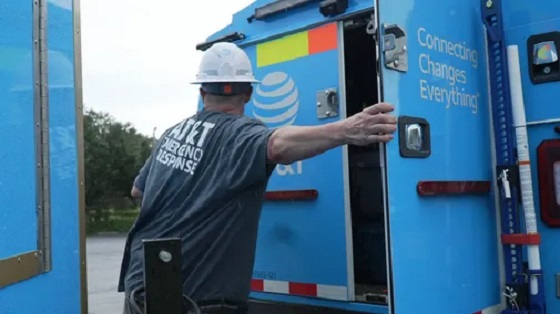

AT&T’s retreat from the diversity, equity, and inclusion playbook marks one of the most significant corporate course corrections of the year — and it didn’t happen by accident. After months of pressure from FCC Chairman Brendan Carr, the telecom giant has confirmed it will unwind its DEI programs top to bottom, ending everything from race-based training modules to staff positions dedicated to enforcing ideological compliance.
The move follows years of controversy, much of it fueled by revelations that AT&T’s internal training materials pushed the notion that racism was a “uniquely white trait” and urged white employees to accept blame as part of a broader critical-race-theory framework. Those claims first surfaced in 2021 through documents obtained by researcher Christopher Rufo, who reported that the company’s curriculum told white staffers they “are the problem.” The backlash never fully subsided — and with Carr signaling that companies seeking key FCC licenses would need to demonstrate they are not running discriminatory programs, the pressure point became impossible for AT&T to ignore.
In a letter sent Monday to Carr, AT&T Senior Executive Vice President and General Counsel David McAtee said the company has overhauled its employment and business practices “to ensure compliance with all applicable laws,” emphasizing that the changes would be substantive, not cosmetic. According to AT&T, that means no hiring quotas, no supplier-contract quotas, no race-based training, and no positions devoted to policing identity-based metrics. DEI courses have been stripped from employee requirements, and the company says it will not resurrect them.
AT&T’s announcement mirrors what has become a growing trend in the corporate world as the regulatory environment shifts. In May, Verizon made a similar pledge, informing the FCC that it, too, would dissolve its DEI department and reassign staff to conventional HR roles. Carr praised that decision at the time as “a good step forward for equal opportunity, nondiscrimination, and the public interest.”
The broader message coming out of Washington is unmistakable: the days of federally regulated industries running ideological experiments under the guise of “equity” are coming to an end. Companies that want federal approval for major licenses are being told to stick to the law, treat employees equally, and drop programs that sort workers by skin color or political theory. AT&T is the latest to fall in line — and almost certainly not the last.
Agriculture
Federal cabinet calls for Canadian bank used primarily by white farmers to be more diverse

From LifeSiteNews
A finance department review suggested women, youth, Indigenous, LGBTQ, Black and racialized entrepreneurs are underserved by Farm Credit Canada.
The Cabinet of Prime Minister Mark Carney said in a note that a Canadian Crown bank mostly used by farmers is too “white” and not diverse enough in its lending to “traditionally underrepresented groups” such as LGBT minorities.
Farm Credit Canada Regina, in Saskatchewan, is used by thousands of farmers, yet federal cabinet overseers claim its loan portfolio needs greater diversity.
The finance department note, which aims to make amendments to the Farm Credit Canada Act, claims that agriculture is “predominantly older white men.”
Proposed changes to the Act mean the government will mandate “regular legislative reviews to ensure alignment with the needs of the agriculture and agri-food sector.”
“Farm operators are predominantly older white men and farm families tend to have higher average incomes compared to all Canadians,” the note reads.
“Traditionally underrepresented groups such as women, youth, Indigenous, LGBTQ, and Black and racialized entrepreneurs may particularly benefit from regular legislative reviews to better enable Farm Credit Canada to align its activities with their specific needs.”
The text includes no legal amendment, and the finance department did not say why it was brought forward or who asked for the changes.
Canadian census data shows that there are only 590,710 farmers and their families, a number that keeps going down. The average farmer is a 55-year-old male and predominantly Christian, either Catholic or from the United Church.
Data shows that 6.9 percent of farmers are immigrants, with about 3.7 percent being “from racialized groups.”
National census data from 2021 indicates that about four percent of Canadians say they are LGBT; however, those who are farmers is not stated.
Historically, most farmers in Canada are multi-generational descendants of Christian/Catholic Europeans who came to Canada in the mid to late 1800s, mainly from the United Kingdom, Ireland, Ukraine, Russia, Italy, Poland, the Netherlands, Germany, and France.


Trump Deals Biden’s EV Dreams A Death Blow

Canadian bishops condemn Liberal ‘hate speech’ proposal that could criminalize quoting Scripture

While Trump has southern border secure, hundreds of thousands of illegal immigrants still flooding in from Canada

Pharma Bombshell: President Trump Orders Complete Childhood Vaccine Schedule Review
-
 National17 hours ago
Liberal bill “targets Christians” by removing religious exemption in hate-speech law
-
 Business2 days ago
The EU Insists Its X Fine Isn’t About Censorship. Here’s Why It Is.
-
 Business1 day ago
Canada invests $34 million in Chinese drones now considered to be ‘high security risks’
-
 Bruce Dowbiggin2 days ago
Wayne Gretzky’s Terrible, Awful Week.. And Soccer/ Football.
-
 Business14 hours ago
Looks like the Liberals don’t support their own Pipeline MOU
-
 Health2 days ago
CDC Vaccine Panel Votes to End Universal Hep B Vaccine for Newborns
-
 Economy1 day ago
Affordable housing out of reach everywhere in Canada
-
 Business1 day ago
The Climate-Risk Industrial Complex and the Manufactured Insurance Crisis