Fraser Institute
B.C. Indigenous land claims decision leaves British Columbians in limbo


From the Fraser Institute
The Cowichan, who are based mainly on Vancouver Island, claimed they had a village on an island that is now part of Richmond that they used seasonally. They had to prove with evidence that they were fearsome enough that other groups—like the Musqueam and Tsawwassen, who incidentally were both part of the opposition to the Cowichan claim—would have been scared and thus reluctant to use the claimed area when the Cowichan were away.
The recent decision of the British Columbia Supreme Court in Cowichan Tribes v Canada (Attorney General) (cited as 2025 BCSC 1490) granting a declaration of Aboriginal title over city-owned land in Richmond and fishing rights in the Fraser River has already drawn attention and concern.
This is because the judgment’s reasoning on Aboriginal title has potentially widespread implications for private property in B.C., and perhaps elsewhere. At the same time, the judgment is also totally inaccessible for most readers. At a monster length of more than 3,700 paragraphs, it does not yield legal guidance easily.
The judgment comes after a trial that started in 2019, with more than 500 trial days. The judgment lists out more than 80 lawyers involved so far. It was the longest trial in Canadian history, and the case will probably ultimately reach the Supreme Court of Canada—perhaps with a decision by the end of the decade.
Estimating the likely costs based on the length of proceedings, and normal legal fees, I will not be surprised if overall legal costs in the Cowichan Tribes case approach or even exceed $100 million by the time all is said and done.
What does $100 million of such spending get you these days? A few things.
First, and explaining significant parts of the expense, it got a lot of detailed evidence from documents, from experts, from Aboriginal oral history, and other forms that the trial judge, Madam Justice Young, considered against the established Aboriginal title test. In other words, the trial allowed a multitude of sources, many new, for the trial judge to try to apply the existing rules on Aboriginal title.
That test looks for whether a claimant group has proven “sufficient” and “exclusive” occupation of land as of just prior to the date of assertion of European/Canadian sovereignty—in this part of B.C., that date is 1846. The Cowichan, who are based mainly on Vancouver Island, claimed they had a village on an island that is now part of Richmond that they used seasonally. They had to prove with evidence that they were fearsome enough that other groups—like the Musqueam and Tsawwassen, who incidentally were both part of the opposition to the Cowichan claim—would have been scared and thus reluctant to use the claimed area when the Cowichan were away. Sorting through these facts and other elements pertinent to the Aboriginal title test took massive amounts of evidence and time.
Second, the spending includes consideration of various defences that parties to the case mounted. The federal lawyers, the provincial lawyers, and City of Richmond lawyers all made different arguments. Both the federal and provincial lawyers were restricted in what they could argue, based on a combination of their own policies and on the judge’s rejection of some of their arguments as inconsistent with other legal acts, such as B.C.’s recognition of title in the Haida Agreement. This is an important recognition of how the trial judge’s decision was influenced by discretionary provincial policy in the province, namely its recognition of the Haida Nation’s title on their claimed land.
The City of Richmond was less restricted in its defence but critically failed with portions of its defence that might apply to private landowners. For example, the lands the City of Richmond owned were determined to not have been acquired “for value,” which means that the City didn’t buy them. The failure of meeting this test means the City of Richmond was not afforded the significant protection in property law that many private landowners would receive (under a technical category of “bona fide purchasers for value”).
Third, the spending gets you a decision that included some unclear paragraphs that say there will be interesting questions to be faced down the road, including what happens when there’s an Aboriginal title claim directly over privately owned land. Some text from the decision in the case suggest Aboriginal title might take priority over any other property interest, but private landowners will have a future chance to invoke defences such as the “bona fide purchaser for value” concept. Despite the fact the Cowichan avoided these issues for now by not asking for a declaration concerning any private land, those cases are coming. The broader trajectory is precisely towards that clash, and there are active cases of that type elsewhere, including over major private landholdings throughout New Brunswick.
There’s not any definitive legal clarity from the judgment on this crucial point of how Aboriginal title and private property interact. For $100 million, the trial delivered lingering uncertainty and heightened risks on the legal status of property, which influences the economy and residents across the province, not just those directly involved in the case.
This issue has been key in motivating a provincial government appeal, which is unlikely to take less than a year to resolve and could take two or even three years, and even then it’s likely to move on to the Supreme Court of Canada. Until then, British Columbians, including Indigenous Peoples, will continue to face heightened uncertainty and the economic costs it imposes.

Dwight Newman
Professor of Law, University of Saskatchewan

From the Fraser Institute
By Gary Mauser
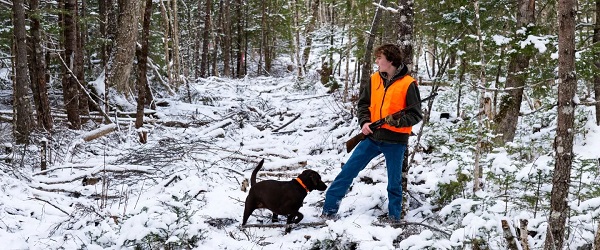
The government told Cape Bretoners they had two weeks to surrender their firearms to qualify for reimbursement or “buyback.” The pilot project netted a grand total of 22 firearms.
Five years after then-prime minister Justin Trudeau banned more than 100,000 types of so-called “assault-style firearms,” the federal government recently made the first attempt to force Canadians to surrender these firearms.
It didn’t go well.
The police chief in Cape Breton, Nova Scotia, volunteered to run a pilot “buyback” project, which began last month. The government told Cape Bretoners they had two weeks to surrender their firearms to qualify for reimbursement or “buyback.” The pilot project netted a grand total of 22 firearms.
This failure should surprise no one. Back in 2018, a survey of “stakeholders” warned the government that firearms owners wouldn’t support such a gun ban. According to Prime Minister Carney’s own Privy Council Office the “program faces a risk of non-compliance.” And federal Public Safety Minister Gary Anandasangaree was recently recorded admitting that the “buyback” is a partisan maneuver, and if it were up to him, he’d scrap it. What’s surprising is Ottawa’s persistence, particularly given the change in the government and the opportunity to discard ineffective policies.
So what’s really going on here?
One thing is for certain—this program is not, and never has been, about public safety. According to a report from the federal Department of Justice, almost all guns used in crimes in Canada, including in big cities such as Toronto, are possessed illegally by criminals, with many smuggled in from the United States. And according to Ontario’s solicitor general, more than 90 per cent of guns used in crimes in the province are illegally imported from the U.S. Obviously, the “buyback” program will have no effect on these guns possessed illegally by criminals.
Moreover, Canadian firearms owners are exceptionally law-abiding and less likely to commit murder than other Canadians. That also should not be surprising. To own a firearm in Canada, you must obtain a Possession and Acquisition Licence (PAL) from the RCMP after initial vetting and daily monitoring for possible criminal activity. Between 2000 and 2020, an average of 12 PAL-holders per year were accused of homicide, out of approximately two million PAL-holders. During that same 10-year period, the PAL-holder firearms homicide rate was 0.63 (per 100,000 PAL-holders) compared to 0.72 (per 100,000 adult Canadians)—that’s 14 per cent higher than the rate for PAL-holders.
In other words, neither the so-called “assault-style firearms” nor their owners pose a threat to the public.
And the government’s own actions belie its claims. If these firearms are such a threat to Canadians, why slow-roll the “buyback” program? If inaction increased the likelihood of criminality by law-abiding firearms owners, why wait five years before launching a pilot program in a small community such as Cape Breton? And why continue to extend the amnesty period for another year, which the government did last month at the same time its pilot project netted a mere 22 firearms?
To ask those questions is to answer them.
Another question—how much will the “buyback” program cost taxpayers?
The government continues to block any attempt to disclose the full financial costs (although the Canadian Taxpayers Federation has launched a lawsuit to try to force the government to honour its Access to Information Act request). But back in 2020 the Trudeau government said it would cost $200 million to compensate firearms owners (although the Parliamentary Budget Officer said compensation costs could reach $756 million). By 2024, the program had spent $67.2 million—remember, that’s before it collected a single gun. The government recently said the program’s administrative costs (safe storage, destruction of hundreds of thousands of firearms, etc.) would reach an estimated $1.8 billion. And according to Carney’s first budget released in November, his government will spend $364 million on the program this fiscal year—at a time of massive federal deficits and debt.
This is reminiscent of the Chretien government’s gun registry fiasco, which wound up costing more than $2 billion even after then-justice minister Allan Rock promised the registry program would “almost break even” after an $85 million initial cost. The Harper government finally scrapped the registry in 2012.
As the Carney government clings to the policies of its predecessor, Canadians should understand the true nature of Ottawa’s gun “buyback” program and its costs.

Gary Mauser
Professor Emeritus, Simon Fraser University
From the Fraser Institute
By Jake Fuss and Austin Thompson
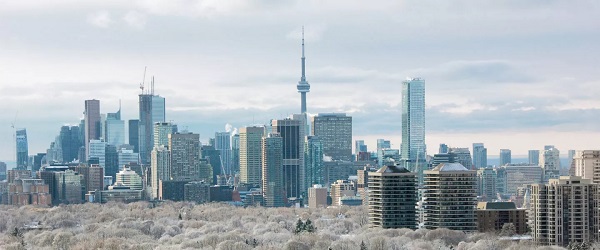
House prices in Toronto are declining. But the city’s affordability crisis is far from over—and government policies will likely make it worse.
While most Torontonians know there’s a crisis, the numbers make it clear. According to our new study, in 2023 (the latest year of available data), a family earning the city’s median after-tax income ($60,510) had to save $216,240 (the equivalent of 42.9 months of its after-tax income) for a 20 per cent downpayment on a typical home of any type (single-detached, semi-detached, condominium). But even if that family could somehow clear this monumental hurdle, it then had to dedicate 110.2 per cent of its after-tax income for monthly mortgage payments ($5,557)—a financial impossibility, unless the family can share housing costs (e.g. live-in tenants) or rely on financial support from elsewhere.
At this point, some long-time Toronto residents might recall their own difficult home purchase and think, “Hasn’t it always been this bad?” But just a decade ago, the hurdles weren’t nearly as high.
For example, in 2014 in Toronto, a 20 per cent downpayment cost 26.4 months of median after-tax family income—not 42.9 months. And the monthly mortgage payment on a typical home purchase required 56.0 per cent of median after-tax family income—not 110.2 per cent. So yes, typical homes have been broadly unaffordable for median-income-earning Toronto families for years, but it’s way worse now.
For Torontonians priced out of homeownership, renting has not offered much relief. In 2023, Toronto had the least affordable rents in Canada. The monthly cost of the median rental unit was $1,750, equal to 34.7 per cent of the median after-tax family income. That’s up from $1,110 (or 27.7 per cent of after-tax income) in 2014.
Fast-forward to today, and Torontonians should view reports of “crashing” home prices in the proper context. Typical home prices peaked at $1.27 million in the first quarter of 2022. By the second quarter of 2025, they had fallen to $1.00 million. That’s a marked decline, but prices remain well above pre-pandemic levels and far beyond the reach of most typical families.
And while the fall in house prices hasn’t been enough to restore affordability, it has caused a steep contraction in homebuilding as builders take a more cautious approach to development at a time when the city still needs more new homes to improve affordability.
This unhealthy dynamic, where price declines weigh heavily on housing construction, is made worse by government policy. Despite hundreds of millions of taxpayer dollars spent on housing initiatives by the federal government, the Ford government and Toronto City Hall, key provincial and municipal policies continue to impose needless costs and restrictions on new housing.
For example, Toronto homebuilders must endure costly wait times of more than two years for municipal approvals—more than three times longer than in Vancouver and seven times longer than in Edmonton. New high-rise developments in Toronto face municipal charges of $134,900 per unit compared to $38,100 in Ottawa and $6,900 in Edmonton. Meanwhile, the Ford government has backed away from several critical recommendations from its own Housing Task Force, which would make it easier to build more and denser housing, such as allowing fourplexes provincewide without special approval.
Of course, federal immigration policy, particularly over the last five years, has increased demand for new homes in Toronto and across the country. But even so, if not for lengthy approval processes, sky-high fees and restrictive land-use policies, many more new homes would be built in Toronto today despite declining prices. Homes only get built when buyers can cover the cost of construction plus a reasonable return on investment for developers. But when governments drive up costs, increase uncertainty and claim a significant share of the final sale price through fees and charges, projects that might otherwise proceed can become financially unviable. The result is less new housing, fewer options for buyers and a slower path to improved affordability.
To help improve housing affordability, Toronto needs a steady flow of new homebuilding. Torontonians should demand faster approvals, lower fees and more sensible rules on what types of homes can be built.

Jake Fuss
Director, Fiscal Studies, Fraser Institute

Austin Thompson
Senior Policy Analyst, Fraser Institute


From Underdog to Top Broodmare
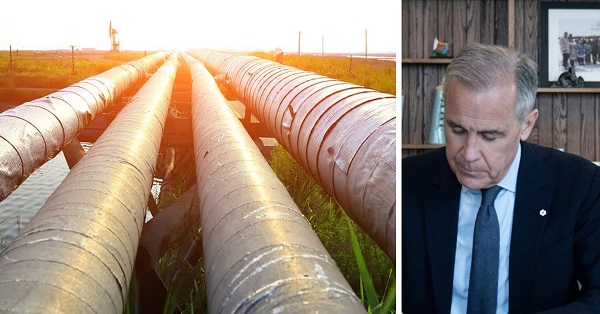
Will the New West Coast Pipeline MoU Lead to Results? Almost Certainly Not According to AI

Poilievre says West Coast Pipeline MOU is no guarantee
Carney forces Alberta to pay a steep price for the West Coast Pipeline MOU
-
 Energy1 day ago
Canadians will soon be versed in massive West Coast LPG mega-project
-
 Alberta2 days ago
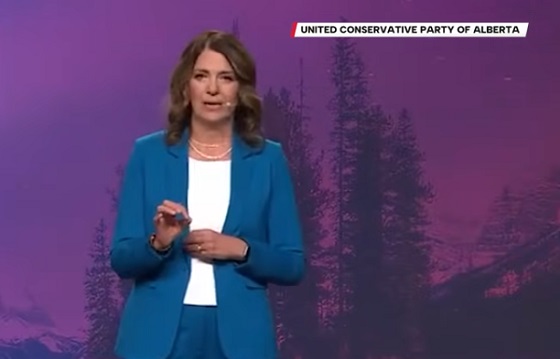
Keynote address of Premier Danielle Smith at 2025 UCP AGM
-
 Daily Caller1 day ago
Tom Homan Predicts Deportation Of Most Third World Migrants Over Risks From Screening Docs
-
 C2C Journal23 hours ago
Learning the Truth about “Children’s Graves” and Residential Schools is More Important than Ever
-
 COVID-192 days ago
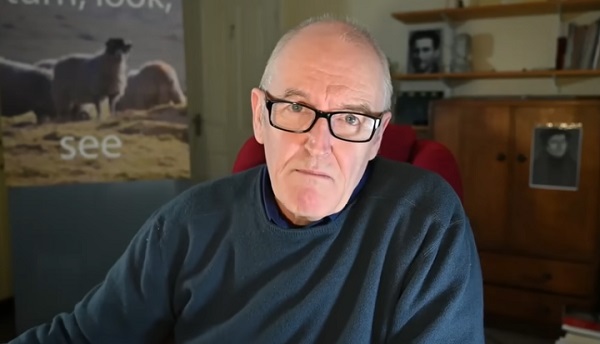
The dangers of mRNA vaccines explained by Dr. John Campbell
-
 National1 day ago
Media bound to pay the price for selling their freedom to (selectively) offend
-
 Alberta23 hours ago
New era of police accountability
-
 Artificial Intelligence1 day ago
‘Trouble in Toyland’ report sounds alarm on AI toys