
COVID-19
Australian Senate launches landmark excess death inquiry following COVID shot rollout

From LifeSiteNews
By David James
The Australian Senate has initiated an inquiry into the surge of excess deaths since the 2021 COVID vaccination program, marking the first formal parliamentary examination of this issue worldwide.
The Australian Senate has begun an inquiry into excess deaths since the mass vaccination program of 2021 in an effort to isolate the causes of what is described as the worst level of excess mortality since World War II. It is being touted as the first instance in the world of a Parliament formally examining the issue.
The successful motion, brought by United Australia Party (UAP) Senator Ralph Babet, was his fifth attempt to launch a parliamentary inquiry in two years. Previously, the left-wing Labor government and the Greens had blocked the motion, without explaining why. The Senate’s Community Affairs References Committee is now required to investigate the factors contributing to the abnormally high mortality. The report is expected by the end of August.
It will be a difficult task, and the likelihood that there will be any admissions of wrongdoing by government bureaucrats and politicians is vanishingly small, even if the findings compellingly point to the vaccination program as the reason behind the excess deaths.
A range of excuses and misdirection will be used to confound the picture. The most obvious is the point that correlation does not prove causation. It will likely be argued that just because the excess deaths happened at about the same time as the mass inoculations it does not necessarily mean there is a causal connection. This is true, but it only means that the evidence is circumstantial, which is valid and can be conclusive, especially when there is no obvious alternative explanation and similar surges in deaths have been observed in most countries that were heavily vaccinated.
READ: US gov’t scientists received $710 million from Big Pharma during COVID, watchdog finds
There are likely to be arguments about the precision of the data and the establishment of an appropriate base line. There is little doubt about the overall trend. The Australian Actuaries Institute sounded the alarm in early 2023. But a favoured tactic of bureaucrats is to argue over fine detail in order to distract from the big picture.
There will thus need to be work to get precise data, if that is possible. For example, according to Babet on March 26 this year, the Therapeutic Goods Administration’s (TGA) provisional mortality figures “confirm that to November 2023 there were 15,114, or 10 percent, more deaths than the baseline average.”
Different figures are in an article in globalresearch.ca (referencing figures from Mortality Watch). The excess death figures were below 4 percent in 2021, just under 14 percent in 2022, and just over 7 percent in 2023.
The Australian Bureau of Statistics (ABS) has different figures again: -3.1 percent in 2020 (when politicians were saying a deadly pandemic was ravaging the country), 1.4 percent in 2021, 10.9 percent in 2022, and 9.1 percent in 2023. These inconsistencies will have to be resolved.
Ed Dowd, author of Cause Unknown: The Epidemic of Sudden Deaths in 2021 & 2022, observes that Australian data has several limitations, one of which is that it “does not allow us to observe the excess mortality in younger age groups with sufficient detail.” His figures, which are broken down by age, show that the excess deaths were worst for most ages in 2022 and then declined in 2023. The exception was the 75-84 age bracket, where excess deaths rose in 2023.
Another likely tactic is that it will be argued that the problem is “multi-factorial”: that the deaths were caused by many things. This will have some truth to it – the lockdowns probably led to increased suicide rates, for example – and it is likely that it will be used to confuse the picture. But it will not explain the size of the excess mortality, which is the equivalent of what happens in a war. To explain that a novel reason is required, not causes of death that have existed for a long time.
READ: UK study of children shows heart inflammation develops after COVID vaccination, not infection
The aggregate mortality statistics are not the only relevant data; there are other pieces of evidence that can help fill in the picture. One is that the excess deaths, which have occurred in all age groups, do not seem to have been the result of COVID itself. According to the ABS in 2022, when the excess deaths were at their peak, the median (average) age of death for COVID-19 was 86, significantly higher than average life expectancy in Australia. That suggests relatively few working age and younger people died from the disease. So, what killed them?
Another pointer is a report that there have been 20 percent more sudden cardiac arrests in Victoria than five years ago – and more than 95 percent of the patients are dying. “Of the 7,830 people whose hearts stopped beating due to this condition in 2022/23, just 388 survived, the latest Ambulance Victoria figures reveal,” reports the Herald Sun. The ABC, the national broadcaster, reported that many of the heart attack victims are young, but did not investigate any further.
The state government’s response has been to buy more defibrillators. There has been no mention of the vaccines as a possible cause despite accumulating evidence that the heart conditions myocarditis and pericarditis are the most commonly reported adverse events associated with the vaccines.
Especially telling has been the TGA’s response. They simply stopped reporting on myocarditis and pericarditis. Such tactics are typical of Australian bureaucrats’ efforts to protect themselves.
The biggest challenge will be analyzing causation of the deaths in an environment where most of the people providing the data have a vested interest in not having their actions exposed, especially when the evidence might show that they have committed a homicide. Australian doctors and academics are also under threat of losing their careers if they voice their doubts about the vaccines. They, too, are hardly likely to be eager to take responsibility for deadly mistakes.
It is more likely that the exposing of the truth in Australia will have to wait for the insights of experts such as Dr. Francis Boyle, who was responsible for drafting the United States’ 1989 Biological Weapons and Antiterrorism Act. He recently testified in a Florida court case that the “mRNA nanoparticle injections” are “biological weapons and weapons of mass destruction.”
If true, it seems very unlikely that Australian health authorities knew. The TGA admitted that it just followed the FDA’s recommendations throughout the crisis. But given that it is supposed to be their job to know it is no excuse.

From LifeSiteNews
A judge ruled that the Ontario Court of Justice is already ‘satisfied’ with Chris Barber’s sentence and taking away his very livelihood would be ‘disproportionate.’
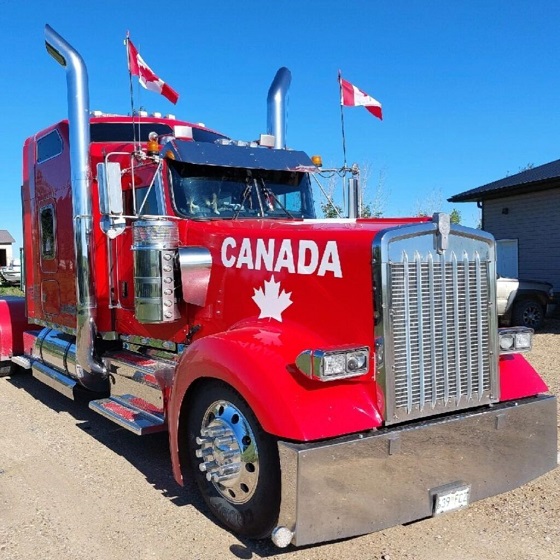
A Canadian judge has dismissed a demand from Canadian government lawyers to seize Freedom Convoy leader Chris Barber’s “Big Red” semi-truck.
On Friday, Ontario Court of Justice Judge Heather Perkins-McVey denied the Crown’s application seeking to forfeit Barber’s truck.
She ruled that the court is already “satisfied” with Barber’s sentence and taking away his very livelihood would be “disproportionate.”
“This truck is my livelihood,” said Barber in a press release sent to LifeSiteNews.
“Trying to permanently seize it for peacefully protesting was wrong, and I’m relieved the court refused to allow that to happen,” he added.
Criminal defense lawyer Marwa Racha Younes was welcoming of the ruling as well, stating, “We find it was the right decision in the circumstances and are happy with the outcome.”
John Carpay, president of the Justice Centre for Constitutional Freedoms (JCCF), said the decision is “good news for all Canadians who cherish their Charter freedom to assemble peacefully.”
READ: Freedom Convoy protester appeals after judge dismissed challenge to frozen bank accounts
“Asset forfeiture is an extraordinary power, and it must not be used to punish Canadians for participating in peaceful protest,” he added in the press release.
As reported recently by LifeSiteNews, the Canadian government claimed that Barber’s truck is an “offence-related property” relating to his involvement in the 2022 protests against Canada’s COVID mandates.
At this time, the court ruling ends any forfeiture proceedings for the time being, however Barber will continue to try and appeal his criminal conviction and house arrest sentence.
Barber’s truck, a 2004 Kenworth long-haul he uses for business, was a focal point in the 2022 protests. He drove it to Ottawa, where it was parked for an extended period of time, but he complied when officials asked him to move it.
On October 7, 2025, after a long trial, Ontario Court Justice Perkins-McVey sentenced Barber and Tamara Lich, the other Freedom Convoy leader, to 18 months’ house arrest. They had been declared guilty of mischief for their roles as leaders of the 2022 protest against COVID mandates, and as social media influencers.
Lich and Barber have filed appeals of their own against their house arrest sentences, arguing that the trial judge did not correctly apply the law on their mischief charges.
Government lawyers for the Crown have filed an appeal of the acquittals of Lich and Barber on intimidation charges.
The pair’s convictions came after a nearly two-year trial despite the nonviolent nature of the popular movement.

From LifeSiteNews
Protestor Evan Blackman’s legal team argues Trudeau’s Emergencies Act-based bank account freezes were punitive state action tied directly to protest participation.
A Freedom Convoy protester whose bank accounts were frozen by the Canadian government says a judge erred after his ruling did not consider the fact that the funds were frozen under the Emergencies Act, as grounds for a stay of proceedings.
In a press release sent out earlier this week, the Justice Centre for Constitutional Freedoms (JCCF) said that Freedom Convoy protestor Evan Blackman will challenge a court ruling in his criminal case via an appeal with the Ontario Superior Court of Justice.
“This case raises serious questions about how peaceful protest is treated in Canada and about the lasting consequences of the federal government’s unlawful use of the Emergencies Act,” noted constitutional lawyer Chris Fleury. “The freezing of protestors’ bank accounts was part of a coordinated effort to suppress dissent, and courts ought to be willing to scrutinize that conduct.”
Blackman was arrested on February 18, 2022, during the police crackdown on Freedom Convoy protests against COVID restrictions, which was authorized by the Emergencies Act (EA). The EA was put in place by former Prime Minister Justin Trudeau’s Liberal government, which claimed the protests were violent, despite no evidence that this was the case.
Blackman’s three bank accounts with TD Bank were frozen due to his participation in the Freedom Convoy, following a directive ordered by Trudeau.
As reported by LifeSiteNews, in November of this year, Blackman was convicted at his retrial even though he had been acquitted at his original trial. In 2023, Blackman’s “mischief” and “obstructing police” charges were dismissed by a judge due to lack of evidence and the “poor memory of a cop regarding key details of the alleged criminal offences.”
His retrial resulted in Blackman getting a conditional discharge along with 12 months’ probation and 122 hours of community service, along with a $200 victim fine surcharge.
After this, Blackman’s application for a stay of proceedings was dismissed by the court. He had hoped to have his stay of proceedings, under section 24(1) of the Charter of Rights and Freedoms, allowed. However, the judge ruled that the freezing of his bank accounts was legally not related to his arrest, and because of this, the stay of proceedings lacked standing.
The JCCF disagreed with this ruling, noting, it “stands in contrast to a Federal Court decision finding that the government’s invocation of the Emergencies Act was unreasonable and violated Canadians’ Charter rights, including those targeted by the financial measures used against Freedom Convoy protestors.”
As of press time, a hearing date has not been scheduled.
In 2024, Federal Court Justice Richard Mosley ruled that Trudeau was “not justified” in invoking the Emergencies Act.
In early 2022, the Freedom Convoy saw thousands of Canadians from coast to coast come to Ottawa to demand an end to COVID mandates in all forms. Despite the peaceful nature of the protest, Trudeau’s federal government enacted the EA in mid-February.
After the protesters were cleared out, which was achieved through the freezing of bank accounts of those involved without a court order as well as the physical removal and arrest of demonstrators, Trudeau revoked the EA on February 23, 2022.


Georgia county admits illegally certifying 315k ballots in 2020 presidential election

Canadian government launches trial version of digital ID for certain licenses, permits
Communist China arrests hundreds of Christians just days before Christmas
The Top News Stories That Shaped Canadian Energy in 2025 and Will Continue to Shape Canadian Energy in 2026
-
 Bruce Dowbiggin1 day ago
Be Careful What You Wish For In 2026: Mark Carney With A Majority
-
 Energy1 day ago
New Poll Shows Ontarians See Oil & Gas as Key to Jobs, Economy, and Trade
-
 Business6 hours ago
Largest fraud in US history? Independent Journalist visits numerous daycare centres with no children, revealing massive scam
-
 Fraser Institute2 days ago
Carney government sowing seeds for corruption in Ottawa
-
 International2 days ago
No peace on earth for ISIS: Trump orders Christmas strikes after Christian massacres
-
 Alberta2 days ago
Alberta Next Panel calls for less Ottawa—and it could pay off
-
 Alberta1 day ago
Alberta project would be “the biggest carbon capture and storage project in the world”
-
 Business1 day ago
Socialism vs. Capitalism