
COVID-19
ArriveCAN charges dropped, shielding the controversial program from constitutional scrutiny

News release from the Justice Centre for Constitutional Freedoms
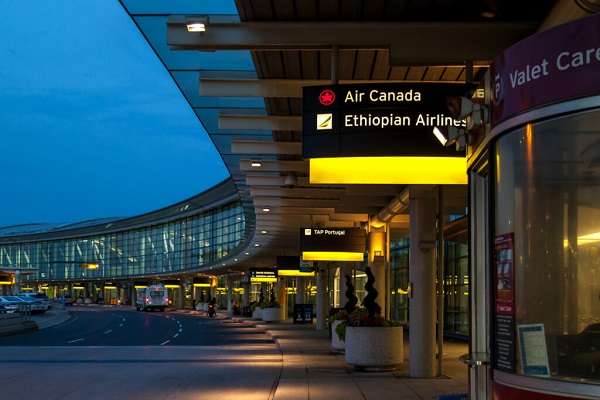
The Justice Centre for Constitutional Freedoms announces that City of Mississauga prosecutors have withdrawn five charges against four Canadians who refused to comply with ArriveCAN requirements at the Toronto Pearson International Airport.
The withdrawn charges include those against Elim Sly-Hooten of British Columbia. After arriving in Toronto from the Netherlands, Mr. Sly-Hooten felt that his personal medical information should remain private and chose not to disclose his vaccination status via ArriveCAN. In response, Peel Regional Police and Public Health Agency of Canada personnel detained him. Under pressure and without counsel, Mr. Sly-Hooten broke down and revealed his vaccination status. He received a $5,000 ticket for violating the Quarantine Act and was ordered to quarantine in his home for 14 days.
With help from the Justice Centre, Mr. Sly-Hooten launched a constitutional challenge against ArriveCAN, citing his right to liberty, his right to be protected from unreasonable search and seizure, his right to be free from arbitrary arrest and detention, and his right to counsel after arrest and detention – all protected by the Canadian Charter of Rights and Freedoms.
Prosecutors also withdrew tickets against Mark Spence, Aaron Grubb, and Evan Kraayenbrink. Like Mr. Sly-Hooten, each were charged for choosing not to provide information via ArriveCAN and were ordered to quarantine for 14 days. Prosecutors have withdrawn the charges because they believe it is not in the public interest to expend further resources on a trial. This outcome follows a similar pattern of ArriveCAN-related charges being dropped before their trials in what appears to be an attempt to shield the controversial program from constitutional scrutiny. In other words, charges are being dropped before the merits of constitutional challenges to ArriveCAN can be heard by the courts.
Beside the constitutional question, ArriveCAN has been dogged by bad publicity since its implementation. Canada Border Services Agency launched ArriveCAN in April 2020 in response to the World Health Organization’s declaration of a global pandemic. Since then, ArriveCAN has cost Canadians an estimated $59.5 million (not counting in-house costs), according to the Auditor General of Canada in her February 12, 2024 performance audit report.
ArriveCAN was mandatory for all air, land, and marine travellers between November 2021 and October 2022. During that time, the program erroneously ordered 10,000 Canadians to quarantine in a significant breach of the Privacy Act, according to a 2023 report from the Office of the Privacy Commissioner of Canada. The program violated many of the rights and freedoms protected by the Canadian Charter of Rights and Freedoms.
Lawyer Chris Fleury stated, “This outcome is bittersweet for each of our clients. It is positive for each of them personally. On the other hand, they were deeply interested in seeking a determination of the constitutionality of the irrational and unscientific decision forcing unvaccinated Canadians to quarantine. The federal government has again escaped accountability for Covid policy decisions that breached Canadians’ Charter rights.”

From LifeSiteNews
A judge ruled that the Ontario Court of Justice is already ‘satisfied’ with Chris Barber’s sentence and taking away his very livelihood would be ‘disproportionate.’
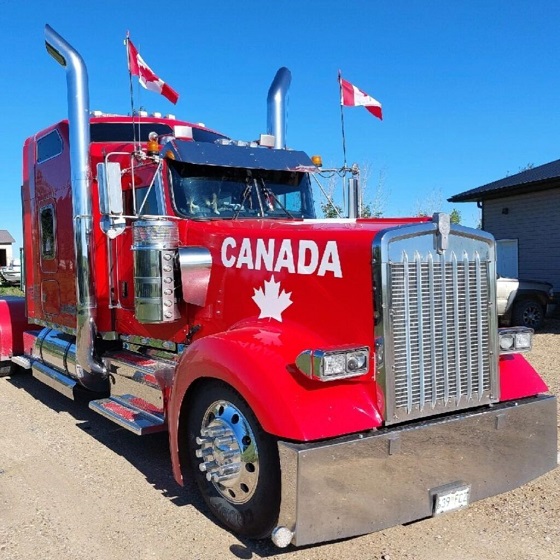
A Canadian judge has dismissed a demand from Canadian government lawyers to seize Freedom Convoy leader Chris Barber’s “Big Red” semi-truck.
On Friday, Ontario Court of Justice Judge Heather Perkins-McVey denied the Crown’s application seeking to forfeit Barber’s truck.
She ruled that the court is already “satisfied” with Barber’s sentence and taking away his very livelihood would be “disproportionate.”
“This truck is my livelihood,” said Barber in a press release sent to LifeSiteNews.
“Trying to permanently seize it for peacefully protesting was wrong, and I’m relieved the court refused to allow that to happen,” he added.
Criminal defense lawyer Marwa Racha Younes was welcoming of the ruling as well, stating, “We find it was the right decision in the circumstances and are happy with the outcome.”
John Carpay, president of the Justice Centre for Constitutional Freedoms (JCCF), said the decision is “good news for all Canadians who cherish their Charter freedom to assemble peacefully.”
READ: Freedom Convoy protester appeals after judge dismissed challenge to frozen bank accounts
“Asset forfeiture is an extraordinary power, and it must not be used to punish Canadians for participating in peaceful protest,” he added in the press release.
As reported recently by LifeSiteNews, the Canadian government claimed that Barber’s truck is an “offence-related property” relating to his involvement in the 2022 protests against Canada’s COVID mandates.
At this time, the court ruling ends any forfeiture proceedings for the time being, however Barber will continue to try and appeal his criminal conviction and house arrest sentence.
Barber’s truck, a 2004 Kenworth long-haul he uses for business, was a focal point in the 2022 protests. He drove it to Ottawa, where it was parked for an extended period of time, but he complied when officials asked him to move it.
On October 7, 2025, after a long trial, Ontario Court Justice Perkins-McVey sentenced Barber and Tamara Lich, the other Freedom Convoy leader, to 18 months’ house arrest. They had been declared guilty of mischief for their roles as leaders of the 2022 protest against COVID mandates, and as social media influencers.
Lich and Barber have filed appeals of their own against their house arrest sentences, arguing that the trial judge did not correctly apply the law on their mischief charges.
Government lawyers for the Crown have filed an appeal of the acquittals of Lich and Barber on intimidation charges.
The pair’s convictions came after a nearly two-year trial despite the nonviolent nature of the popular movement.

From LifeSiteNews
Protestor Evan Blackman’s legal team argues Trudeau’s Emergencies Act-based bank account freezes were punitive state action tied directly to protest participation.
A Freedom Convoy protester whose bank accounts were frozen by the Canadian government says a judge erred after his ruling did not consider the fact that the funds were frozen under the Emergencies Act, as grounds for a stay of proceedings.
In a press release sent out earlier this week, the Justice Centre for Constitutional Freedoms (JCCF) said that Freedom Convoy protestor Evan Blackman will challenge a court ruling in his criminal case via an appeal with the Ontario Superior Court of Justice.
“This case raises serious questions about how peaceful protest is treated in Canada and about the lasting consequences of the federal government’s unlawful use of the Emergencies Act,” noted constitutional lawyer Chris Fleury. “The freezing of protestors’ bank accounts was part of a coordinated effort to suppress dissent, and courts ought to be willing to scrutinize that conduct.”
Blackman was arrested on February 18, 2022, during the police crackdown on Freedom Convoy protests against COVID restrictions, which was authorized by the Emergencies Act (EA). The EA was put in place by former Prime Minister Justin Trudeau’s Liberal government, which claimed the protests were violent, despite no evidence that this was the case.
Blackman’s three bank accounts with TD Bank were frozen due to his participation in the Freedom Convoy, following a directive ordered by Trudeau.
As reported by LifeSiteNews, in November of this year, Blackman was convicted at his retrial even though he had been acquitted at his original trial. In 2023, Blackman’s “mischief” and “obstructing police” charges were dismissed by a judge due to lack of evidence and the “poor memory of a cop regarding key details of the alleged criminal offences.”
His retrial resulted in Blackman getting a conditional discharge along with 12 months’ probation and 122 hours of community service, along with a $200 victim fine surcharge.
After this, Blackman’s application for a stay of proceedings was dismissed by the court. He had hoped to have his stay of proceedings, under section 24(1) of the Charter of Rights and Freedoms, allowed. However, the judge ruled that the freezing of his bank accounts was legally not related to his arrest, and because of this, the stay of proceedings lacked standing.
The JCCF disagreed with this ruling, noting, it “stands in contrast to a Federal Court decision finding that the government’s invocation of the Emergencies Act was unreasonable and violated Canadians’ Charter rights, including those targeted by the financial measures used against Freedom Convoy protestors.”
As of press time, a hearing date has not been scheduled.
In 2024, Federal Court Justice Richard Mosley ruled that Trudeau was “not justified” in invoking the Emergencies Act.
In early 2022, the Freedom Convoy saw thousands of Canadians from coast to coast come to Ottawa to demand an end to COVID mandates in all forms. Despite the peaceful nature of the protest, Trudeau’s federal government enacted the EA in mid-February.
After the protesters were cleared out, which was achieved through the freezing of bank accounts of those involved without a court order as well as the physical removal and arrest of demonstrators, Trudeau revoked the EA on February 23, 2022.


Argentina’s Milei delivers results free-market critics said wouldn’t work

‘Almost Sounds Made Up’: Jeffrey Epstein Was Bill Clinton Plus-One At Moroccan King’s Wedding, Per Report
Saskatchewan woman approved for euthanasia urged to seek medical help in Canada rather than US

Danielle Smith slams Skate Canada for stopping events in Alberta over ban on men in women’s sports
-
Business2 days ago
Argentina’s Milei delivers results free-market critics said wouldn’t work
-
 espionage1 day ago
Carney Floor Crossing Raises Counterintelligence Questions aimed at China, Former Senior Mountie Argues
-
 Health18 hours ago
FDA warns ‘breast binder’ manufacturers to stop marketing to gender-confused girls
-
 Daily Caller18 hours ago
Trump Reportedly Escalates Pressure On Venezuela With Another Oil Tanker Seizure
-
 Business1 day ago
Taxing food is like slapping a surcharge on hunger. It needs to end
-
 Energy1 day ago
75 per cent of Canadians support the construction of new pipelines to the East Coast and British Columbia
-
 Business2 days ago
Deadlocked Jury Zeroes In on Alleged US$40 Million PPE Fraud in Linda Sun PRC Influence Case
-
 Health1 day ago
All 12 Vaccinated vs. Unvaccinated Studies Found the Same Thing: Unvaccinated Children Are Far Healthier