
Alberta
Alberta taxpayers should know how much their municipal governments spend


From the Fraser Institute
By Tegan Hill and Austin Thompson
Next week, voters across Alberta will go to the polls to elect their local governments. Of course, while the issues vary depending on the city, town or district, all municipal governments spend taxpayer money.
And according to a recent study, Grande Prairie County and Red Deer County were among Alberta’s highest-spending municipalities (on a per-person basis) in 2023 (the latest year of comparable data). Kara Westerlund, president of the Rural Municipalities of Alberta, said that’s no surprise—arguing that it’s expensive to serve a small number of residents spread over large areas.
That challenge is real. In rural areas, fewer people share the cost of roads, parks and emergency services. But high spending isn’t inevitable. Some rural municipalities managed to spend far less, demonstrating that local choices about what services to provide, and how to deliver them, matter.
Consider the contrast in spending levels among rural counties. In 2023, Grande Prairie County and Red Deer County spent $5,413 and $4,619 per person, respectively. Foothills County, by comparison, spent just $2,570 per person. All three counties have relatively low population densities (fewer than seven residents per square kilometre) yet their per-person spending varies widely. (In case you’re wondering, Calgary spent $3,144 and Edmonton spent $3,241.)
Some of that variation reflects differences in the cost of similar services. For example, all three counties provide fire protection but in 2023 this service cost $56.95 per person in Grande Prairie County, $38.51 in Red Deer County and $10.32 in Foothills County. Other spending differences reflect not just how much is spent, but whether a service is offered at all. For instance, in 2023 Grande Prairie County recorded $46,283 in daycare spending, while Red Deer County and Foothills County had none.
Put simply, population density alone simply doesn’t explain why some municipalities spend more than others. Much depends on the choices municipal governments make and how efficiently they deliver services.
Westerlund also dismissed comparisons showing that some counties spend more per person than nearby towns and cities, calling them “apples to oranges.” It’s true that rural municipalities and cities differ—but that doesn’t make comparisons meaningless. After all, whether apples are a good deal depends on the price of other fruit, and a savvy shopper might switch to oranges if they offer better value. In the same way, comparing municipal spending—across all types of communities—helps Albertans judge whether they get good value for their tax dollars.
Every municipality offers a different mix of services and those choices come with different price tags. Consider three nearby municipalities: in 2023, Rockyview County spent $3,419 per person, Calgary spent $3,144 and Airdrie spent $2,187. These differences reflect real trade-offs in the scope, quality and cost of local services. Albertans should decide for themselves which mix of local services best suits their needs—but they can’t do that without clear data on what those services actually cost.
A big municipal tax bill isn’t an inevitable consequence of rural living. How much gets spent in each Alberta municipality depends greatly on the choices made by the mayors, reeves and councillors Albertans will elect next week. And for Albertans to determine whether or not they get good value for their local tax dollars, they must know how much their municipality is spending.

Tegan Hill
Director, Alberta Policy, Fraser Institute

Austin Thompson


Canada and Alberta’s new net-zero energy deal is being promoted as progress, but it also brings rising costs. In this video, I break down the increase to Alberta’s industrial carbon price, how those costs can raise fuel, heating, and grocery prices, and why taxpayer-funded carbon-capture projects and potential pipeline delays could add even more. Here’s what this agreement could mean for Canadians.
Watch Nataliya Bankert’s latest video.

Alberta’s government will introduce a motion under the Alberta Sovereignty within a United Canada Act to defend law-abiding firearms owners.
A new motion under the Alberta Sovereignty within a United Canada Act will, if passed by the legislature, instruct all provincial entities, including law-enforcement agencies such as municipal police services and the RCMP, to decline to enforce or implement the federal gun seizure program. The motion also makes clear that Albertans have the right to use reasonable force to defend themselves, their families and their homes from intruders.
This builds on the steps Alberta has already taken to reduce crime, strengthen public safety and assert provincial jurisdiction over firearms. This includes passing the Alberta Firearms Act to establish the Alberta Chief Firearms Office, along with the Alberta Firearms Regulation and the Seizure Agent and Provider Licensing Regulation.
“It’s time for Ottawa to stop targeting the wrong people. Albertans have the right to protect their homes and their families. No one should hesitate to defend themselves when faced with a threat at their own doorway. Law-abiding citizens, hunters, farmers and sport shooters are not the source of violent crime, yet the federal government wants to confiscate their property while illegal guns pour across our borders. Alberta will not stand by while responsible gun owners are treated like criminals. This motion is about using every legal tool we have to protect their rights, uphold public safety and push back on federal overreach into provincial jurisdiction.”
“When someone breaks into your home, the law recognizes that you have enhanced rights to protect yourself and your family. Alberta is making that principle unmistakably clear: lawful, reasonable self-defence will be respected, not criminalized.”
“As an experienced former law enforcement officer, law-abiding gun owners have never been an issue, in my own personal experience, nor has there been any data to support that law-abiding gun owners are the ones that are committing violent gun crimes. The illegal guns that you see being used by criminals are typically being smuggled in from the United States. The federal government should help us strengthen the border, helping us to stop illegal guns from coming into Canada. This would further enhance safety and security for the people of Alberta and Canada as opposed to going after lawful gun owners.”
Under the Alberta Firearms Regulation, municipalities, law enforcement and police commissions must obtain approval from Alberta’s Minister of Justice before accepting funding to participate in the Assault-Style Firearms Compensation Program.
“Misguided federal initiatives such as the handgun transfer ban and the Order in Council firearms prohibitions of 2020, 2024 and 2025 have had a devastating impact on the safe, legitimate activities of the firearms community and the businesses that support it, while having no discernible effect on criminal activity. I am proud to see that the Alberta government is pushing back and supporting lawful firearms owners through these measures.”
“Licensed gun owners and all Albertans can rest assured that their government, under the leadership of the UCP, is laser focused on protecting law abiding citizens while prioritizing real public safety.”
“The Alberta Hunter Education Instructors Association will continue to support our government and the Alberta chief firearms officer in our joint quest to use safety training and education as the key tools to ensure we have safer streets and communities. Safe and responsible use of firearms in Alberta is a key part of our heritage, culture, and our rich and precious heritage.”
Key facts:
- Pursuant to the Attorney General’s recent guidance protocols, Alberta’s prosecutors will decline to prosecute offences under the federal gun seizure program when it is not in the public interest.
- The Attorney General’s recent guidance protocol directs prosecutors to not prosecute home defence offences when it is not in the public interest.
- Total spending on the federal Assault-Style Firearms Compensation Program is expected to exceed $750 million.
- The firearms motion considers the Alberta Bill of Rights, the Constitution Act, 1867 and the Criminal Code.
- Currently 10 per cent of adult Albertans are licenced to use and own firearms. There are 381,900 firearms licences in Alberta.
- Alberta has 638 licensed firearms businesses, 138 shooting ranges and 91 shooting clubs.


From Underdog to Top Broodmare

Canadians will soon be versed in massive West Coast LPG mega-project
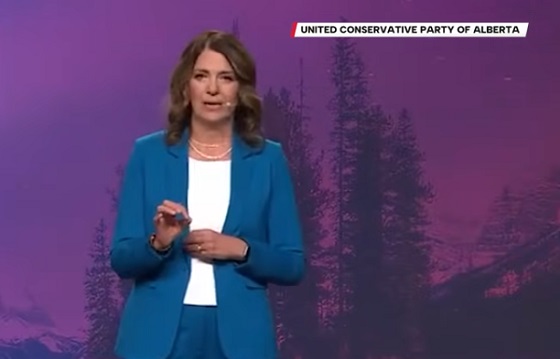
Keynote address of Premier Danielle Smith at 2025 UCP AGM

‘No Critical Thinking’: Parents Sound Alarm As Tech Begins To ‘Replace The Teacher’
-
 Business20 hours ago
Recent price declines don’t solve Toronto’s housing affordability crisis
-
 Daily Caller19 hours ago
Tech Mogul Gives $6 Billion To 25 Million Kids To Boost Trump Investment Accounts
-
 National17 hours ago
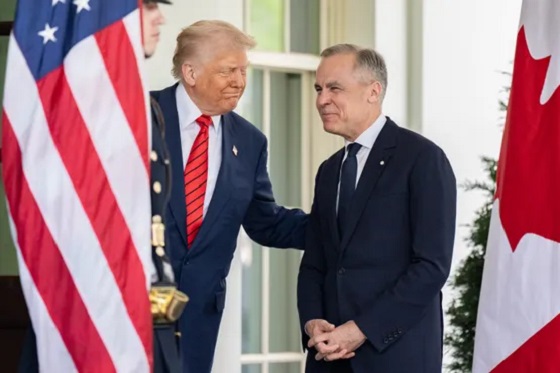
Canada Needs an Alternative to Carney’s One Man Show
-
 Alberta2 days ago
New era of police accountability
-
 National2 days ago
Media bound to pay the price for selling their freedom to (selectively) offend
-
 C2C Journal2 days ago
Learning the Truth about “Children’s Graves” and Residential Schools is More Important than Ever
-
 armed forces2 days ago
Global Military Industrial Complex Has Never Had It So Good, New Report Finds
-
 Automotive4 hours ago
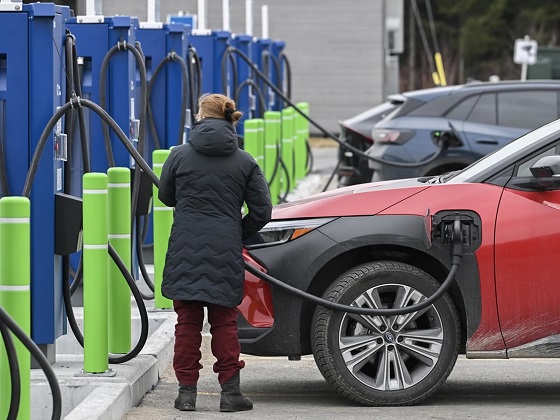
Power Struggle: Governments start quietly backing away from EV mandates