
Censorship Industrial Complex
A License to Censor? The Fierce Fight Over the GEC’s Renewal


|
What happens when an agency meant to protect Americans from foreign propaganda starts tiptoeing over the line into the realm of domestic censorship? Enter the Global Engagement Center (GEC), a charming creation of the US State Department that was originally tasked with combating foreign disinformation. It sounds like something out of a spy novel: shadowy entities sowing chaos through whisper campaigns and disinformation dumps. But now, the real drama lies in how this agency has extended its reach beyond foreign threats and into the murky waters of the internet’s free speech landscape.
Of course, the GEC would prefer to be seen as a benevolent referee, helping social media giants like Facebook and YouTube play the good guys in the battle against digital deception. In theory, this agency is all about countering Russian bots and Iranian trolls. But somehow, along the way, its mission stretched to a point where the average American scrolling through a feed can almost feel the government’s fingers tapping on their shoulder, cautioning them about what’s “trustworthy.” It’s no wonder people are starting to worry. “Protecting” Free Speech with Blacklists and Bans Let’s break down how the GEC manages to defend democracy in ways that look suspiciously undemocratic. The agency works directly with social media platforms, advising them on what narratives might be feeding the foreign propaganda machine. Sounds reasonable—until it doesn’t. The GEC has dipped into its federal piggy bank to fund initiatives creating online blacklists and flagging content for removal. Some say it’s about “maintaining integrity” online; others say it looks a lot like censorship on the taxpayer’s dime. To critics, this looks like the first few moves of a chess game where the GEC is lining up for a checkmate on free expression. And they’re not alone. Skeptics of the GEC’s approach argue that these actions open the door to a sanitized internet, where only approved opinions make the cut. Who gets to decide what’s misleading or manipulative? Turns out, it’s not entirely clear, and this vagueness is what has civil liberties watchdogs gnashing their teeth. Paul Nakasone: Former Spy, Current AI Board Member, and GEC’s Biggest Fan Amid the ruckus, the GEC does have a few high-profile cheerleaders. One of them is none other than Paul Nakasone, a former NSA Director who now sits on the board of OpenAI. He’s come out swinging in favor of the GEC, showering praise on its efforts to shield American audiences from outside influence. For someone who once helmed the NSA, Nakasone knows a thing or two about surveillance, and his endorsement feels like a tacit nod from the intelligence community itself. But even as he applauds the GEC, some are asking the obvious question: why is a former NSA chief, now positioned at the bleeding edge of AI technology, so invested in this government office’s future? Could it be that he sees a future where government-sponsored “truth” filters bleed into the algorithmic architecture of social media platforms? The GEC’s methods may have started with a noble purpose, but Nakasone’s involvement shines a light on the agency’s proximity to power and influence, making many wonder if the GEC is merely a cudgel for elites to enforce their narrative. Bipartisan Endorsement: The Ultimate Shield Then there’s the bipartisan protection the GEC enjoys, courtesy of Senators John Cornyn and Chris Murphy, the Republican-Democrat duo that co-parented the agency into existence back in 2016. In the world of American politics, finding anything both sides agree on is as rare as a unicorn, so when they do align, it’s usually worth a closer look. Cornyn and Murphy are now pushing for the GEC’s reauthorization, hoping to give it another seven-year lease on life. Their logic? Keep the GEC’s scope foreign-focused and off-limits when it comes to domestic politics. The proposal includes a “strict ban” on US political meddling and tighter financial oversight—measures meant to steer the GEC back toward its original, “noble” mission. Yet, those promises don’t seem to be allaying fears. After all, what constitutes meddling, exactly? And how far does “foreign-focused” go on the internet where “foreign” is about as easy to define as air? If there’s one thing Washington excels at, it’s drawing the line right where it’s convenient, then redrawing it when no one’s looking. The GEC’s Real Legacy: Democracy or Control? At its core, the GEC’s story isn’t one of pure villainy or virtue; it’s the all-too-common tale of mission creep. Born to protect, it evolved into a protector so zealous it could become the very thing it claimed to fight. In a landscape where free speech is already under constant siege, the GEC’s growth raises the age-old question: who watches the watchers? So, here we stand, with two powerful senators asking us to trust that the GEC’s next seven years won’t resemble the questionable track record of the last. Whether you see this as a necessary shield or a potential weapon against dissent, one thing is clear—the GEC’s presence in the digital ecosystem is likely to remain contentious, polarizing, and above all, inescapably tangled in the web of modern-day propaganda wars. The Global Engagement Center, with its sleek mission of unmasking foreign propaganda, has certainly racked up its share of victories abroad, unearthing disinformation from the usual suspects—Russia, China, and other state-sponsored actors. But back home, it’s a different story. While the GEC might like to see itself as an indispensable line of defense, a growing number of Americans see it as something altogether more insidious: a tool for quashing dissent under the shiny guise of “security.” The backlash isn’t just coming from the fringes; it’s led by Republican lawmakers who accuse the GEC of overstepping its mandate, straying from a mission to combat foreign influence and dabbling instead in something far more contentious: influencing American political discourse. Conservatives argue that the GEC has a cozy relationship with major social media platforms, where it’s allegedly advising them to tag and downrank content from right-leaning sources, all under the sanctified banner of “disinformation.” In a country already primed to erupt over issues of free speech, it’s an explosive allegation that’s landed the GEC in the crosshairs of national outrage. The Conservative Media Strikes Back Fed up and ready to push back, some of the biggest conservative media names have banded together with the state of Texas to launch a lawsuit against the Department of State. Platforms like The Daily Wire and The Federalist are taking aim at what they claim is a calculated attempt by the GEC to label their content as “disinformation,” a charge they argue has made them radioactive for advertisers and throttled their visibility on social media. Their argument is simple but searing: a federal agency is directly infringing on the First Amendment by blocking or burying conservative viewpoints in the very same channels it was established to keep open. This accusation has given conservatives a rallying cry, a David-vs-Goliath scenario where state-backed censors go after political speech under the flimsiest pretexts. Leading the legal crusade is Texas Attorney General Ken Paxton, who’s never one to mince words. Paxton has openly accused the GEC of being on a crusade of its own—one aimed not at safeguarding democracy, but at suffocating it. In Paxton’s view, the GEC has gone rogue, turning from a shield against foreign interference to a battering ram against American freedoms. Enter Congress: The Great Reassessment The uproar has made its way to Capitol Hill, where figures like Rep. Darrell Issa are pounding the drum for a major reassessment of the GEC’s practices. Issa, along with a cadre of similarly concerned lawmakers, has raised the alarm about how far the GEC’s operations have expanded. It’s one thing to combat the well-oiled disinformation machines of Moscow or Beijing. But it’s something else entirely to be monitoring, blacklisting, and deplatforming opinions within US borders under the same disinformation protocols. For Issa, this isn’t just mission creep; it’s an outright defiance of the GEC’s mandate. The agency, he contends, has blurred the line between legitimate counter-disinformation efforts and outright censorship, especially when that censorship just so happens to lean in one political direction. Issa and others argue that under the pretext of fighting foreign influence, the GEC is developing an appetite for policing thought—a role Congress never intended it to fill. Reform or Dismantle: The Fight Over the GEC’s Future And now, Washington is embroiled in a growing debate over what to do with the GEC. On one side are those who argue that the center just needs a tighter leash, and a few accountability measures to ensure it sticks to foreign threats and foreign threats only. On the other side are those who say the GEC’s existence is a danger to American principles — perhaps a well-intentioned experiment gone horribly wrong. They’re pushing for its complete dismantling, arguing that no amount of reform can protect an agency with such sweeping power from abusing it. In an ironic twist, the very tools created to protect democracy now stand accused of eroding it, launching a bitter tug-of-war over the American ideal of free speech versus the unquantifiable need to “protect” citizens from supposedly dangerous ideas. Are we safer for it? Or are we on a slow slide into a digital age where the government, deciding what counts as legitimate speech, becomes the very propagandist it claims to fight? At the least, the GEC seems to have lost its way, now accused of extending its mission to target domestic media—particularly conservative voices. Its partnerships with organizations like the Global Disinformation Index (GDI) have turned into a flashpoint for accusations of bias, with critics arguing that these alliances are driving the GEC’s work right into partisan territory. The GDI, a non-profit that presents itself as an impartial watchdog against misinformation, has its own critics, many of whom argue that its “disinformation” classifications are less about protecting the public and more about ensuring the “right” voices dominate the information landscape. Conservative media outlets have consistently found themselves on the wrong end of these classifications, flagged as threats to the sanctity of truth while more progressive-leaning sources, somehow, skate by. This raises questions about how these ostensibly neutral organizations are choosing their targets and how much influence the government-backed GEC has on these classifications. An Ethical Tug-of-War: Security, Truth, or Free Speech? As the debate heats up over the GEC’s impending renewal, we’re not just talking about a procedural rubber stamp. The reauthorization of the GEC is emerging as a proxy battle over far deeper questions: What role should the government play in policing information? And where is the line between safeguarding the public and controlling it? On one hand, there’s the argument that a body like the GEC is essential for a world where foreign states meddle with domestic politics through armies of bots and fake accounts. Without it, we’re told, Americans would be defenseless against the unrelenting tidal wave of foreign-sponsored fake news designed to sow chaos and division. Yet, that same narrative has an underbelly—a creeping encroachment on civil liberties, a kind of censorship wearing the costume of patriotism, where political biases steer the GEC’s focus. Congress at a Crossroads: To Renew, Reform, or Repeal? Congress now faces a critical decision: Do they rubber-stamp the GEC for another seven years and trust that reforms and restrictions can keep it in check? Or is it time to dismantle a mechanism that critics argue is increasingly indistinguishable from the very disinformation campaigns it claims to fight? Senators are debating an array of reforms, from tighter financial oversight to strict prohibitions on domestic content moderation. But skeptics aren’t convinced that a few added layers of oversight will suffice; the GEC’s history suggests that mission creep may be inevitable, and with it, the erosion of free expression. If the GEC’s renewal goes through with little structural change, the implications will reverberate far beyond Washington. It could set a precedent where government-sanctioned “disinformation” monitoring becomes normalized as part of the American media landscape, allowing those in power to define and punish “disinformation” with little accountability. The potential for abuse here is staggering. Setting Precedents for a Digital Battlefield The GEC saga is a window into the heart of a much larger debate over information warfare and the role of government in a digital age. If the GEC continues to exercise its authority as both referee and player in the information space, it could pave the way for similar agencies to wield censorship as an arm of policy. We might soon find ourselves living in a digital landscape where what’s considered “misinformation” conveniently aligns with what’s politically inconvenient for those in power. Ultimately, the GEC’s future will set the tone for how the US balances national security with its commitment to free speech. As the Senate weighs its options, the stakes couldn’t be higher. This decision will define the boundaries of governmental influence over the public’s access to information, shaping the next chapter of American engagement in the digital world. The choice to renew, reform, or repeal the GEC is no small moment—it’s a defining one, with repercussions for every American’s right to think, speak, and decide for themselves what is truth and what is manipulation. |
|
|
|
Thank you for considering a contribution. Each donation not only supports our operations but also strengthens our efforts to challenge injustices and advocate for those who cannot speak out.
|

Censorship Industrial Complex
Death by a thousand clicks – government censorship of Canada’s internet


The Justice Centre for Constitutional Freedoms announces its latest publication, Death by a thousand clicks: The rise of internet censorship and control in Canada, authored by veteran journalist and researcher Nigel Hannaford. The report outlines how recommendations from the Broadcasting and Telecommunications Legislative Review Panel in 2020 set the stage for a series of federal bills that have collectively transformed Canada’s once open internet into a state-managed digital environment that restricts what Canadians may access, share, and say online.
The report highlights the following federal legislation:
Online Streaming Act (C-11): Passed in 2023, this Bill gives the CRTC power to regulate online videos and other content, including material created by everyday Canadians. It also lets the government influence online “discoverability,” meaning it can push certain content to the top of your feeds while making other content harder to find.
Online News Act (C-18): Also passed in 2023, this Bill forces platforms to pay approved news outlets, a measure that led to increased dependence of media organizations on the government and widespread blocking of Canadian news as a result of Meta’s news ban on Facebook and Instagram.
Online Harms Act (C-63): Although this Bill was halted by the 2025 election, it would have empowered a new “Digital Safety Commission” to order content removals, demand platform data, levy severe financial penalties on service providers for non-compliance with regulations created by the federal cabinet, and impose house arrest on Canadians who had not been charged with or convicted of any crime. It also would have allowed the Canadian Human Rights Commission to pursue Canadians over non-criminal “discriminatory” speech, together creating a sweeping censorship regime under the guise of addressing so-called “harms” that were already illegal.
Strong Borders Act (C-2): Introduced in June 2025 and currently at second reading, this Bill authorizes law enforcement to obtain subscriber information and metadata without a warrant, chilling anonymous online expression and eroding digital privacy.
An Act respecting cyber security, amending the Telecommunications Act and making consequential amendments to other Acts (C-8): Introduced in April 2025 and now before committee, this Bill expands government access to private networks and enables federal officials to direct telecommunications providers to kick individual Canadians off the internet without due process or appeal.
Combatting Hate Act (C-9): Introduced in September 2025 and currently before Parliament, this Bill broadens “hate-propaganda” offences, removes Attorney General oversight for prosecutions, encourages widespread self-censorship, and makes Canada more like the United Kingdom, where thousands of citizens are arrested over their social media commentary.
Report author Nigel Hannaford said, “It is important for Canadians to know that these bills are not isolated technical updates. Together they form a coordinated shift toward state-managed digital speech.”
“If we value open debate, privacy, and democratic accountability, we need to repeal the laws already passed and stop the ones now before Parliament,” he added.
Benjamin Klassen, Research and Education Coordinator for the Justice Centre, said, “It is important Canadians stay informed about these important issues. An informed public is essential to a free society.”
“Through research reports like this one, our Education team works to explain complex legislation in a way that empowers Canadians to participate in the national debate around important policies and defend their rights and freedoms,” he added.
To protect free expression online, Canadians should demand the repeal of Bills C-11 and C-18, insist that MPs vote against Bills C-2, C-8, and C-9, and elect representatives committed to restoring a free and open internet.
From the Frontier Centre for Public Policy
By Lee Harding
Ottawa says Bill C-9 fights hate. Critics say it turns ordinary disagreement into a potential crime.
Discriminatory hate is not a good thing. Neither, however, is the latest bill by the federal Liberal government meant to fight it. Civil liberties organizations and conservative commentators warn that Bill C-9 could do more to chill legitimate speech than curb actual hate.
Bill C-9 creates a new offence allowing up to life imprisonment for acts motivated by hatred against identifiable groups. It also creates new crimes for intimidation or obstruction near places of worship or community buildings used by identifiable groups. The bill adds a new hate propaganda offence for displaying terrorism or hate symbols.
The Canadian Civil Liberties Association (CCLA) warns the legislation “risks criminalizing some forms of protected speech and peaceful protest—two cornerstones of a free and democratic society—around tens of thousands of community gathering spaces in Canada.” The CCLA sees no need to add to existing hate laws.
Bill C-9 also removes the requirement that the Attorney General consent to lay charges for existing hate propaganda offences. The Canadian Constitution Foundation (CCF) calls this a major flaw, noting it removes “an important safeguard for freedom of expression that has been part of Canada’s law for decades.” Without that safeguard, decisions to prosecute may depend more on local political pressures and less on consistent national standards.
Strange as it sounds, hatred just will not be what it used to be if this legislation passes. The core problem begins with how the bill redefines the term itself.
Previously, the Supreme Court of Canada said hatred requires “extreme manifestations” of detestation or vilification that involve destruction, abhorrence or portraying groups as subhuman or innately evil. Instead, Bill C-9 defines hatred as “detestation or vilification,” stronger than “disdain or dislike.” That is a notably lower threshold. This shift means that ordinary political disagreement or sharp criticism could now be treated as criminal hatred, putting a wide range of protected expression at real risk.
The bill also punishes a hateful motivation more than the underlying crime. For example, if a criminal conviction prompted a sentence of two years to less than five years, a hateful motivation would add as much as an additional five years of jail time.
On paper, most Canadians may assume they will never be affected by these offences. In practice, the definition of “hate” is already stretched far beyond genuine threats or violence.
Two years ago, the 1 Million March for Children took place across Canada to protest the teaching of transgender concepts to schoolchildren, especially the very young. Although such opposition is a valid position, unions, LGBT advocates and even Newfoundland and Labrador Conservatives adopted the “No Space For Hate” slogan in response to the march. That label now gets applied far beyond real extremism.
Public pressure also shapes how police respond to protests. If citizens with traditional values protest a drag queen story hour near a public library, attendees may demand that police lay charges and accuse officers of implicit hatred if they refuse. The practical result is clear: officers may feel institutional pressure to lay charges to avoid being accused of bias, regardless of whether any genuine threat or harm occurred.
Police, some of whom take part in Pride week or work in stations decorated with rainbow colours in June, may be wary of appearing insensitive or intolerant. There have also been cases where residents involved in home invasion incidents were charged, and courts later determined whether excessive force was used. In a similar way, officers may lay charges first and allow the courts to sort out whether a protest crossed a line. Identity-related considerations are included in many workplace “sensitivity training” programs, and these broader cultural trends may influence how such situations are viewed. In practice, this could mean that protests viewed as ideologically unfashionable face a higher risk of criminal sanction than those aligned with current political priorities.
If a demonstrator is charged and convicted for hate, the Liberal government could present the prosecution as a matter for the justice system rather than political discretion. It may say, “It was never our choice to charge or convict these people. The system is doing its job. We must fight hate everywhere.”
Provincial governments that support prosecution will be shielded by the inability to show discretion, while those that would prefer to let matters drop will be unable to intervene. Either way, the bill could increase tensions between Ottawa and the provinces. This could effectively centralize political authority over hate-related prosecutions in Ottawa, regardless of regional differences in values or enforcement priorities.
The bill also raises concerns about how symbols are interpreted. While most Canadians would associate the term “hate symbol” with a swastika, some have linked Canada’s former flag to extremism. The Canadian Anti-Hate Network did so in 2022 in an educational resource entitled “Confronting and preventing hate in Canadian schools.”
The flag, last used nationally in 1965, was listed under “hate-promoting symbols” for its alleged use by the “alt-right/Canada First movement” to recall when Canada was predominantly white. “Its usage in modern times is an indicator of hate-promoting beliefs,” the resource insisted. If a historic Canadian symbol can be reclassified this easily, it shows how subjective and unstable the definition of a “hate symbol” could become under this bill.
These trends suggest the legislation jeopardizes not only symbols associated with Canada’s past, but also the values that supported open debate and free expression. Taken together, these changes do not merely target hateful behaviour. They create a legal framework that can be stretched to police dissent and suppress unpopular viewpoints. Rest in peace, free speech.
Lee Harding is a research fellow for the Frontier Centre for Public Policy.


Terror in Australia: 12 killed after gunmen open fire on Hanukkah celebration

Tanker ban politics leading to a reckoning for B.C.

Canada’s free speech record is cracking under pressure

Hero bystander disarms shooter in Australian terror attack
-
Censorship Industrial Complex18 hours ago
Death by a thousand clicks – government censorship of Canada’s internet
-
 Alberta21 hours ago
Schools should go back to basics to mitigate effects of AI
-
International24 hours ago
At Least 15 Killed In Shooting Targeting Jewish Community At Australia’s Bondi Beach, Police Say
-
 Daily Caller19 hours ago
Chinese Billionaire Tried To Build US-Born Baby Empire As Overseas Elites Turn To American Surrogates
-
 Great Reset21 hours ago
Viral TikTok video shows 7-year-old cuddling great-grandfather before he’s euthanized
-
 International18 hours ago
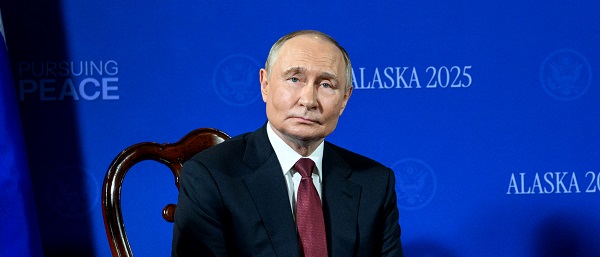
Russia Now Open To Ukraine Joining EU, Officials Briefed On Peace Deal Say
-
 Business20 hours ago
Major tax changes in 2026: Report
-
 Crime8 hours ago
Trump designates fentanyl a ‘weapon of mass destruction’