
Energy
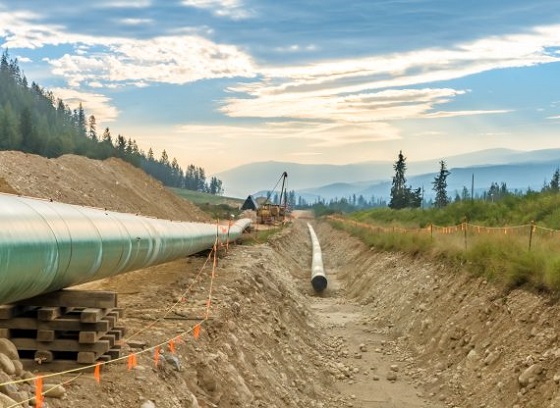
75 per cent of Canadians support the construction of new pipelines to the East Coast and British Columbia


-
71 per cent of Canadians find the approval process too long.
-
67 per cent of Quebecers support the Marinvest Energy natural gas project.
“While there has always been a clear majority of Canadians supporting the development of new pipelines, it seems that the trade dispute has helped firm up this support,” says Gabriel Giguère, senior policy analyst at the MEI. “From coast to coast, Canadians appreciate the importance of the energy industry to our prosperity.”
Three-quarters of Canadians support constructing new pipelines to ports in Eastern Canada or British Columbia in order to diversify our export markets for oil and gas.
This proportion is 14 percentage points higher than it was last year, with the “strongly agree” category accounting for almost all of the increase.
For its part, Marinvest Energy’s natural gas pipeline and liquefaction plant project, in Quebec’s North Shore region, is supported by 67 per cent of Quebecers polled, who see it as a way to reduce European dependence on Russian natural gas.
Moreover, 54 per cent of Quebecers now say they support the development of the province’s own oil resources. This represents a six-point increase over last year.
“This year again, we see that this preconceived notion according to which Quebecers oppose energy development is false,” says Mr. Giguère. “Quebecers’ increased support for pipeline projects should signal to politicians that there is social acceptability, whatever certain lobby groups might think.”
It is also the case that seven in ten Canadians (71 per cent) think the approval process for major projects, including environmental assessments, is too long and should be reformed. In Quebec, 63 per cent are of this opinion.
The federal Bill C-5 and Quebec Bill 5 seem to respond to these concerns by trying to accelerate the approval of certain large projects selected by governments.
In July, the MEI recommended a revision of the assessment process in order to make it swift by default instead of creating a way to bypass it as Bill C-5 and Bill 5 do.
“Canadians understand that the burdensome assessment process undermines our prosperity and the creation of good, well-paid jobs,” says Mr. Giguère. “While the recent bills to accelerate projects of national interest are a step in the right direction, it would be better simply to reform the assessment process so that it works, rather than creating a workaround.”
A sample of 1,159 Canadians aged 18 and older were surveyed between November 27 and December 2, 2025. The results are accurate to within ± 3.5 percentage points, 19 times out of 20.


This article supplied by Troy Media.

Oil markets are shrugging off war and sanctions, a sign that oversupply now matters more than disruption
Oil producers hoping geopolitics would lift prices are running into a harsh reality. Markets are brushing off wars and sanctions as traders focus instead on expectations of a deep and persistent oil glut.
That shift was evident last week. Despite several geopolitical developments that would once have pushed prices higher, including the U.S. seizure of a Venezuelan crude tanker and fresh Ukrainian strikes on Russian energy infrastructure, oil markets barely reacted, with prices ending the week lower.
Brent crude settled Friday at US$61.12 a barrel and U.S. West Texas Intermediate at US$57.44, capping a weekly drop of more than four per cent.
Instead of responding to disruption headlines, markets were reacting to a different risk. Bearish sentiment, rather than geopolitics, continued to dominate as expectations of a “2026 glut” took centre stage.
At the heart of that outlook is a growing supply overhang. The oil market is grappling with whether sanctioned Russian and Iranian cargoes should still be counted as supply. That uncertainty helps explain why prices have been slow to react to a glut that is already forming on the water, said Carol Ryan, writing for The Wall Street Journal.
The scale of that buildup is significant. There are 1.4 billion barrels of oil “on the water,” 24 per cent higher than the average for this time of year between 2016 and 2024, according to oil analytics firm Vortexa. These figures capture shipments still in transit or cargoes that have yet to find a buyer, a clear sign that supply is running ahead of immediate demand.
Official forecasts have reinforced that view. Last week, the International Energy Agency trimmed its projected 2026 surplus to 3.84 million barrels per day, down from 4.09 million barrels per day projected previously. Even so, the IEA still sees a large oversupply relative to global demand.
Demand growth offers little relief. The IEA expects growth of 830 kb/d (thousand barrels per day) in 2025 and 860 kb/d in 2026, with petrochemical feedstocks accounting for a larger share of incremental demand. That pace remains modest against the volume of supply coming to market.
OPEC, however, has offered a different assessment. In its latest report, the group pointed to a near balance, forecasting demand for OPEC+ crude averaging about 43 million barrels per day in 2026, roughly in line with what it produced in November.
Reflecting that confidence. OPEC+ kept policy steady late in November, pausing planned output hikes for the first quarter of 2026 while more than three million barrels per day of cuts remain in place. Those measures are supportive in theory, but markets have shown little sign of being persuaded.
Recent geopolitical events underline that scepticism. The ongoing Russia-Ukraine war and Ukrainian strikes on Russian energy infrastructure, including reported hits on facilities such as the Slavneft-YANOS refinery in Yaroslavl, again failed to lift prices. Russia-Ukraine headlines pulled prices down more than strikes lifted them, according to media reports, suggesting traders were more attuned to “peace deal” risk than to supply disruption.
Washington’s move against Venezuelan crude shipments offered another test. The U.S. seizure of a Venezuelan tanker, the first formal seizure under the 2019 sanctions framework, had a muted price impact, writes Marcin Frackiewicz of Oilprice.com.
Venezuela’s exports fell sharply in the days that followed, but markets remained largely unmoved. One explanation is that Venezuela’s output is no longer large enough to tighten global balances the way it once did, and that abundant global supply has reduced the geopolitical premium.
Taken together, the signal is hard to miss. Oil producers, including in Canada, face a reality check in a market that no longer rewards headlines, only discipline and demand.
Toronto-based Rashid Husain Syed is a highly regarded analyst specializing in energy and politics, particularly in the Middle East. In addition to his contributions to local and international newspapers, Rashid frequently lends his expertise as a speaker at global conferences. Organizations such as the Department of Energy in Washington and the International Energy Agency in Paris have sought his insights on global energy matters.
Troy Media empowers Canadian community news outlets by providing independent, insightful analysis and commentary. Our mission is to support local media in helping Canadians stay informed and engaged by delivering reliable content that strengthens community connections and deepens understanding across the country.
From Energy Now
By Margareta Dovgal
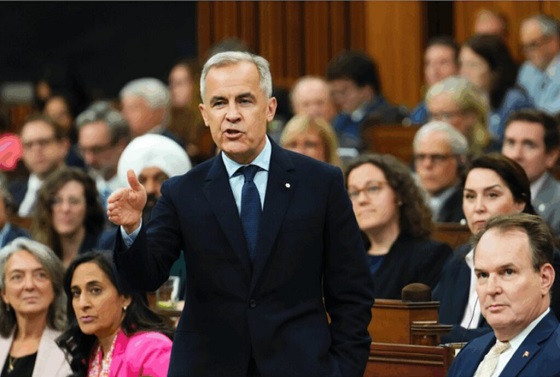
Playing politics with pipelines is a time-honored Canadian tradition. Recent events in the House of Commons offered a delightful twist on the genre.
The Conservatives introduced a motion quoting the Liberals’ own pipeline promises laid out in the Memorandum of Understanding (MOU) with Alberta, nearly verbatim. The Liberals, true to form, killed it 196–139 with enthusiastic help from the NDP, Bloc, and Greens.
We all knew how this would end. Opposition motions like this never pass; no government, especially not one led by Mark Carney, is going to let the opposition dictate the agenda. There’s not much use feigning outrage that the Liberals voted it down. The more entertaining angle has been watching closely as Liberal MPs twist themselves into pretzels explaining why they had to vote “no” on a motion that cheers on a project they claim to support in principle.
Liberal MP Corey Hogan dismissed the motion as “game-playing” designed to “poke at people”.
And he’s absolutely right to call it a “trap” for the Liberals. But traps only work when you walk into them.
Indigenous Services Minister Mandy Gull-Masty deemed the motion an “immature waste of parliamentary time” and “clearly an insult towards Indigenous Peoples” because it didn’t include every clause of the original agreement. Energy Minister Tim Hodgson decried it as a “cynical ploy to divide us” that “cherry-picked” the MOU.
Yet the prize for the most tortured metaphor goes to the prime minister himself. Defending his vote against his own pipeline promise, Carney lectured the House that “you have to eat the entire meal, not just the appetizer.”
It’s a clever line, and it also reveals the problem. The “meal” Carney is serving is stuffed with conditions. Environmental targets or meaningful engagement with Indigenous communities aren’t unrealistic asks. A crippling industrial carbon price as a precondition might be though.
But the prime minister has already said the quiet part out loud.
Speaking in the House a few weeks ago, Carney admitted that the agreement creates “necessary conditions, but not sufficient conditions,” before explicitly stating: “We believe the government of British Columbia has to agree.”
There is the poison pill. Handing a de facto veto to a provincial government that has spent years fighting oil infrastructure is neither constitutionally required nor politically likely. Elevating B.C.’s “agreement” to a condition, which is something the MOU text itself carefully avoids doing, means that Carney has made his own “meal” effectively inedible.
Hodgson’s repeated emphasis that the Liberal caucus supports “the entire MOU, the entire MOU” only reinforces this theory.
This entire episode forces us to ask whether the MOU is a real plan to build a pipeline, or just a national unity play designed to cool down the separatist temperature in Alberta. My sense is that Ottawa knew they had to throw a bone to Premier Danielle Smith because the threat of the sovereignty movement is gaining real traction. But you can’t just create the pretense of negotiation to buy time.
With the MOU getting Smith boo’ed at her own party’s convention by the separatists, it’s debatable whether that bone was even an effective one to throw.
There is a way. The federal government has the jurisdiction. If they really wanted to, they could just do it, provided the duty to consult with and accommodate Indigenous peoples was satisfied. Keep in mind: no reasonable interpretation equates Section 35 of the Charter to a veto.
Instead, the MOU is baked with so many conditions that the Liberals have effectively laid the groundwork for how they’re going to fail.
With overly-hedged, rather cryptic messaging, Liberals have themselves given considerable weight to a cynical theory, that the MOU is a stalling tactic, not a foundation to get more Canadian oil to the markets it’s needed in. Maybe Hodgson is telling the truth, and caucus is unified because the radicals are satisfied that “the entire MOU” ensures that a new oil pipeline will never reach tidewater through BC.
So, hats off to the legislative affairs strategists in the Conservative caucus. The real test of Carney’s political power continues: can he force a caucus that prefers fantasy economics into a mold of economic literacy to deliver on the vision Canadians signed off on? Or will he be hamstrung trying to appease the radicals from within?
Margareta Dovgal is managing director of Resource Works Society.


Death by a thousand clicks – government censorship of Canada’s internet

‘Almost Sounds Made Up’: Jeffrey Epstein Was Bill Clinton Plus-One At Moroccan King’s Wedding, Per Report

Danielle Smith slams Skate Canada for stopping events in Alberta over ban on men in women’s sports
Saskatchewan woman approved for euthanasia urged to seek medical help in Canada rather than US
-
Daily Caller2 days ago
‘Almost Sounds Made Up’: Jeffrey Epstein Was Bill Clinton Plus-One At Moroccan King’s Wedding, Per Report
-
 Business14 hours ago
Argentina’s Milei delivers results free-market critics said wouldn’t work
-
 Alberta2 days ago
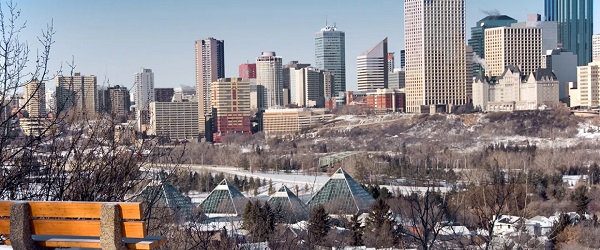
Housing in Calgary and Edmonton remains expensive but more affordable than other cities
-
 Business1 day ago
State of the Canadian Economy: Number of publicly listed companies in Canada down 32.7% since 2010
-
 International1 day ago
DOJ fails to fully comply with Friday deadline for Epstein files release
-
 Bruce Dowbiggin1 day ago
Hunting Poilievre Covers For Upcoming Demographic Collapse After Boomers
-
 Business2 days ago
Trump signs order reclassifying marijuana as Schedule III drug
-
 Crime2 days ago
Brown University shooter dead of apparent self-inflicted gunshot wound