
Business
$500K Forfeited, 20 Vancouver Properties Still in Legal Limbo in Case Connecting Sam Gor–Linked Suspect to Child Kidnapping Attempt and Trudeau Meeting

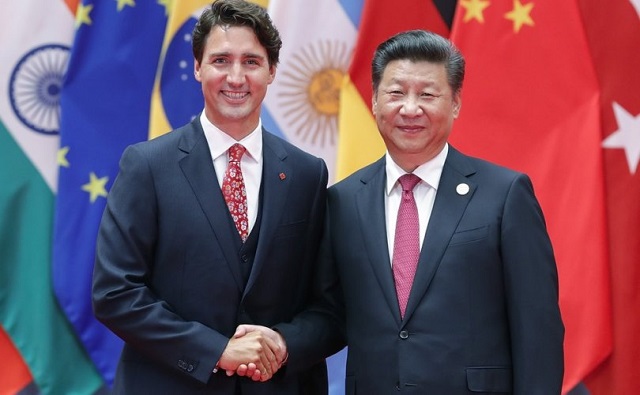


In a stunning detail first reported by The Globe and Mail and independently confirmed by The Bureau, Prime Minister Justin Trudeau was entangled in a Canadian surveillance operation when he met privately with Paul King Jin at a Richmond hotel in the months following the E-Pirate raids.
On October 15, 2015, as one team of RCMP officers stormed a bulletproof-glass-protected office inside a Richmond business tower, another team, just two kilometres away, entered a luxury condominium on Brighouse Way. Inside the master bedroom, they pried open a gun safe and uncovered what would become one of the most notorious cash seizures in Canadian anti-money laundering history: more than $4.3 million in Canadian currency, tightly bundled in elastic bands and stacked in rows. The bundles were surrounded by high-denomination casino chips and dozens of promissory notes written in Mandarin and English — all bearing the imprint of Paul King Jin’s clandestine gambling empire.
Among the documents recovered from the unit was one investigators never expected to find: a photocopy of a child’s identification. Two years earlier, that same child had been the target of a brazen abduction attempt. A man working for Jin had arrived at the child’s school with forged documents, police say, intending to seize the student as collateral for an unpaid gambling debt. Now, the reappearance of the child’s personal ID inside Jin’s Brighouse condo offered chilling confirmation of what experts on Triad-linked infiltration had long warned: the torrent of cash pouring into Canadian cities like Vancouver and Toronto wasn’t merely about casinos and narcotics and Asian capital flight — it was rooted in the systematic intimidation of vulnerable members of Canada’s Chinese diaspora.
The Brighouse unit — with its cash-laden gun safe and disturbing evidence of child-targeted debt enforcement — was just one of many interconnected properties raided by RCMP that day. Also searched was a sprawling Richmond mansion used to host Jin’s VIP gambling clientele; the Water Cube, a massage parlour tied to high-end prostitution and elite drug trafficking networks; and Silver International, a Chinese-run underground bank operating brazenly out of a Richmond office tower. It was at Silver, investigators believed, that hundreds of millions — possibly billions — in suspected drug proceeds were funneled through an informal remittance system linked to Hong Kong and mainland China.

Nearly a decade after RCMP’s sweeping E-Pirate raids, the civil forfeiture cases launched by the B.C. government against Paul King Jin and his relatives — targeting roughly 20 Vancouver-area properties worth an estimated $30 million — remain largely unresolved. Since the core case was filed in March 2019, new claims and properties have been added year after year. But The Bureau’s review of court records shows that to date, just one asset has been successfully reclaimed: in May 2025, the province quietly secured a consent forfeiture order for $538,638.22 in cash seized from Jin’s Jones Road property — minus a portion claimed by Jin’s parents.
The remainder — including the $4.3 million from the Brighouse gun safe, a portfolio of homes and vehicles, including Porsche 911, a 2013 Bentley Continental GT, a Cadillac Escalade — remains tied up in litigation. There has been little public explanation for the delay, other than court records showing Jin citing extended overseas travel as the reason for missed filings and non-compliance. Confusion has also persisted over which of his rotating cast of high-priced Vancouver lawyers is representing him in which case.
Jin’s claims of frequent international travel align with intelligence shared by two Canadian sources, who say he regularly flies to Latin America and the Caribbean — particularly Panama and Mexico. One source told The Bureau that during a search at a Mexican airport, authorities discovered a business card in Jin’s possession linking him to Wan Kuok Koi — the U.S.-sanctioned gangster known as “Broken Tooth,” identified as a senior Sam Gor drug cartel figure and “Hongmen” leader operating under Beijing’s United Front influence apparatus.
Experts say Sam Gor has senior operatives embedded in both Vancouver and Toronto, with direct ties to Chinese Communist Party officials involved in global drug trafficking and foreign interference campaigns.
Meanwhile, Jin remains seemingly unfazed, spotted recently strolling casually through Richmond. Despite multiple criminal convictions for aggravated assault, sexual assault, and sexual exploitation, he has never been convicted for money laundering or drug trafficking in several of Canada’s highest-profile investigations. Shielded by top-tier legal counsel and a legal framework ill-equipped to confront transnational organized crime, Jin has become a symbol of impunity — and a source of political controversy given his documented proximity to Canada’s ruling elite.
In a stunning detail first reported by The Globe and Mail and independently confirmed by The Bureau, Prime Minister Justin Trudeau was entangled in a Canadian surveillance operation when he met privately with Paul King Jin at a Richmond hotel in the months following the E-Pirate raids. According to The Globe, Jin attended the meeting alongside a group of Chinese businessmen. The precise date of the gathering remains unclear, but it took place during a sensitive period when the fallout from E-Pirate was still unfolding — and potentially after Jin’s arrest on February 24, 2016, when he was formally charged under the Criminal Code in connection with the RCMP investigation.
That criminal case collapsed in November 2018, just one month before trial, after federal prosecutors in Ottawa disclosed that a confidential informant’s identity had been inadvertently revealed to Jin’s defence team — a catastrophic failure reportedly of concern to senior U.S. officials, and one that ended Canada’s largest-ever money laundering case without a verdict.
If the E-Pirate trial was halted to protect the lives of police informants, it may have been in vain.
The Bureau is a reader-supported publication.
To receive new posts and support my work, consider becoming a free or paid subscriber.
As The Bureau has confirmed, one of the Chinese-Canadian narcotics traffickers surveilled during E-Pirate — Richard Yen Fat Chiu — was found stabbed and burned to death near the Venezuelan border on June 20, 2019. Colombian news outlets reported the murder bore the hallmarks of a targeted execution.
Similarly, if the multiple B.C. civil forfeiture actions targeting Jin’s Vancouver real estate and casino-linked assets were meant to cripple his operations, the effort appears to have had limited impact.
According to a police source, Jin is now believed to be operating a new illegal mansion casino in Richmond — not the 13511 No. 4 Road property raided by RCMP during E-Pirate, which was found vacant in 2015 and, according to recent photographs, has since fallen into disrepair.
Like many of Jin’s holdings, the new suspected mansion casino is reportedly registered to a nominee, and also linked to a decades-old RCMP file on methamphetamine trafficking.
Nevertheless, in the absence of any criminal trials, B.C. civil forfeiture filings remain the clearest court account of what investigators uncovered during E-Pirate. The B.C. forfeiture office did not respond to multiple requests for comment from The Bureau regarding the status of its ongoing cases.
Among the parade of financial records in the filings, the most jarring detail is the evidence of a kidnapping attempt — tied to more than $4 million in cash, promissory notes written by lawyers on Jin’s behalf, and casino paraphernalia seized from one of his condos. It’s a revelation that cuts through the numbing mass of transactions and property titles with a chilling portrait of impact and depravity.
“On February 25, 2013, a male working for Mr. Jin attempted to kidnap the child of one of the debtors by attending at the child’s school and presenting photocopies of the child’s identification documents,” the B.C. forfeiture filing states. “The child and the school refused the male’s request to release the child. Later that day, the male was arrested by Vancouver Police after following a vehicle the child was being transported in. During the search of #1204 – 5177 Brighouse Way, RCMP located a photocopy of the child’s identification documents.”
The kidnapping case is detailed within the broader context of how the Sam Gor network allegedly converted casino lending into real estate holdings across Vancouver, according to civil forfeiture filings.
Jin engaged in fraudulent schemes involving the preparation of promissory notes that falsely stated large sums of money loaned to gambling debtors were for home renovations. These documents were crafted to support constructive trust claims on real estate owned by the debtors — effectively allowing Jin to lay legal claim to the homes of individuals indebted through his gambling operation.
Multiple debtors reported to police that Jin or his associates had threatened them with physical violence and, in some cases, carried out assaults in attempts to collect on the fraudulent legal notes.
This raises the possibility that Sam Gor effectively controls unaccountable real estate in Vancouver through a parallel Chinese legal system — not only via nominee owners, but also through indebted gamblers who retain legal title in Canadian property records while ceding true ownership through secret agreements drafted by law offices.
The RCMP’s investigation into Jin’s underground gambling and money laundering network was sparked by reports from the British Columbia Lottery Corporation. By 2015, BCLC had flagged Jin as a high-risk casino patron known for delivering plastic bags and suitcases of cash into Lower Mainland gambling venues. Jin and his associates were linked to 140 suspicious transactions totaling more than $23 million, triggering a lifetime casino ban. That decision helped the RCMP to launch E-Pirate — a sweeping probe into money laundering, loan sharking, and transnational criminal finance networks tied to Chinese organized crime and the Sam Gor cartel.
At the center of the case was Silver International Investment Ltd., a Richmond currency exchange storefront that investigators say laundered, at minimum, hundreds of millions of dollars in drug cash through Canada’s casinos and real estate markets. Surveillance captured Paul King Jin and his wife, Xiaoqi Wei, arriving repeatedly with suitcases full of cash.
Surveillance showed that Jin was also a frequent visitor to Richmond law offices.
According to police, the laundering cycle operated much like the Beijing-linked illegal marijuana brokerage house system recently uncovered in Vancouver by The Bureau: illicit drug proceeds were delivered to Silver International by Asian gangsters operating across Western Canada. Jin and his network acted as brokers, passing the money to Chinese businessmen and organized crime associates flying into Vancouver, who then walked bags of cash into B.C. government casino cash cages.
After converting the cash into casino chips and cashing out, the laundered funds were repaid through Silver International or other underground banking channels — often materializing not through wire transfers, but through accounting sleight-of-hand recorded in the ledgers of Sam Gor–affiliated underground banks in Vancouver and China, then funneled into hundreds of Chinese bank accounts controlled by the traffickers who supplied the drug cash and the high-stakes gamblers who borrowed it to play.
Jin, investigators alleged, also operated a network of illegal gambling houses — including one fitted with baccarat tables and surveillance cameras at 13511 No. 4 Road, and another at #102 – 5131 Brighouse Way. A contractor hired to install video equipment at the Brighouse location told police he had been hired by “Paul from the Water Cube.”
On October 15 and 16, 2015, RCMP executed coordinated search warrants across six properties. At the No. 4 Road mansion — the main suspected casino site — officers found signs of a hasty cleanup operation, three empty gaming rooms, and dismantled surveillance equipment. According to details later published in Wilful Blindness, officers also discovered evidence suggesting a leak of confidential RCMP intelligence.
In addition to the $4.3 million found in the Brighouse Way gun safe, RCMP seized over $45,000 in casino chips, ledgers detailing $26 million in gambling debts, and a trove of fraudulent promissory notes — some allegedly drafted by lawyers working with Paul King Jin — designed to fabricate claims over real estate assets. A police dog later tested the seized cash and confirmed it was contaminated with narcotics residue.
Following the seizures and arrests, law enforcement undertook a detailed financial investigation. Analysis of ledgers recovered during the October 15 and 16, 2015, search warrants, combined with findings from the Canada Revenue Agency, revealed the extraordinary scale of Jin’s illegal gambling and money laundering enterprise.
The investigation found that:
From June 11 to October 8, 2015, Jin’s illegal gaming houses generated net profits exceeding $32 million, a staggering sum accrued in just under four months.
During the period from June 1 to October 15, 2015, Jin received nearly $27 million ($26,996,935) from Silver International, the underground bank and laundering hub, while depositing only $101,000 in return.
Despite the tens of millions in profit and cash flow, between 2011 and 2014, Jin and his wife reported average declared income to the CRA of just $29,969.
This massive disparity between reported income and financial activity suggested clear evidence of systemic tax evasion and laundering. The financial misconduct surrounding Jin and his network continues to unravel. As first reported by the Vancouver Sun, a new luxury penthouse in Richmond valued at almost $6-million has been added to the B.C. Civil Forfeiture Office’s expanding list of properties linked to Jin and his wife, who are now reportedly undergoing divorce proceedings, according to the B.C. court registry.
The Bureau is a reader-supported publication.
To receive new posts and support my work, consider becoming a free or paid subscriber.
Invite your friends and earn rewards


From Resource Works
Gitxaala has changed all the ground rules in British Columbia reshaping the risks around mills, mines and the North Coast transmission push.
The British Columbia Court of Appeal’s decision in Gitxaala v. British Columbia (Chief Gold Commissioner) is poised to reshape how the province approves and defends major resource projects, from mills and mines to new transmission lines.
In a split ruling on 5 December, the court held that British Columbia’s Declaration on the Rights of Indigenous Peoples Act makes consistency with the United Nations Declaration on the Rights of Indigenous Peoples a question courts can answer. The majority went further, saying UNDRIP now operates as a general interpretive aid across provincial law and declaring the Mineral Tenure Act’s automatic online staking regime inconsistent with article 32(2).
University of Saskatchewan law professor Dwight Newman, who has closely followed the case, says the majority has stretched what legislators thought they were doing when they passed the statute. He argues that section 2 of British Columbia’s UNDRIP law, drafted as a purpose clause, has been turned from guidance for reading that Act into a tool for reading all provincial laws, shifting decisions that were meant for cabinet and the legislature toward the courts.
The decision lands in a province already coping with legal volatility on land rights. In August, the Cowichan Tribes title ruling raised questions about the security of fee simple ownership in parts of Richmond, with critics warning that what used to be “indefeasible” private title may now be subject to senior Aboriginal claims. Newman has called the resulting mix of political pressure, investor hesitation and homeowner anxiety a “bubbling crisis” that governments have been slow to confront.
Gitxaala’s implications reach well beyond mining. Forestry communities are absorbing another wave of closures, including the looming shutdown of West Fraser’s 100 Mile House mill amid tight fibre and softwood duties. Industry leaders have urged Ottawa to treat lumber with the same urgency as steel and energy, warning that high duties are squeezing companies and towns, while new Forests Minister Ravi Parmar promises to restore prosperity in mill communities and honour British Columbia’s commitments on UNDRIP and biodiversity, as environmental groups press the government over pellet exports and protection of old growth.
At the same time, Premier David Eby is staking his “Look West” agenda on unlocking about two hundred billion dollars in new investment by 2035, including a shift of trade toward Asia. A centrepiece is the North Coast Transmission Line, a grid expansion from Prince George to Bob Quinn Lake that the government wants to fast track to power new mines, ports, liquefied natural gas facilities and data centres. Even as Eby dismisses a proposed Alberta to tidewater oil pipeline advanced under a new Alberta memorandum as a distraction, Gitxaala means major energy corridors will also be judged against UNDRIP in court.
Supporters of the ruling say that clarity is overdue. Indigenous nations and human rights advocates who backed the appeal have long argued that governments sold UNDRIP legislation as more than symbolism, and that giving it judicial teeth will front load consultation, encourage genuine consent based agreements and reduce the risk of late stage legal battles that can derail projects after years of planning.
Critics are more cautious. They worry that open ended declarations about inconsistency with UNDRIP will invite strategic litigation, create uncertainty around existing approvals and tempt courts into policy making by another name, potentially prompting legislatures to revisit UNDRIP statutes altogether. For now, the judgment leaves British Columbia with fewer excuses: the province has built its growth plans around big, nation building projects and reconciliation framed as partnership with Indigenous nations, and Gitxaala confirms that those partnerships now have a hard legal edge that will shape the next decade of policy and investment.
Resource Works News


By Stephen Nagy for Inside Policy
Beijing understands what many Canadians still resist: that our greatest national virtues, including our desire to be an “honest broker” on the world stage, have become our most exploitable weaknesses.
On December 1, 2018, RCMP officers arrested Huawei CFO Meng Wanzhou at Vancouver International Airport. As Canadians know well, within days, China seized two Canadians, Michael Kovrig and Michael Spavor, on fabricated espionage charges. For 1,019 days, they endured arbitrary detention while Canada faced an impossible choice of abandoning the rule-of-law or watching its citizens suffer in Chinese prisons.
This was hostage diplomacy. But more insidiously, it was also the opening move in a broader campaign against Canada, guided by the ancient Chinese proverb “借刀杀人” (Jiè dāo shā rén), or “Kill with a borrowed knife.” Beijing’s strategy, like the proverb, exploits others to do its bidding while remaining at arm’s length. In this case, it seeks to exploit Canadian vulnerabilities such as our resource-dependent economy, our multicultural identity, our loosely governed Arctic territories, and our naïve belief that we can balance relationships with all major powers – even when those powers are in direct conflict with one another.
With its “borrowed knife” campaign, Beijing understands what many Canadians still resist: that our greatest national virtues, including our desire to be an “honest broker” on the world stage, have become our most exploitable weaknesses.
The Weaponization of Canadian Niceness
Canadian foreign policy rests on the Pearsonian tradition. It is the belief that our lack of imperial history and (now irrelevant) middle-power status uniquely positions us as neutral mediators. We pride ourselves on sending peacekeepers, not warfighters. We build bridges through dialogue and compromise.
Beijing exploited this subjective, imagined identity. When Canada arrested Meng pursuant to our extradition treaty with the United States, Chinese state media framed it as Canada “choosing sides” and betraying its honest broker role. This narrative trapped Canadian political culture. Our mythology says we transcend conflicts through enlightened multilateralism. But the modern world increasingly demands choosing sides.
When former Prime Minister Jean Chrétien and former Ambassador John McCallum advocated releasing Meng to free the “Two Michaels,” they weren’t acting as Chinese agents. They were expressing a genuinely Canadian impulse that conflict resolves through compromise. Yet this “Canadian solution” was precisely what Beijing sought, abandoning legal principles under pressure.
China’s economic coercion has followed a similar logic. When Beijing blocked Canadian canola, pork, and beef exports – targeting worth $2.7 billion worth of Prairie agricultural products – the timing was transparently political. However, China maintained the fiction of “quality concerns,” making it extremely difficult for Canada to challenge the restrictions via the World Trade Organization. At the same time, Prairie farmers pressured Ottawa to accommodate Beijing.
The borrowed knife was Canadian democratic debate itself, turned against Canadian interests. Beijing didn’t need to directly change policy, it mobilized Canadian farmers, business lobbies, and opposition politicians to do it instead.
The Arctic: Where Mythology Meets Reality
No dimension better illustrates China’s strategy than the Arctic. Canada claims sovereignty over vast northern territories while fielding six icebreakers to Russia’s forty. We conduct summer sovereignty operations that leave territories ungoverned for nine months annually. Chinese state-owned enterprises invest in Arctic mining, Chinese research vessels map Canadian waters, and Beijing now calls itself a “near-Arctic state,” a term appearing nowhere in international law.
This campaign weaponizes the gap between Canadian mythology and capacity. When China proposes infrastructure investment, our reflex is “economic opportunity.” When Chinese researchers request Arctic access, our instinct is accommodation because we’re co-operative multilateralists. Each accommodation establishes precedent, each precedent normalizes Chinese presence, and each normalized presence constrains future Canadian options.
Climate change accelerates these dynamics. As ice melts, the Northwest Passage becomes navigable. Canada insists these are internal waters. China maintains they’re international straits allowing passage. The scenario exposes Canada’s dilemma perfectly. Does Ottawa escalate against our second-largest trading partner over waters we cannot patrol, or accept Chinese transits as fait accompli? Either choice represents failure.
The Diaspora Dilemma
Canada’s multiculturalism represents perhaps our deepest national pride. The Chinese Communist Party has systematically weaponized this openness through United Front Work Department operations, an ostensibly independent community organization that provides genuine services while advancing Beijing’s agenda including: monitoring dissidents, mobilizing Chinese-Canadians for CCP-approved candidates, organizing counter-protests against Tibetan and Uyghur activists, and creating environments where criticism of Beijing risks community ostracism and threats to relatives in China.
The establishment of illegal Chinese police stations in Toronto and Vancouver represents this operation’s logical endpoint. These “overseas service centres” conducted intimidation operations, pressured targets to return to China, and maintained surveillance on diaspora communities.
Canada’s response illuminates our vulnerability. When investigations exposed how Chinese organized crime groups, operating with apparent CCP protection, laundered billions through Vancouver real estate while financing fentanyl trafficking, initial reactions accused investigators of anti-Chinese bias. When CSIS warned that MPs might be compromised, debate focused on whether the warning represented racial profiling rather than whether compromise occurred.
Beijing engineered this trap brilliantly. Legitimate criticism of CCP operations becomes conflated with anti-Chinese racism. Our commitment to multiculturalism gets inverted into paralysis when a foreign government exploits ethnic networks for political warfare. The borrowed knife is Canadian anti-racism, wielded against Canadian sovereignty and this leaves nearly two million Chinese-Canadians under a cloud of suspicion while actual operations continue with limited interference.

What Resistance Requires
Resisting comprehensive pressure demands abandoning comfortable myths and making hard choices.
First, recognize that 21st-century middle-power independence is increasingly fictional. The global order is re-polarizing. Canada cannot maintain equidistant relationships with Washington and Beijing during strategic competition. We can trade with China, but not pretend shared rhetoric outweighs fundamental disagreements about sovereignty and human rights. The Pearsonian honest-broker role is obsolete when major powers want you to choose sides.
Second, invest in sovereignty capacity, not just claims. Sovereignty is exercised or forfeited. This requires sustained investment in military forces, intelligence services, law enforcement, and Arctic infrastructure. It means higher defence spending, more robust counterintelligence, and stricter foreign investment screening, traditionally un-Canadian approaches, which is precisely why we need them.
Third, build coalitions with countries facing similar pressures. Australia, Japan, South Korea, Lithuania, and others have faced comparable campaigns. When China simultaneously blocks Canadian canola, Australian wine, and Lithuanian dairy, that’s not separate trade disputes but a pattern requiring coordinated democratic response. The borrowed knife only works when we’re isolated.
Fourth, Ottawa must do much more to protect diaspora communities while confronting foreign operations. Effective policy must shut down United Front operations and illegal police stations while ensuring actions don’t stigmatize communities. Success requires clear communication that we’re targeting a foreign government’s operations, not an ethnic community.
Finally, we must accept the necessity of selective economic diversification. Critical infrastructure, sensitive technologies, and strategic resources cannot be integrated with an authoritarian state weaponizing interdependence. This means higher costs and reduced export opportunities – but maximum efficiency sometimes conflicts with strategic resilience. Canada can achieve this objective with a synergistic relationship with the US and other allies and partners that understand the tangential link between economic security and national security.
Conclusion
Canada’s myths, that we transcend conflicts, that multiculturalism creates only strength, that resource wealth brings pure prosperity and positivity, coupled with our deep vein of light-but-arrogant anti-Americanism, have become exploitable weaknesses. Beijing systematically tested each myth and used the gap between self-conception and reality as leverage.
The borrowed knife strategy works because we keep handing over the knife. Our openness becomes the vector for interference. Our trade dependence becomes the lever for coercion. Our niceness prevents us from recognizing we’re under attack.
Resistance doesn’t require abandoning Canadian values. It requires understanding that defending them demands costs we’ve historically refused to pay. The Chinese “Middle Kingdom” that tells the world it has had 5,000 years of peaceful history has entered a world that doesn’t reward peaceability, it exploits it. The question is whether we’ll recognize the borrowed knife for what it is and put it down before we bleed out from self-inflicted wounds.
Stephen R. Nagy is a professor of politics and international studies at the International Christian University in Tokyo and a senior fellow and China Project lead at the Macdonald-Laurier Institute (MLI). The title for his forthcoming monograph is “Japan as a Middle Power State: Navigating Ideological and Systemic Divides.”


Wisdom of Our Elders: The Contempt for Memory in Canadian Indigenous Policy
Liberal bill “targets Christians” by removing religious exemption in hate-speech law

Canada invests $34 million in Chinese drones now considered to be ‘high security risks’

Conservative MP warns Liberals’ national AI plan could increase gov’t surveillance
-
C2C Journal2 days ago
Wisdom of Our Elders: The Contempt for Memory in Canadian Indigenous Policy
-
 Sports2 days ago
Egypt, Iran ‘completely reject’ World Cup ‘Pride Match’ plan
-
 National14 hours ago
Canada’s free speech record is cracking under pressure
-
 Alberta2 days ago
Alberta introducing three “all-season resort areas” to provide more summer activities in Alberta’s mountain parks
-
 Business17 hours ago
Taxpayers Federation calls on politicians to reject funding for new Ottawa Senators arena
-
 Energy6 hours ago
Meet REEF — the massive new export engine Canadians have never heard of
-
 Business17 hours ago
Albertans give most on average but Canadian generosity hits lowest point in 20 years
-
 Automotive2 days ago
The $50 Billion Question: EVs Never Delivered What Ottawa Promised