
Agriculture
2024 harvest wrap-up: Minister Sigurdson

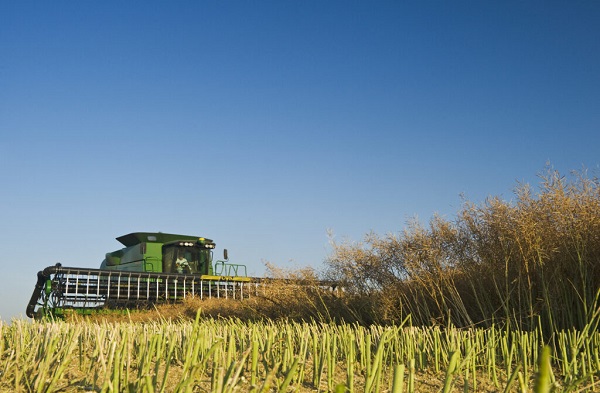
As the 2024 growing season comes to a close, Minister of Agriculture and Irrigation RJ Sigurdson issued the following statement:
“While many Albertans were enjoying beautiful fall days with above-average temperatures, farmers were working around the clock to get crops off their fields before the weather turned. I commend their continued dedication to growing quality crops, putting food on tables across the province and around the world.
“Favourable weather conditions in August and early September allowed for a rapid start to harvest, leading to quick and efficient completion.
“The final yield estimates show that while the South, North West and Peace regions were slightly above average, the yields in the Central and North East regions were below average.
“Crop quality for oats and dry peas is currently exceeding the five-year average, with a higher rate of these crops grading in the top two grade categories. In contrast, spring wheat, durum, barley and canola are all grading in the top two grades at rates lower than the five-year average.
“Crop grading is a process that determines the quality of a grain crop based on visual inspection and instrument analysis. Factors like frost damage, colour, moisture content and sprouting all impact grade and affect how the grain will perform during processing or how the end product will turn out. Alberta generally produces high-quality crops.
“Farmers faced many challenges over the last few years and, for some areas of the province, 2024 was a difficult growing season. But Alberta producers are innovative and resilient. They work constantly to meet challenges head-on and drive sustainable growth in our agricultural sector.
“Alberta farmers help feed the world, and I’m proud of the reputation for safe, high-quality agricultural products that this industry has built for itself. Thank you to our producers, and congratulations on another successful harvest!”

Agriculture
Health Canada indefinitely pauses plan to sell unlabeled cloned meat after massive public backlash


From LifeSiteNews
Health Canada has indefinitely paused its plan to allow unlabeled cloned meat in grocery stores after thousands of Canadians, prominent figures, and industry leaders condemned the move.
Health Canada is pausing its plan to put unlabeled cloned meat in Canadian grocery stores, following public outcry.
In a November 19 update on its website, Health Canada announced an indefinite suspension of the decision to remove labels from cloned meat products after thousands of Canadians condemned the plan online.
“The Government of Canada has received significant input from both consumers and industry about the implications of this potential policy update,” the publication read. “The Department has therefore indefinitely paused the policy update to provide time for further discussions and consideration,” it continued, adding, “Until the policy is updated, foods made from cloned cattle and swine will remain subject to the novel food assessment.”
In late October, Health Canada quietly approved removing labels from foods derived from somatic cell nuclear transfer (SCNT) clones and their offspring. As a result, Canadians buying meat from the grocery store would have had no way of knowing if the product was cloned meat.
Many researchers have documented high rates of cloning failure, large offspring syndrome (LOS), placental abnormalities, early death, and organ defects in cloned animals. The animals are also administered heavy doses of antibiotics due to infections and immune issues.
Typically, the offspring of cloned animals, rather than the cloned animals themselves, are processed for human consumption. As a result, researchers allege that the health defects and high drug use does not affect the final product.
However, there are no comprehensive human studies on the effects of eating cloned meat, meaning that the side-effects for humans are unknown.
News of the plan spread quickly on social media, with thousands of Canadians condemning the plan and promising to switch to local meat providers.
“By authorizing the sale of meat from cloned animals without mandatory labeling or a formal public announcement, Health Canada risks repeating a familiar and costly failure in risk communication. Deeply disappointing,” food policy expert and professor at Dalhousie University Sylvain Charlebois wrote on X.
"By authorizing the sale of meat from cloned animals without mandatory labeling or a formal public announcement, Health Canada risks repeating a familiar and costly failure in risk communication. Deeply disappointing."
More on this week's Food Professor Podcast! https://t.co/UZTIcQzUN3
— The Food Professor (@FoodProfessor) October 30, 2025
Likewise, Conservative MP Leslyn Lewis warned, “Health Canada recently decided that meat from cloned animals and their offspring no longer needs a special review or any form of disclosure.”
“That means, soon you could buy beef or pork and have no idea how it was bred,” she continued. “Other countries debate this openly: the EU has considered strict labelling, and even the U.S. has admitted that cloned-offspring meat is circulating.”
“But here in Canada, the public wasn’t even told. This is about informed choice,” Lewis declared. “If government and industry don’t have to tell us when meat comes from cloned animals, then Canadians need to ask a simple, honest question: What else are we not being told?”
Health Canada recently decided that meat from cloned animals and their offspring no longer needs a special review or any form of disclosure. That means, soon you could buy beef or pork and have no idea how it was bred.
Other countries debate this openly: the EU has considered… pic.twitter.com/zCnqJOpvf3
— Dr. Leslyn Lewis (@LeslynLewis) November 14, 2025
Likewise, duBreton, a leading North American supplier of organic pork based out of Quebec, denounced the move, saying, “Canadians expect clarity, transparency, and meaningful consultation on issues that directly touch their food supply. As producers, we consider it our responsibility and believe our governing food authorities should too.”
According to a survey conducted by duBreton, 74 percent of Canadians believe that “cloned meat and genetic editing practices have no place in farm and food systems.”
Agriculture
Federal cabinet calls for Canadian bank used primarily by white farmers to be more diverse

From LifeSiteNews
A finance department review suggested women, youth, Indigenous, LGBTQ, Black and racialized entrepreneurs are underserved by Farm Credit Canada.
The Cabinet of Prime Minister Mark Carney said in a note that a Canadian Crown bank mostly used by farmers is too “white” and not diverse enough in its lending to “traditionally underrepresented groups” such as LGBT minorities.
Farm Credit Canada Regina, in Saskatchewan, is used by thousands of farmers, yet federal cabinet overseers claim its loan portfolio needs greater diversity.
The finance department note, which aims to make amendments to the Farm Credit Canada Act, claims that agriculture is “predominantly older white men.”
Proposed changes to the Act mean the government will mandate “regular legislative reviews to ensure alignment with the needs of the agriculture and agri-food sector.”
“Farm operators are predominantly older white men and farm families tend to have higher average incomes compared to all Canadians,” the note reads.
“Traditionally underrepresented groups such as women, youth, Indigenous, LGBTQ, and Black and racialized entrepreneurs may particularly benefit from regular legislative reviews to better enable Farm Credit Canada to align its activities with their specific needs.”
The text includes no legal amendment, and the finance department did not say why it was brought forward or who asked for the changes.
Canadian census data shows that there are only 590,710 farmers and their families, a number that keeps going down. The average farmer is a 55-year-old male and predominantly Christian, either Catholic or from the United Church.
Data shows that 6.9 percent of farmers are immigrants, with about 3.7 percent being “from racialized groups.”
National census data from 2021 indicates that about four percent of Canadians say they are LGBT; however, those who are farmers is not stated.
Historically, most farmers in Canada are multi-generational descendants of Christian/Catholic Europeans who came to Canada in the mid to late 1800s, mainly from the United Kingdom, Ireland, Ukraine, Russia, Italy, Poland, the Netherlands, Germany, and France.


A look inside the ‘floatel’ housing B.C.’s LNG workforce

Canada Needs an Alternative to Carney’s One Man Show

FBI may have finally nabbed the Jan. 6 pipe bomber

This new Canada–Alberta pipeline agreement will cost you more than you think
-
Energy2 days ago
A look inside the ‘floatel’ housing B.C.’s LNG workforce
-
 National2 days ago
Alberta will use provincial laws to stop Canadian gov’t from trying to confiscate legal firearms
-
 Energy2 days ago
ELZABETH MAY HAS IT WRONG: An Alberta to Prince Rupert Oil Pipeline Will Contribute to Greater Global Oil Tanker Safety
-
 illegal immigration1 day ago
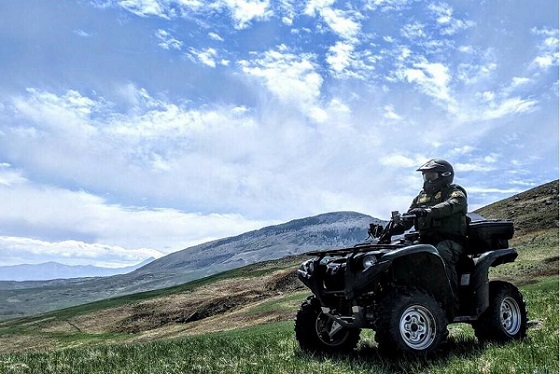
While Trump has southern border secure, hundreds of thousands of illegal immigrants still flooding in from Canada
-
 Censorship Industrial Complex1 day ago
Canadian bishops condemn Liberal ‘hate speech’ proposal that could criminalize quoting Scripture
-
 COVID-192 days ago
Canadian legislator introduces bill to establish ‘Freedom Convoy Recognition Day’ as a holiday
-
 Business2 days ago
US Energy Secretary says price of energy determined by politicians and policies
-
 Censorship Industrial Complex1 day ago
Foreign Leaders Caught Orchestrating Campaign To Censor American Right-Wing Media Companies