
Automotive
$15 Billion, Zero Assurances: Stellantis Abandons Brampton as Trudeau-Era Green Deal Collapses

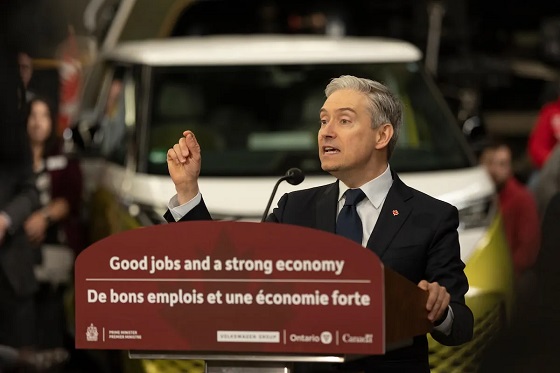


Carney issues memos, Joly writes letters, and Freeland hides abroad—while 3,000 Canadian workers pay the price for a green gamble built on denial and delusion.
Stellantis has announced they’re leaving Brampton. That’s it. End of story.
Three thousand workers. Gone. A manufacturing base gutted. A city thrown into economic chaos. And a federal government left holding a $15 billion bag it handed over like a drunk tourist at a rigged poker table.
The Jeep Compass—the very vehicle they promised would anchor Ontario’s role in the so-called “EV transition”—will no longer be built in Canada. Production is moving to Belvidere, Illinois. The same company that cashed billions of your tax dollars under the banner of “green jobs” and “economic transformation” has slammed the door and walked out. And no, this isn’t a surprise. This was baked into the cake from day one.
Let’s rewind.
In April 2023, under Justin Trudeau’s government, Chrystia Freeland—then Finance Minister—and François-Philippe Champagne, the Industry Minister, announced what they called a “historic” agreement: a multi-billion-dollar subsidy package to Stellantis and LG Energy Solution to build an EV battery plant in Windsor, Ontario.
It was sold as a turning point. The future. A Green Revolution. Thousands of jobs. A new industrial strategy for Canada. But in reality? It was a Hail Mary pass by a government that had already crippled Canada’s energy sector and needed a shiny new narrative heading into an election cycle.
And here’s what they didn’t tell you: the deal had no enforceable commitment to keep auto production in Brampton. There were performance-based incentives—yes—but only for the battery plant. Not for the Brampton assembly line. Not for the existing workforce. And certainly not for ensuring the long-term health of Canada’s domestic auto industry.
They tied this country’s future to a globalist fantasy. A fantasy that assumed the United States would remain under the control of climate-obsessed technocrats like Joe Biden. A fantasy that required a compliant America pushing carbon neutrality, electric vehicle mandates, and billions in matching subsidies for green infrastructure.
But in November 2024, Americans said no.
Donald Trump was elected president. And just as he promised, he tore Biden’s green agenda to shreds. He pulled out of the Paris Climate Accord—again. He dismantled the EV mandates. He unleashed American oil and gas. But he didn’t stop there. Trump imposed a sweeping America First manufacturing policy, pairing 25% tariffs on imported goods with aggressive incentives to bring factories, jobs, and supply chains back onto U.S. soil.
And it’s working—because the United States doesn’t strangle its industries with the kind of red tape, carbon taxes, and bureaucratic self-sabotage that Canada does. Energy is cheaper, regulations are lighter, and capital actually wants to stay. So when companies like Stellantis look at the map, it’s no contest.
Now Stellantis, like any rational corporation, is doing what any business does under pressure: protecting its bottom line. They’re shifting production to a country that rewards investment instead of punishing it, a country that actually wants to build things again. That’s Trump’s America—competitive, unapologetic, and open for business—while Canada clings to a collapsing green fantasy and wonders why the factories keep leaving.

So what does Canada do in response? Our Prime Minister, Mark Carney, issues a carefully scripted memo on social media—not action, not legislation, not binding commitments—just a memo—reassuring workers he “stands by” the auto sector while offering vague promises about future budgets and long-term resilience. Lets be clear Carney isn’t saving jobs; he’s eulogizing them. Those 3,000 positions aren’t “paused” or “in transition.” They’re gone. Finished. Packed up and heading south. No memo, no committee, no press conference is bringing them back.
Chrystia Freeland, the architect of this mess, isn’t around to answer for any of it. She’s been conveniently shipped off to Kyiv, far from the consequences of the green boondoggles she helped engineer

And Industry Minister Mélanie Joly? She’s doing what this government does best: issuing strongly worded letters, drafted by lawyers, polished by comms teams, and lobbed into the void like they carry any real weight. She’s threatening legal action against Stellantis—vague, undefined, and almost certainly toothless. As if a global automaker backed by EU investors and billions in international capital is going to flinch because Ottawa wrote them a nasty note.
But let’s be absolutely clear here—what legal action? What’s the actual mechanism Ottawa is threatening to use? This wasn’t a blank cheque handed to Stellantis. According to public records, The $15 billion deal was built around performance-based incentives, structured to release funding only if Stellantis delivered on agreed milestones: production output, sales volume, battery module manufacturing at the Windsor facility. If they didn’t meet those metrics, they wouldn’t get paid. That’s the public line. That’s the defense.
Opposition Calls for Accountability
Conservatives, led by Raquel Dancho, are demanding real accountability, a formal investigation, a full reopening of the House of Commons Standing Committee on Industry and Technology (INDU) under Standing Order 106(4).
This isn’t a symbolic gesture. It’s a procedural weapon. When invoked, 106(4) forces Parliament to reconvene the committee, even if the government doesn’t want to, and compels ministers and officials to testify under oath. That’s what Dancho and her colleagues, Ted Falk, Michael Guglielmin, and Kathy Borrelli, have done. Their letter, dated October 15, 2025, demands that INDU immediately examine the Stellantis debacle — the $15 billion taxpayer-funded subsidy that failed to secure a single guarantee for Canadian auto jobs.
The letter is explicit. It references Stellantis’ decision to move Jeep Compass production from Brampton, Ontario to Illinois, a move that puts 3,000 Canadian jobs at risk despite the billions handed to the automaker under the Trudeau-Freeland-Carney green industrial strategy. It details how the federal and Ontario governments offered over $15 billion to secure battery plant investments, but with no enforceable job protection clauses to safeguard workers at Stellantis’s Canadian operations.
It doesn’t stop there. The letter points directly at Mark Carney, accusing him of breaking his promise to “put elbows up” and negotiate a fair deal with President Trump. It notes that Carney’s October 7th White House visit yielded nothing but new U.S. tariffs on Canadian autos and lumber, while Stellantis and GM expanded their operations south of the border. “Mark Carney broke his promise,” the MPs write, “and his weakness abroad is costing Canadian jobs at home.”

Dancho’s accompanying tweet lays out the message clearly and without spin:
“Stellantis received up to $15 billion in taxpayer subsidies—with no assurances of job retention in Canada. Yesterday, Stellantis announced that they were moving production to the U.S. and investing $13 billion in their economy. Conservatives are calling to reconvene the Industry Committee to study this decision and learn how such a failure happened. While the Liberals pat themselves on the back for announcements and rhetoric, auto workers are being told that their jobs are on the chopping block. They deserve clarity.”
Dancho’s move changes the game. With the NDP gutted and no longer shielding the government in committee, the opposition finally has the numbers and the mandate to dig. Ministers like Mélanie Joly and François-Philippe Champagne will now have to answer, under oath, for the deals they signed. Officials from Innovation, Finance, and Employment Canada will be subpoenaed to explain what oversight, if any, was built into the Stellantis agreements.
Final thoughts
I wrote about this when the deal was signed, and I wasn’t guessing. I said it plainly: this $15 billion green industrial experiment was a reckless, ideological bet that depended entirely on Donald Trump not winning the presidency.
Now here we are. Trump’s back in office — and he’s gone even further than I predicted. He didn’t just rip up Biden’s climate agenda; he imposed broad “America First” tariffs across the board to drag manufacturing back onto U.S. soil. Twenty-five percent duties on Canadian and Mexican goods, combined with tax breaks and energy policies that make it cheaper to produce in America than anywhere else. That single move detonated the fragile logic behind Trudeau and Freeland’s so-called industrial strategy.
So Stellantis did what any corporation would do when faced with a government that punishes production and a neighbour that rewards it: it packed up and left. The company took billions in Canadian subsidies, thanked Ottawa for the free money, then announced a $13 billion expansion in the United States—under Trump’s protectionist umbrella.
Let’s be clear: when I bet, I bet smart. I hedge. I read the table. I make damn sure I’m holding something real. These people—the Liberal government—went all in with a high card and a hollow narrative, betting your tax dollars on a political fantasy. They thought they could bluff their way into an industrial renaissance while ignoring the shift happening just across the border.
And you want final thoughts? Here they are: I am absolutely sickened by the people responsible for this disaster and you know exactly who I mean. Chrystia Freeland, who vanished from Cabinet and failed up into some made up ambassador’s post, her entire political career a string of bailouts, virtue signals, and globalist pageantry. And François-Philippe Champagne, the man who handed out our tax dollars like Monopoly money and couldn’t negotiate a cup of coffee without being outplayed.
They won an election based on this. Based on lies. Based on phony climate promises and fake job projections and polls manipulated by the same Mainstream Media that cashes federal subsidy cheques while calling themselves journalists. Do you think they’re going to hold Champagne accountable? Do you think they’re going to track Freeland down between photo ops in Kyiv and ask how 3,000 Canadian families are supposed to pay their mortgage now?
Of course not. They’re all on the same payroll.
Well guess what, I’m not. I don’t take their money. I don’t need their approval. And I am not shutting up. Not now. Not until that committee gets answers. Not until those ministers are dragged before Parliament. And not until Chrystia Freeland and François-Philippe Champagne are fired for the betrayal they’ve inflicted on Canadian workers.
This isn’t over. Not by a long shot. I’m going to bang this drum until it splits. And every time they try to bury this story, I’ll be there digging it back up. You’ve been lied to. Robbed. Betrayed. And someone is finally going to answer for it.
So stay tuned. Stay loud. And for God’s sake, stay angry.

From Resource Works
Barry Penner doesn’t posture – he brings evidence. And lately, the evidence has been catching up fast to what he’s been saying for months.
Penner, chair of the Energy Futures Institute and a former B.C. environment minister and attorney-general, walked me through polling that showed a decisive pattern: declining support for electric-vehicle mandates, rising opposition, and growing intensity among those pushing back.
That was before the political landscape started shifting beneath our feet.
In the weeks since our conversation, the B.C. government has begun retreating from its hardline EV stance, softening requirements and signalling more flexibility. At the same time, Ottawa has opened the door to revising its own rules, acknowledging what the market and motorists have been signalling for some time.
Penner didn’t need insider whispers to see this coming. He had the data.

Barry Penner, Chair of the Energy Futures Institute
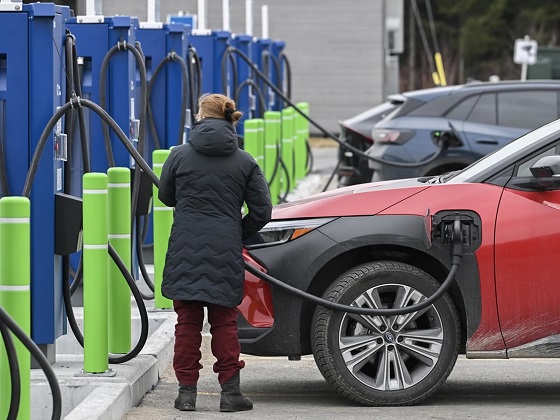
B.C.’s mandate remains the most aggressive in North America: 26 per cent ZEV sales by 2026, 90 per cent by 2030, and 100 per cent by 2035. Yet recent sales paint a different picture. Only 13 per cent of new vehicles sold in June were electric. “Which means 87 per cent weren’t,” Penner notes. “People had the option. And 87 per cent chose a non-electric.”
Meanwhile, Quebec has already adjusted its mandate to give partial credit for hybrids. Polling shows 76 per cent of British Columbians want the same. The trouble? “There’s a long waiting list to get one,” Penner says.
Cost, charging access and range remain the top barriers for consumers. And with rebates shrinking or disappearing altogether, the gap between policy ambition and practical reality is now impossible for governments to ignore.
Penner’s advice is simple, and increasingly unavoidable: “Recognition of reality is in order.”
- Now watch Barry Penner’s full video interview with Stewart Muir on Power Struggle here:


By Jerome Gessaroli for Inside Policy
Reducing transportation emissions is a worthy goal, but policy must be guided by evidence, not ideology.
In the next few years, the average new vehicle in British Columbia could reach $80,000, not because of inflation, but largely because of provincial and federal climate policy. By forcing zero-emission-vehicle (ZEV) targets faster than the market can afford, both governments risk turning climate ambition into an affordability crisis.
EVs are part of the solution, but mandates that outpace market acceptance risk creating real-world challenges, ranging from cold-weather travel to sparse rural charging to the cost and inconvenience for drivers without home charging. As Victoria and Ottawa review their ZEV policies, the goal is to match ambition with evidence.
Introduced in 2019, BC’s mandate was meant to accelerate electrification and cut emissions from light-duty vehicles. In 2023, however, it became far more stringent, setting the most aggressive ZEV targets in North America. What began as a plan to boost ZEV adoption has now become policy orthodoxy. By 2030, automakers must ensure that 90 per cent of new light-duty vehicles sold in BC are zero-emission, regardless of what consumers want or can afford. The evidence suggests this approach is out of step with market realities.
The province isn’t alone in pursuing EV mandates, but its pace is unmatched. British Columbia, Quebec, and the federal government are the only ones in Canada with such rules. BC’s targets rise much faster than California’s, the jurisdiction that usually sets the bar on green-vehicle policy, though all have the same goal of making every new vehicle zero-emission by 2035.
According to Canadian Black Book, 2025 model EVs are about $17,800 more expensive than gas-powered vehicles. However, ever since Ottawa and BC removed EV purchase incentives, sales have fallen and have not yet recovered. Actual demand in BC sits near 16 per cent of new vehicle sales, well below the 26 per cent mandate for 2026. To close that gap, automakers may have to pay steep penalties or cut back on gas-vehicle sales to meet government goals.
The mandate also allows domestic automakers to meet their targets by purchasing credits from companies, such as Tesla, which hold surplus credits, transferring millions of dollars out of the country simply to comply with provincial rules. But even that workaround is not sustainable. As both federal and provincial mandates tighten, credit supplies will shrink and costs will rise, leaving automakers more likely to limit gas-vehicle sales.
It may be climate policy in intent, but in reality, it acts like a luxury tax on mobility. Higher new-vehicle prices are pushing consumers toward used cars, inflating second-hand prices, and keeping older, higher-emitting vehicles on the road longer. Lower-income and rural households are hit hardest, a perverse outcome for a policy meant to reduce emissions.
Infrastructure is another obstacle. Charging-station expansion and grid upgrades remain far behind what is needed to support mass electrification. Estimates suggest powering BC’s future EV fleet alone could require the electricity output of almost two additional Site C dams by 2040. In rural and northern regions, where distances are long and winters are harsh, drivers are understandably reluctant to switch. Beyond infrastructure, changing market and policy conditions now pose additional risks to Canada’s EV goals.
Major automakers have delayed or cancelled new EV models and battery-plant investments. The United States has scaled back or reversed federal and state EV targets and reoriented subsidies toward domestic manufacturing. These shifts are likely to slow EV model availability and investment across North America, pushing both British Columbia and Ottawa to reconsider how realistic their own targets are in more challenging market conditions.
Meanwhile, many Canadians are feeling the strain of record living costs. Recent polling by Abacus Data and Ipsos shows that most Canadians view rising living costs as the country’s most pressing challenge, with many saying the situation is worsening. In that climate, pressing ahead with aggressive mandates despite affordability concerns appears driven more by green ideology than by evidence. Consumers are not rejecting EVs. They are rejecting unrealistic timelines and unaffordable expectations.
Reducing transportation emissions is a worthy goal, but policy must be guided by evidence, not ideology. When targets become detached from real-world conditions, ideology replaces judgment. Pushing too hard risks backlash that can undo the very progress we are trying to achieve.
Neither British Columbia nor the federal government needs to abandon its clean-transportation objectives, but both need to adjust them. That means setting targets that match realistic adoption rates, as EVs become more affordable and capable, and allowing more flexible compliance based on emissions reductions rather than vehicle type. In simple terms, the goal should be cutting emissions, not forcing people to buy a specific type of car. These steps would align ambition with reality and ensure that environmental progress strengthens, rather than undermines, public trust.
With both Ottawa and Victoria reviewing their EV mandates, their next moves will show whether Canadian climate policy is driven by evidence or by ideology. Adjusting targets to reflect real-world affordability and adoption rates would signal pragmatism and strengthen public trust in the country’s clean-energy transition.
Jerome Gessaroli is a senior fellow at the Macdonald-Laurier Institute and leads the Sound Economic Policy Project at the BC Institute of British Columbia


Canadians will soon be versed in massive West Coast LPG mega-project
Keynote address of Premier Danielle Smith at 2025 UCP AGM

Canada Needs an Alternative to Carney’s One Man Show

Net Zero goal is a fundamental flaw in the Ottawa-Alberta MOU
-
 Alberta2 days ago
This new Canada–Alberta pipeline agreement will cost you more than you think
-
 Energy2 days ago
Unceded is uncertain
-
Automotive2 days ago
Power Struggle: Governments start quietly backing away from EV mandates
-
 Business18 hours ago
Canada’s climate agenda hit business hard but barely cut emissions
-
 Energy22 hours ago
Canada following Europe’s stumble by ignoring energy reality
-
 MAiD1 day ago
From Exception to Routine. Why Canada’s State-Assisted Suicide Regime Demands a Human-Rights Review
-
 Alberta2 days ago
Alberta will defend law-abiding gun owners who defend themselves
-
 Business1 day ago
Carney government should privatize airports—then open airline industry to competition