
Business
103 Conflicts and Counting Unprecedented Ethics Web of Prime Minister Mark Carney


 Dan Knight
Brookfield. The PMO. Eurasia Group. One Green Agenda, Billions in Conflicts.
Well, it finally happened. After months of dodging questions and hiding behind vague platitudes about “climate leadership,” Prime Minister Mark Carney’s official conflict-of-interest screen has been released by the Ethics Commissioner—and what it reveals is nothing short of staggering. Not five entities. Not a dozen. One hundred and three. That’s how many corporate and financial interests Carney has quietly acknowledged are too conflicted for him to touch.
At the center of this web? Brookfield Asset Management, the $1 trillion global investment firm where Carney was Vice-Chair before walking straight into Canada’s top political office. The very same Brookfield that owns energy projects, pipelines, nuclear companies, real estate empires, carbon offset schemes you name it, they’ve got a piece of it. And now, they’ve got a former executive running the country.
We’re told it’s all perfectly legal. We’re told Carney has “recused himself.” But what this disclosure actually shows is something much bigger: a government captured by finance, a prime minister with deep, ongoing entanglements in the very sectors his policies now enrich, and a climate agenda that’s beginning to look a whole lot like a money-printing operation for the global elite.
The deeper one digs into Prime Minister Mark Carney’s ethics disclosure, the clearer the picture becomes: what’s been framed as a climate leadership story is, in reality, a tightly wound web of commercial interest wrapped in green rhetoric. The 103-entity conflict-of-interest screen, ostensibly a shield against impropriety, instead serves as a road map of how thoroughly Canada’s top political office is entangled in the global green finance complex centered around Brookfield Asset Management.
As of Q1 2025, Brookfield reports $125 billion in assets under management (AUM) in its Renewable Power & Transition segment, a figure representing 12.5% of its overall $1 trillion portfolio. This segment alone encompasses most of the entities on Carney’s ethics screen: nearly 60 out of 103, even after accounting for duplicates. These aren’t passive holdings they’re the very projects, technologies, and subsidy-eligible vehicles Carney once oversaw directly as vice-chair of Brookfield and as co-lead of its $15 billion Global Transition Fund.
Brookfield’s renewables portfolio is vast: over 41.8 GW in installed capacity globally across wind, solar, hydro, and storage, with a 200+ GW development pipeline. A significant portion of this is owned or operated through the same SPVs and subsidiaries now appearing on the conflict list. Notable entries include Scout Clean Energy ($1B), Urban Grid ($650M), and Standard Solar ($540M). These acquisitions were all completed while Carney was at Brookfield, and they continue to generate revenue from U.S. and Canadian subsidy frameworks programs now shaped by the very government he leads.
Brookfield Renewable Partners L.P., the sector flagship, holds approximately $95 billion in total assets and generated $315 million in funds from operations in Q1 2025 alone. The firm is planning to add another 8 GW in capacity this year expansion that is, in part, subsidized through the same green transition policies Carney has promoted both in office and as a climate finance advocate.
The line between public and private interest blurs even further when examining the entities categorized under the “energy transition” banner; nuclear, CCS (carbon capture and storage), and so-called e-fuels. Carney’s screen includes Brookfield’s recent $8 billion acquisition of Westinghouse Electric Company, a nuclear power behemoth now positioned to benefit from Canada’s federal nuclear incentives and SMR (small modular reactor) program. Other flagged investments like Entropy and Carbon TerraVault fall directly into carbon credit and offset schemes—markets heavily influenced by federal regulation and incentive design.
Let’s stop pretending. What we’re witnessing here isn’t just conflict of interest, it’s a complete merger of state power and corporate ambition, all dressed up in the language of moral urgency. The Ethics Commissioner’s so-called “screen” for Mark Carney? It’s a joke. A checklist. A bureaucratic fig leaf meant to reassure you that everything’s above board. But it’s not.
Because here’s the truth: Carney is policing himself. He’s supposed to recuse himself from decisions that benefit the 103 entities he’s tied to many of which he helped create or oversee as Vice-Chair of Brookfield Asset Management. But who decides if he’s in conflict? He does. Or more accurately, the PMO does. The same PMO now drafting Dominion Barton-style focus groups to figure out how best to sell you the green grift. There’s no third-party oversight, no transparency on what’s actually in his so-called blind trust, and no disclosure of the carried interest he may still be entitled to from Brookfield’s billions in funds.
Meanwhile, the policy levers of government are being pulled in exactly the direction Brookfield bet on. Wind, solar, carbon capture, nuclear, every so-called “transition” sector that Brookfield spent years buying into is now flush with green subsidies, ESG guarantees, and taxpayer-backed investment shields. This isn’t the free market at work, it’s a strategic payoff, engineered by someone who’s now running one of the most powerful G7 economies.
And again, none of it is illegal. That’s the most damning part. Because legality isn’t the standard here. The standard is integrity, and that’s nowhere to be found. The scale of this overlap isn’t just large. It’s systemic. It’s built into the very foundation of the Carney government’s climate policy. The same man who structured these funds is now the man signing off on the policies that make them profitable.
Diana Fox Carney’s Quiet Role in the Climate Cash Machine
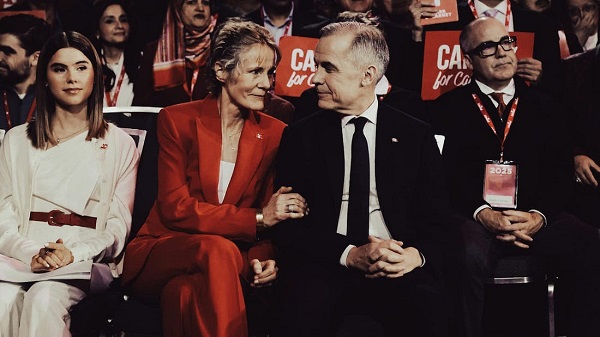
And just when you thought the web of influence stopped at the Prime Minister himself, along comes Diana Fox Carney, economist, climate consultant, and spouse of the most well-connected man in Canadian politics. While Mark Carney’s direct financial entanglements with Brookfield Asset Management are now public record, his wife’s career trajectory paints an equally troubling picture of how the same elite networks driving Canada’s green spending are profiting in parallel, behind the curtain.
Diana Fox Carney currently holds a senior advisory role at Eurasia Group, the New York-based geopolitical risk consultancy that’s become a quiet powerhouse in shaping global ESG narratives. It’s also the same firm where Gerald Butts—Trudeau’s longtime fixer and architect of the federal climate playbook—now serves as vice chair. Add in former journalist Evan Solomon and even Conservative stalwart John Baird, and you’ve got a bipartisan consultancy stacked with Canadian political operators. Convenient? Maybe. Coordinated? You decide.
And what has this firm staffed with Liberal-era insiders received in return? Millions in untendered government contracts, including a $446,210 deal from Natural Resources Canada in 2024 for vaguely defined “geopolitical research.” That’s nearly half a million dollars in taxpayer money handed out without competition, to a firm employing the sitting Prime Minister’s wife—and his former colleagues. Just coincidence, right?
But Eurasia Group is only the start. Diana’s reach extends far beyond advisory calls. She’s connected to:
- BeyondNetZero, a climate equity fund backed by U.S. private capital giant General Atlantic.
- Helios CLEAR, investing in African climate “resilience.”
- ClientEarth U.S. and the Shell Foundation, both pushing aggressive environmental litigation and policy influence.
- Canada 2020, a Trudeau-aligned think tank that’s pocketed over $1 million in federal grants.
Throw in indirect ties to Gates Foundation funding, Save the Children, and research networks influencing African agriculture, and you’re looking at a network of transnational climate consultants with deep, ongoing influence over the exact climate policies the federal government is now implementing under her husband’s leadership.
Now, legally, Diana is in the clear. She’s not a public office holder. But that’s the point. The rules weren’t designed for this new class of political operator—the dual-career globalist power couple, where one side signs the climate cheques while the other cashes them. No formal disclosure is required. No recusals. No transparency. Yet the influence is there. The access is there. The money is flowing.
Opposition Reaction: Pierre Poilievre Slams Carney’s Hidden Conflicts, Demands Real Transparency
Conservative Leader Pierre Poilievre wasted no time responding to the bombshell ethics screen showing Prime Minister Mark Carney is recusing himself from dealings with over 100 companies, many tied to his former employer, Brookfield Asset Management. In a pair of direct and widely shared posts, Poilievre accused Carney of concealing critical financial entanglements from voters during the 2025 election, and warned that the Liberal leader is now either positioned to profit from federal decisions or paralyzed from making them.
“Mark Carney must explain why he kept these conflicts secret from voters until after the election,” Poilievre wrote. “Now he will be in a position to profit from big decisions or will be forced to sit out those decisions altogether. Either way, Canadians will pay the price.”
In a second post earlier that morning, Poilievre challenged the credibility of Carney’s so-called blind trust, urging the Prime Minister to liquidate his holdings entirely and hand the cash to a trustee who can invest it without Carney’s knowledge or influence:
“Otherwise, he will always know how political decisions can affect his personal wealth.”
These statements mark the strongest opposition rebuke yet of the Carney government’s financial entanglements. Poilievre’s message echoes growing public criticism that the ethics screen is little more than window dressing, lacking third-party oversight, and that it fails to address indirect benefit through carried interest, deferred compensation, or spousal affiliations.
While Carney has claimed he is in full compliance with federal ethics laws, the fact that the disclosures were released only after the election is fueling outrage—not just among Conservatives but from broader accountability watchdogs. With over 100 entities flagged, many of them tied to green energy, infrastructure, and climate finance—the same sectors receiving billions in federal spending—the Conservative leader has positioned himself as the voice of those demanding a full forensic audit of the Prime Minister’s interests.
The message from the opposition is clear: if this were a Conservative leader, the media would be calling it a scandal. But because it’s Carney—the global banker, the climate envoy, the Liberal savior—the establishment is looking the other way. Poilievre’s Conservatives aren’t. And they’re turning this into a defining issue of integrity and accountability in Canadian politics.
Let’s Call This What It Is
This isn’t subtle. This isn’t nuanced. This is what a grift looks like—on paper, in public, in black and white. Over one hundred conflicts of interest tied directly to Mark Carney. Entire portfolios of foreign and domestic holdings, billions in green investments, shell companies in Bermuda—and that’s before we even get to his wife’s global consultancy work, advising firms that quietly gobble up federal contracts without a single public tender.
And here’s the thing: we weren’t told any of this during the election. There was no press conference, no headline, no public vetting of the sprawling web of corporate and climate interests now tied to the highest office in the country. Why? Because it would have compromised the Liberal grip on power. Because the last thing this party wanted Canadians to know was that their new leader wasn’t just a banker—but a banker with a boardroom’s worth of financial strings still attached.
Now imagine—just for a moment—if it had been Pierre Poilievre. Or Andrew Scheer. Or any Conservative leader with over a hundred screened entities, global finance ties, offshore SPVs, and a spouse employed by a company collecting millions in government money. The press would be in a frenzy. The CBC would be running specials. They’d be calling him compromised, unfit, a foreign agent.
But because it’s their guy—because it’s the Liberal elite’s banker-in-chief—we’re told it’s fine. It’s all above board. Move along, nothing to see here.
Nonsense. Absolute nonsense.
This is not leadership. This is ideological grifting at the highest level. The Liberal Party, once the party of national unity and democratic accountability, has become a hollowed-out machine for elite interests. They’re not liberals. They’re grifters—grifting for green subsidies, globalist contracts, and personal access to power. They have no principle left. Just consultants, contracts, and a taxpayer-funded narrative to keep the game going.
Enough. Canadians didn’t vote for this. They weren’t told the truth. And now the entire climate agenda, the whole “just transition,” looks more like a get-rich scheme for the political class than any serious public mission.
It’s time for an election. Time to clear house. Time to drain this toxic, green-glossed swamp once and for all.
Subscribe to The Opposition with Dan Knight
Invite your friends and earn rewards


This article supplied by Troy Media.
 By Gwyn Morgan
Canada is paying a steep economic price for climate policies that have delivered little real environmental progress
In 2015, the newly elected Trudeau government signed the Paris Agreement. The following year saw the imposition of the Pan-Canadian Framework on Clean Growth and Climate Change, which included more than 50 measures aimed at “reducing carbon emissions and fostering clean technology solutions.” Key among them was economy-wide carbon “pricing,” Liberal-speak for taxes.
Other measures followed, culminating last December in the 2030 Emissions Reduction Plan, targeting emissions of 40 per cent below 2005 levels by 2030 and net-zero emissions by 2050. It included $9.1 billion for retrofitting structures, subsidizing zero-emission vehicles, building charging stations and subsidizing solar panels and windmills. It also mandated the phaseout of coal-fired power generation and proposed stringent emission standards for vehicles and buildings.
Other “green initiatives” included the “on-farm climate action fund,” a nationwide reforestation initiative to plant two billion trees, the “Green and Inclusive Community Buildings Program” to promote net-zero standards in new construction, and a “Green Municipal Fund” to support municipal decarbonization. That’s a staggering list of nation-impoverishing subsidies, taxes and restrictions.
Those climate measures come at a real cost to the industry that drives the nation’s economy.
The Trudeau government cancelled the Northern Gateway oil pipeline to the northwest coast, which had been approved by the Harper government, costing sponsors hundreds of millions of dollars in preconstruction expenditures. The political and regulatory morass the Liberals created eventually led to the cancellation of all but one of the 12 LNG export proposals.
Have all those taxes and regulatory measures reduced Canada’s fossil-fuel consumption? No. As Bjorn Lomborg has reported, between the election of the Trudeau government in 2015 through 2023, fossil fuels’ share of Canada’s energy supply increased from 75 to 77 per cent.
That dismal result wasn’t for lack of trying. The Fraser Institute has found that Ottawa and the four biggest provinces have either spent or forgone a mind-numbing $158 billion to create just 68,000 “clean” jobs, increasing the “green economy” by a minuscule 0.3 percentage points to 3.6 per cent of GDP at an eye-watering cost of more than $2.3 million per job.
That’s Canada’s emissions reduction debacle. What’s the global picture? A decade after Paris, 80 per cent of the world’s energy still comes from fossil fuels. World energy demand is up 150 per cent. Canada, which produces roughly 1.5 per cent of global emissions, cannot influence that trajectory. And, as Lomborg writes: “achieving net zero emissions by 2050 would require the removal of the equivalent of the combined emissions of China and the United States in each of the next five years. This puts us in the realm of science fiction.”
Does this mean our planet will become unlivable? A U.S. Department of Energy report issued in July is grounds for optimism. It finds that “claims of increased frequency or intensity of hurricanes, tornadoes, floods and droughts are not supported by U.S. historical data.” And it goes on: “CO2-induced warming appears to be less damaging economically than commonly believed and aggressive mitigation policies could be more detrimental than beneficial.”
U.S. Secretary of Energy Chris Wright responded to the report by saying: “Climate change is real … but it is not the greatest threat facing humanity … (I)mproving the human condition depends on access to reliable, affordable energy.”
That leaves no doubt as to where our largest trading partner stands on carbon emissions. But don’t expect Prime Minister Mark Carney, who helped launch the Glasgow Financial Alliance for Net Zero (GFANZ) at COP 26 in that city in 2021 and co-chaired it until this January, to soften his stand on carbon taxes. His just-released budget imposes carbon tax increases of $80 to $170 per ton by 2030 on our already struggling industries.
Doing so increases Canadian businesses’ competitive disadvantage with our most important trading partner while doing essentially nothing to help the environment.
Gwyn Morgan is a retired business leader who has been a director of five global corporations.
Troy Media empowers Canadian community news outlets by providing independent, insightful analysis and commentary. Our mission is to support local media in helping Canadians stay informed and engaged by delivering reliable content that strengthens community connections and deepens understanding across the country.
From the Frontier Centre for Public Policy
By Jay Goldberg
Rosy projections, chronic deficits, and opaque budgeting. If nothing changes, Carney’s credibility could collapse under the same weight.
Carney promised a fresh start. His budget makes it look like we’re still stuck with the same old Trudeau playbook
It turns out the Trudeau government really did look at Canada’s economy through rose-coloured glasses. Is the Carney government falling into the same pattern?
New research from the Frontier Centre for Public Policy shows that federal budgets during the Trudeau years “consistently overestimated [Canada’s] fiscal health” when it came to forecasting the state of the nation’s economy and finances over the long term.
In his research, policy analyst Conrad Eder finds that, when looking specifically at projections of where the economy would be four years out, Trudeau-era budgets tended to have forecast errors of four per cent of nominal GDP, or an average of $94.4 billion.
Because budgets were so much more optimistic about long-term growth, they consistently projected that government revenue would grow at a much faster pace. The Trudeau government then made spending commitments, assuming the money would be there. And when the forecasts did not keep up, deficits simply grew.
As Eder writes, “these dramatic discrepancies illustrate how the Trudeau government’s longer-term projections consistently underestimated the persistence of fiscal challenges and overestimated its ability to improve the budgetary balance.”
Eder concludes that politics came into play and influenced how the Trudeau government framed its forecasts. Rather than focusing on the long-term health of Canada’s finances, the Trudeau government was focused on politics. But presenting overly optimistic forecasts has long-term consequences.
“When official projections consistently deviate from actual outcomes, they obscure the scope of deficits, inhibit effective fiscal planning, and mislead policymakers and the public,” Eder writes.
“This disconnect between projected and actual fiscal outcomes undermines the reliability of long-term planning tools and erodes public confidence in the government’s fiscal management.”
The public’s confidence in the Trudeau government’s fiscal management was so low, in fact, that by the end of 2024 the Liberals were polling in the high teens, behind the NDP.
The key to the Liberal Party’s electoral survival became twofold: the “elbows up” rhetoric in response to the Trump administration’s tariffs, and the choice of a new leader who seemed to have significant credibility and was disconnected from the fiscal blunders of the Trudeau years.
Mark Carney was recruited to run for the Liberal leadership as the antidote to Trudeau. His résumé as governor of the Bank of Canada during the Great Recession and his subsequent years leading the Bank of England seemed to offer Canadians the opposite of the fiscal inexperience of the Trudeau years.
These two factors together helped turn around the Liberals’ fortunes and secured the party a fourth straight mandate in April’s elections.
But now Carney has presented a budget of his own, and it too spills a lot of red ink.
This year’s deficit is projected to be a stunning $78.3 billion, and the federal deficit is expected to stay over $50 billion for at least the next four years.
The fiscal picture presented by Finance Minister François-Philippe Champagne was a bleak one.
What remains to be seen is whether the chronic politicking over long-term forecasts that plagued the Trudeau government will continue to be a feature of the Carney regime.
As bad as the deficit figures look now, one has to wonder, given Eder’s research, whether the state of Canada’s finances is even worse than Champagne’s budget lets on.
As Eder says, years of rose-coloured budgeting undermined public trust and misled both policymakers and voters. The question now is whether this approach to the federal budget continues under Carney at the helm.
Budget 2025 significantly revises the economic growth projections found in the 2024 fall economic statement for both 2025 and 2026. However, the forecasts for 2027, 2028 and 2029 were left largely unchanged.
If Eder is right, and the Liberals are overly optimistic when it comes to four-year forecasts, then the 2025 budget should worry Canadians. Why? Because the Carney government did not change the Trudeau government’s 2029 economic projections by even a fraction of a per cent.
In other words, despite the gloomy fiscal numbers found in Budget 2025, the Carney government may still be wearing the same rose-coloured budgeting glasses as the Trudeau government did, at least when it comes to long-range fiscal planning.
If the Carney government wants to have more credibility than the Trudeau government over the long term, it needs to be more transparent about how long-term economic projections are made and be clear about whether the Finance Department’s approach to forecasting has changed with the government. Otherwise, Carney’s fiscal credibility, despite his résumé, may meet the same fate as Trudeau’s.
Jay Goldberg is a fellow with the Frontier Centre for Public Policy.


Canadians will soon be versed in massive West Coast LPG mega-project
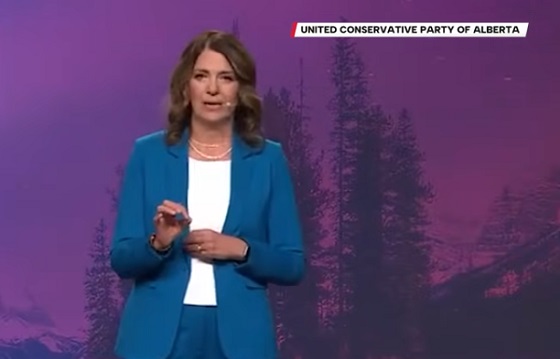
Keynote address of Premier Danielle Smith at 2025 UCP AGM

Canada Needs an Alternative to Carney’s One Man Show

Net Zero goal is a fundamental flaw in the Ottawa-Alberta MOU
-
National2 days ago
Canada Needs an Alternative to Carney’s One Man Show
-
 Alberta1 day ago
This new Canada–Alberta pipeline agreement will cost you more than you think
-
 Daily Caller2 days ago
Tech Mogul Gives $6 Billion To 25 Million Kids To Boost Trump Investment Accounts
-
 Business2 days ago
Recent price declines don’t solve Toronto’s housing affordability crisis
-
 Automotive1 day ago
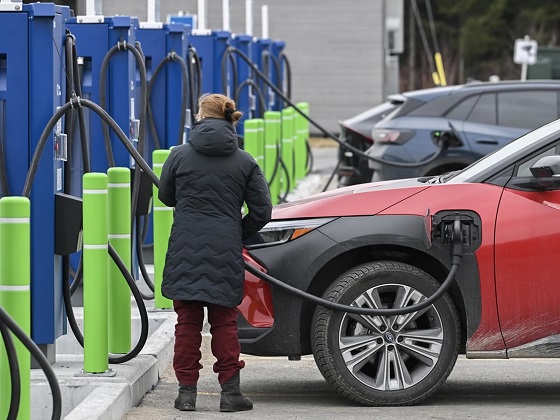
Power Struggle: Governments start quietly backing away from EV mandates
-
 Energy1 day ago
Unceded is uncertain
-
 Business2 days ago
Canada’s future prosperity runs through the northwest coast
-
Business8 hours ago
Canada’s climate agenda hit business hard but barely cut emissions