
National
Liberty on fire in New Brunswick and Nova Scotia



Venture onto any Crown land in New Brunswick and you could be fined up to $172.50. Venture into any wooded area in Nova Scotia and you could be fined up to $25,000.
This is now the reality for Canadians in New Brunswick and Nova Scotia.
Canadians are already being fined.
|
||
|
||
|
|
||
|
||
|
||
|
||
|
||
|
||
|
|
||
|
||
|
||
|
||
|
||
|


From the Frontier Centre for Public Policy
By Ian Madsen
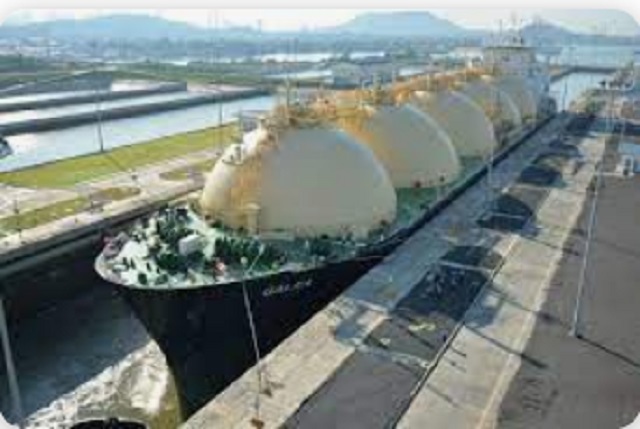
Canada’s growing LNG exports are opening global markets and reducing dependence on U.S. prices, if Ottawa allows the pipelines and export facilities needed to reach those markets
Canada’s LNG advantage is clear, but federal bottlenecks still risk turning a rare opening into another missed opportunity
Canada is finally in a position to profit from global LNG demand. But that opportunity will slip away unless Ottawa supports the pipelines and export capacity needed to reach those markets.
Most major LNG and pipeline projects still need federal impact assessments and approvals, which means Ottawa can delay or block them even when provincial and Indigenous governments are onside. Several major projects are already moving ahead, which makes Ottawa’s role even more important.
The Ksi Lisims floating liquefaction and export facility near Prince Rupert, British Columbia, along with the LNG Canada terminal at Kitimat, B.C., Cedar LNG and a likely expansion of LNG Canada, are all increasing Canada’s export capacity. For the first time, Canada will be able to sell natural gas to overseas buyers instead of relying solely on the U.S. market and its lower prices.
These projects give the northeast B.C. and northwest Alberta Montney region a long-needed outlet for its natural gas. Horizontal drilling and hydraulic fracturing made it possible to tap these reserves at scale. Until 2025, producers had no choice but to sell into the saturated U.S. market at whatever price American buyers offered. Gaining access to world markets marks one of the most significant changes for an industry long tied to U.S. pricing.
According to an International Gas Union report, “Global liquefied natural gas (LNG) trade grew by 2.4 per cent in 2024 to 411.24 million tonnes, connecting 22 exporting markets with 48 importing markets.” LNG still represents a small share of global natural gas production, but it opens the door to buyers willing to pay more than U.S. markets.
LNG Canada is expected to export a meaningful share of Canada’s natural gas when fully operational. Statistics Canada reports that Canada already contributes to global LNG exports, and that contribution is poised to rise as new facilities come online.

Higher returns have encouraged more development in the Montney region, which produces more than half of Canada’s natural gas. A growing share now goes directly to LNG Canada.
Canadian LNG projects have lower estimated break-even costs than several U.S. or Mexican facilities. That gives Canada a cost advantage in Asia, where LNG demand continues to grow.
Asian LNG prices are higher because major buyers such as Japan and South Korea lack domestic natural gas and rely heavily on imports tied to global price benchmarks. In June 2025, LNG in East Asia sold well above Canadian break-even levels. This price difference, combined with Canada’s competitive costs, gives exporters strong margins compared with sales into North American markets.
The International Energy Agency expects global LNG exports to rise significantly by 2030 as Europe replaces Russian pipeline gas and Asian economies increase their LNG use. Canada is entering the global market at the right time, which strengthens the case for expanding LNG capacity.
As Canadian and U.S. LNG exports grow, North American supply will tighten and local prices will rise. Higher domestic prices will raise revenues and shrink the discount that drains billions from Canada’s economy.
Canada loses more than $20 billion a year because of an estimated $20-per-barrel discount on oil and about $2 per gigajoule on natural gas, according to the Frontier Centre for Public Policy’s energy discount tracker. Those losses appear directly in public budgets. Higher natural gas revenues help fund provincial services, health care, infrastructure and Indigenous revenue-sharing agreements that rely on resource income.
Canada is already seeing early gains from selling more natural gas into global markets. Government support for more pipelines and LNG export capacity would build on those gains and lift GDP and incomes. Ottawa’s job is straightforward. Let the industry reach the markets willing to pay.
Ian Madsen is a senior policy analyst at the Frontier Centre for Public Policy.

From LifeSiteNews
Conservative MP Jamil Jivani called a Canadian bill that would criminalize quoting parts of the Bible ‘cultural imperialism targeting Christians, Muslims, and Jews.’
Canadian pro-life Conservative MP Jamil Jivani said the Liberal government of Prime Minister Mark Carney is targeting Christians and people of other faith with a bill that would criminalize quoting parts of the Bible.
“The Liberal Party and Mark Carney are engaged in cultural imperialism, targeting Christians, Muslims, and Jews,” Jivani said in an X post last week that included a link to a video of him speaking out against Bill C-9 in the House of Commons on December 4.
Jivani said in clear terms that government should “not make its way into churches, mosques and synagogues in an effort to bring Liberal values, nor use the criminal justice system to enforce Liberal values on the private religious lives of Canadian citizens.”
He said that this is “precisely what a colonizer would do,” adding, “That is precisely what a cultural imperialist would do.”
Jivani noted that when looking at the “language of colonizers and cultural imperialists,” Canadians need to recognize that when the Liberals “attack scripture, when they attack the Bible, when they attack our religions and when they try to justify bringing the criminal justice system into our places of worship, they are trying to strip away the things that make us well-rounded people.”
“To them, we are simply economic inputs. We should have no culture. They believe we should have no meaning in our lives,” he added.
Bill C-9, the Combating Hate Act, as reported by LifeSiteNews, has been blasted by constitutional experts as allowing empowered police and the government to go after individuals it deems to have violated a person’s “feelings” in a “hateful” way.
As reported by LifeSiteNews, a government insider revealed that the Liberal government plans to remove religious exemptions from Canada’s hate-speech laws.
Concerns over Bill C-9 have resulted in the Canadian Conference of Catholic Bishops (CCCB) condemning the proposed restrictions on quoting religious texts, as reported by LifeSiteNews.
In a December 4 letter to Carney, the CCCB firmly advocated against proposed amendments to Bill C-9,
“(T)he proposed elimination of the ‘good faith’ religious-text defence raises significant concerns,” reads the letter, signed by Bishop Pierre Goudreault, the CCCB president.
“This narrowly framed exemption has served for many years as an essential safeguard to ensure that Canadians are not criminally prosecuted for their sincere, truth-seeking expression of beliefs made without animus and grounded in long-standing religious traditions.”
Other Conservative MPs have voiced concerns about Bill C-9.
Conservative MP Leslyn Lewis recently blasted the Carney government’s plan to criminalize parts of the Bible as an attack on “Christians,” warning it sets a “dangerous precedent” for Canadian society.
In response, the party launched a petition over fear that religious texts could be criminalized
Liberal MP Marc Miller had said earlier in the year that certain passages of the Bible are “hateful” because of what it says about homosexuality and those who recite the passages should be jailed. As reported by LifeSiteNews, he was recently appointed as a government minister by Carney.


Media bound to pay the price for selling their freedom to (selectively) offend

Sometimes An Ingrate Nation Pt. 2: The Great One Makes His Choice

Recent price declines don’t solve Toronto’s housing affordability crisis

From Exception to Routine. Why Canada’s State-Assisted Suicide Regime Demands a Human-Rights Review
-
 COVID-1918 hours ago
University of Colorado will pay $10 million to staff, students for trying to force them to take COVID shots
-
 Bruce Dowbiggin17 hours ago
Integration Or Indignation: Whose Strategy Worked Best Against Trump?
-
 Energy2 days ago
Canada following Europe’s stumble by ignoring energy reality
-
 Banks2 days ago
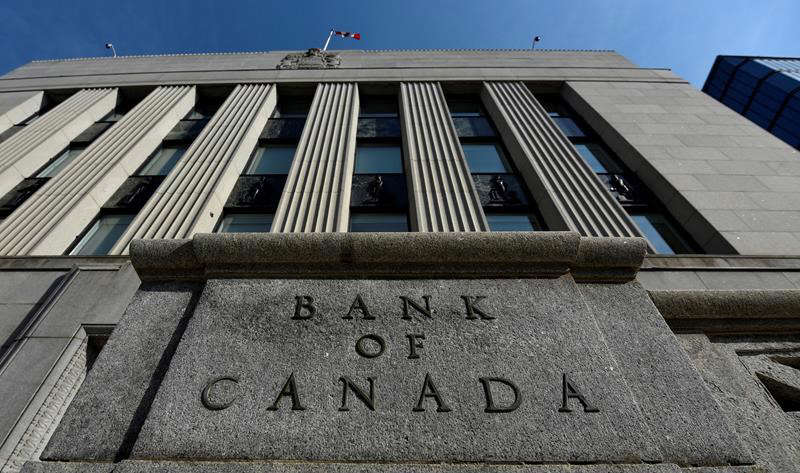
To increase competition in Canadian banking, mandate and mindset of bank regulators must change
-
 Business2 days ago
Loblaws Owes Canadians Up to $500 Million in “Secret” Bread Cash
-
 Focal Points2 days ago
Common Vaccines Linked to 38-50% Increased Risk of Dementia and Alzheimer’s
-
 Opinion2 days ago
The day the ‘King of rock ‘n’ roll saved the Arizona memorial
-
 espionage1 day ago
Western Campuses Help Build China’s Digital Dragnet With U.S. Tax Funds, Study Warns