
Business
Canada’s new pipeline opens a direct oil route to India, offering a sanctions-proof rival to Russian crude.


From Resource Works
India’s giant, flexible refineries are precisely the sort of customers TMX was built to reach. Reliance’s Jamnagar facility can process over 500 different crude grades and is adept at switching feedstocks based on market advantage (NYT). That makes Canadian heavy and medium crudes a natural fit — if price and freight conditions are right.
The completion of the Trans Mountain Expansion (TMX) in May 2024 was meant to end Canada’s near-total dependence on the U.S. as a crude oil export outlet. It worked. For the first time in history, Canadian oil is sailing directly from the West Coast to refiners across the Pacific — including India, the world’s fastest-growing large economy.
But Canada’s early foray into the Indian market comes at a moment when New Delhi’s oil trade with Russia is under intense global scrutiny.
India’s refining titans and Russian crude
Two massive refineries dominate India’s west coast: Mukesh Ambani’s Reliance Industries facility in Jamnagar — the largest in the world — and the Nayara Energy refinery, partly owned by Russia’s Rosneft. Together, they process roughly 1.5 million barrels per day, with about a third of Reliance’s intake and a large portion of Nayara’s coming from Russian sellers (NYT, Aug. 9, 2025).
These plants have thrived on Russian discounts since Europe turned away from Moscow’s crude after the 2022 invasion of Ukraine. For over two years, Indian refiners bought huge volumes of seaborne Russian oil, processed it, and sold products into global markets — including Europe (NYT).
That trade is now a flashpoint. On July 30, U.S. President Donald Trump slapped India with a 25% tariff, accusing it of aiding Russia’s war aims. A week later, he doubled down with an executive order targeting exporters seen to benefit from the Russian oil trade (NYT).
Canada’s small but symbolic entry
Against this backdrop, Canadian shipments to India are small in volume but significant in symbolism.
• May–June 2024: Approximately 262,500 barrels of Canadian crude moved to India via TMX, valued at US $159 million (BIV).
• July 2024: Reliance made its first direct purchase — 2 million barrels of Canadian crude — marking the most substantial Canadian sale to India on record (Reuters).
According to Rita Trichur writing in the Globe & Mail on Aug. 7, the latest sign of increasing Indian interest is the Indian Oil Corp.’s purchase of 500,000 barrels of Western Canadian Select for September delivery.

These shipments represent a diversification for India, giving it an alternative to Russian and Persian Gulf supplies, and a potential geopolitical hedge as tensions with Washington grow.
Strategic convergence — and competition
For Canada, India’s giant, flexible refineries are precisely the sort of customers TMX was built to reach. Reliance’s Jamnagar facility can process over 500 different crude grades and is adept at switching feedstocks based on market advantage (NYT). That makes Canadian heavy and medium crudes a natural fit — if price and freight conditions are right.
Yet Canada is not alone in targeting India. The same ultra-large crude carriers that carry Russian barrels to Jamnagar can just as easily deliver Venezuelan, Saudi, or Brazilian oil.
Why it matters for Canadian producers
• Market leverage: Each cargo sold outside North America increases Canada’s pricing power.
• Political hedge: With Russia’s trade under pressure and Middle East volatility persisting, Canada offers a reliable, sanctions-proof supply line.
• Brand advantage: Canadian crude, produced under some of the world’s strictest environmental and labour standards, offers a reputational edge for buyers sensitive to ESG concerns.
The road ahead
India imports 85% of its crude (NYT), and its refining capacity is still growing. While Canadian shipments are a fraction of its intake today, the TMX route has cracked open a door that could swing wider — especially if Russian volumes taper under political pressure. But without a new oil pipeline to the Canadian port, there will be no way to take full advantage of this opportunity.
PC: Prime Minister Mark Carney greets Indian Prime Minister Narendra Modi at the G7 Summit in Kananaskis, Alta., on Tuesday, June 17, 2025. THE CANADIAN PRESS/Adrian Wyld

Alberta
Emissions Reduction Alberta offering financial boost for the next transformative drilling idea
From the Canadian Energy Centre
$35-million Alberta challenge targets next-gen drilling opportunities
‘All transformative ideas are really eligible’
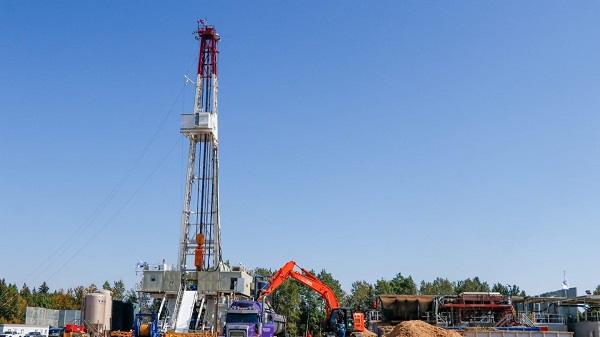
Forget the old image of a straight vertical oil and gas well.
In Western Canada, engineers now steer wells for kilometres underground with remarkable precision, tapping vast energy resources from a single spot on the surface.
The sector is continually evolving as operators pursue next-generation drilling technologies that lower costs while opening new opportunities and reducing environmental impacts.
But many promising innovations never reach the market because of high development costs and limited opportunities for real-world testing, according to Emissions Reduction Alberta (ERA).
That’s why ERA is launching the Drilling Technology Challenge, which will invest up to $35 million to advance new drilling and subsurface technologies.
“The focus isn’t just on drilling, it’s about building our future economy, helping reduce emissions, creating new industries and making sure we remain a responsible leader in energy development for decades to come,” said ERA CEO Justin Riemer.
And it’s not just about oil and gas. ERA says emerging technologies can unlock new resource opportunities such as geothermal energy, deep geological CO₂ storage and critical minerals extraction.
“Alberta’s wealth comes from our natural resources, most of which are extracted through drilling and other subsurface technologies,” said Gurpreet Lail, CEO of Enserva, which represents energy service companies.
ERA funding for the challenge will range from $250,000 to $8 million per project.
Eligible technologies include advanced drilling systems, downhole tools and sensors; AI-enabled automation and optimization; low-impact rigs and fluids; geothermal and critical mineral drilling applications; and supporting infrastructure like mobile labs and simulation platforms.
“All transformative ideas are really eligible for this call,” Riemer said, noting that AI-based technologies are likely to play a growing role.
“I think what we’re seeing is that the wells of the future are going to be guided by smart sensors and real-time data. You’re going to have a lot of AI-driven controls that help operators make instant decisions and avoid problems.”
Applications for the Drilling Technology Challenge close January 29, 2026.

From the Daily Caller News Foundation
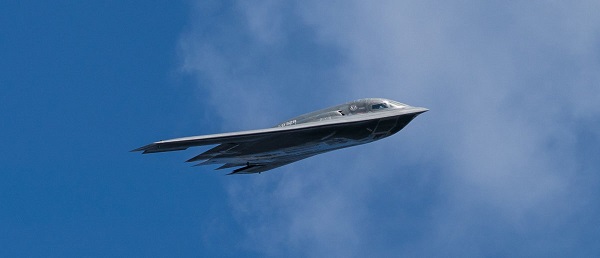
The global war business scored record revenues in 2024 amid multiple protracted proxy conflicts across the world, according to a new industry analysis released on Monday.
The top 100 arms manufacturers in the world raked in $679 billion in revenue in 2024, up 5.9% from the year prior, according to a new Stockholm International Peace Research Institute (SIPRI) study. The figure marks the highest ever revenue for manufacturers recorded by SIPRI as the group credits major conflicts for supplying the large appetite for arms around the world.
“The rise in the total arms revenues of the Top 100 in 2024 was mostly due to overall increases in the arms revenues of companies based in Europe and the United States,” SIPRI said in their report. “There were year-on-year increases in all the geographical areas covered by the ranking apart from Asia and Oceania, which saw a slight decrease, largely as a result of a notable drop in the total arms revenues of Chinese companies.”
Notably, Chinese arms manufacturers saw a large drop in reported revenues, declining 10% from 2023 to 2024, according to SIPRI. Just off China’s shores, Japan’s arms industry saw the largest single year-over-year increase in revenue of all regions measured, jumping 40% from 2023 to 2024.
American companies dominate the top of the list, which measures individual companies’ revenue, with Lockheed Martin taking the top spot with $64,650,000,000 of arms revenue in 2024, according to the report. Raytheon Technologies, Northrop Grumman and BAE Systems follow shortly after in revenue,
The Czechoslovak Group recorded the single largest jump in year-on-year revenue from 2023 to 2024, increasing its haul by 193%, according to SIPRI. The increase is largely driven by their crucial role in supplying arms and ammunition to Ukraine.
The Pentagon contracted one of the group’s subsidiaries in August to build a new ammo plant in the U.S. to replenish artillery shell stockpiles drained by U.S. aid to Ukraine.
“In 2024 the growing demand for military equipment around the world, primarily linked to rising geopolitical tensions, accelerated the increase in total Top 100 arms revenues seen in 2023,” the report reads. “More than three quarters of companies in the Top 100 (77 companies) increased their arms revenues in 2024, with 42 reporting at least double-digit percentage growth.”


From Underdog to Top Broodmare

Landmark 2025 Study Says Near-Death Experiences Can’t Be Explained Away

STUDY: TikTok, Instagram, and YouTube Shorts Induce Measurable “Brain Rot”

Red Deer’s Jason Stephan calls for citizen-led referendum on late-term abortion ban in Alberta
-
 Agriculture2 days ago
Health Canada pauses plan to sell unlabeled cloned meat
-
 Artificial Intelligence1 day ago
Google denies scanning users’ email and attachments with its AI software
-
 Health2 days ago
Organ donation industry’s redefinitions of death threaten living people
-
 National2 days ago
Alleged Liberal vote-buying scandal lays bare election vulnerabilities Canada refuses to fix
-
 COVID-191 day ago
FDA says COVID shots ‘killed’ at least 10 children, promises new vaccine safeguards
-
 Alberta1 day ago
Net Zero goal is a fundamental flaw in the Ottawa-Alberta MOU
-
 Addictions2 days ago
The Death We Manage, the Life We Forget
-
 Addictions1 day ago
Manitoba Is Doubling Down On A Failed Drug Policy