
Business
Meta Pushes for a Digital ID Revolution




If you’re tired of censorship and surveillance, subscribe to Reclaim The Net.
|
Meta is coming out as a supporter of age verification, and the proposal the giant is putting forward exposes and sums up many of the points critics have been consistently making.
A blog post by Meta VP and Global Head of Safety Antigone Davis proposes to implement age verification at the operating system/app stores level. Although the narrative around child safety and difficulties of parenting “in the digital age” dominates the article, “the meat of it” are the implications that this approach brings with it: namely, it creates a situation where, down the line, people would be forced to link real-world identity to their phone’s operating system (OS).
And everything they do using the phone is exposed to that OS. Davis goes into how the EU (notably via the Digital Services Act) is trying to resolve the problem of age verification, but doesn’t think any existing methods are good enough; instead, new regulation is needed, the Meta exec argues – and that would be the one that “applies to all apps.”
It means incorporating “the point of approval” into the OS or app stores. The parents would be notified when their child downloads an app, which would allow them to approve it. (The idea seems to be that if a jurisdiction has laws that prohibit a certain category of minors from using certain apps – it would be the parents’ job to “enforce” that.) It might not sound like a very reliable way to ensure compliance, but it would achieve some goals, in the grand scheme of things, quite separate from what the “think of the children” argument seeks to present as the reason for the age verification push. Meta is trying to lead the way here in introducing “industry standards” – the proposal looks to embed the technology into different operating systems and app stores. When it comes to what a social media company should consider age-appropriate content, Meta is again urging common “standards” that would be observed by everyone. And, some countries already require that parents provide government-issued ID to app stores in order for their children to use a phone and set up accounts. Meta wants the EU to “mandate by a legislative framework that applies across all member states and for all apps teens use.” |
|
|
|
You subscribe to Reclaim The Net because you value free speech and privacy. Each issue we publish is a commitment to defend these critical rights, providing insights and actionable information to protect and promote liberty in the digital age.
Despite our wide readership, less than 0.2% of our readers contribute financially. With your support, we can do more than just continue; we can amplify voices that are often suppressed and spread the word about the urgent issues of censorship and surveillance. Consider making a modest donation — just $5, or whatever amount you can afford. Your contribution will empower us to reach more people, educate them about these pressing issues, and engage them in our collective cause. Thank you for considering a contribution. Each donation not only supports our operations but also strengthens our efforts to challenge injustices and advocate for those who cannot speak out.
Thank you.
|

Alberta
Emissions Reduction Alberta offering financial boost for the next transformative drilling idea
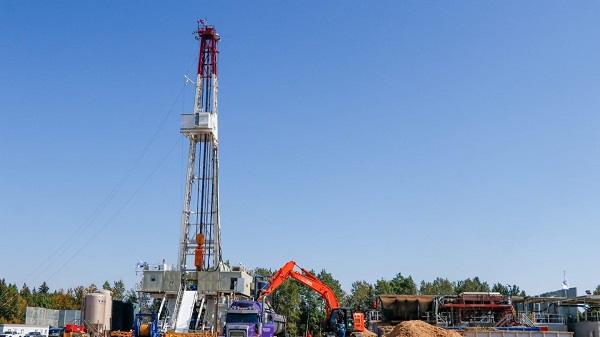
From the Canadian Energy Centre
$35-million Alberta challenge targets next-gen drilling opportunities
‘All transformative ideas are really eligible’
Forget the old image of a straight vertical oil and gas well.
In Western Canada, engineers now steer wells for kilometres underground with remarkable precision, tapping vast energy resources from a single spot on the surface.
The sector is continually evolving as operators pursue next-generation drilling technologies that lower costs while opening new opportunities and reducing environmental impacts.
But many promising innovations never reach the market because of high development costs and limited opportunities for real-world testing, according to Emissions Reduction Alberta (ERA).
That’s why ERA is launching the Drilling Technology Challenge, which will invest up to $35 million to advance new drilling and subsurface technologies.
“The focus isn’t just on drilling, it’s about building our future economy, helping reduce emissions, creating new industries and making sure we remain a responsible leader in energy development for decades to come,” said ERA CEO Justin Riemer.
And it’s not just about oil and gas. ERA says emerging technologies can unlock new resource opportunities such as geothermal energy, deep geological CO₂ storage and critical minerals extraction.
“Alberta’s wealth comes from our natural resources, most of which are extracted through drilling and other subsurface technologies,” said Gurpreet Lail, CEO of Enserva, which represents energy service companies.
ERA funding for the challenge will range from $250,000 to $8 million per project.
Eligible technologies include advanced drilling systems, downhole tools and sensors; AI-enabled automation and optimization; low-impact rigs and fluids; geothermal and critical mineral drilling applications; and supporting infrastructure like mobile labs and simulation platforms.
“All transformative ideas are really eligible for this call,” Riemer said, noting that AI-based technologies are likely to play a growing role.
“I think what we’re seeing is that the wells of the future are going to be guided by smart sensors and real-time data. You’re going to have a lot of AI-driven controls that help operators make instant decisions and avoid problems.”
Applications for the Drilling Technology Challenge close January 29, 2026.


From the Daily Caller News Foundation
The global war business scored record revenues in 2024 amid multiple protracted proxy conflicts across the world, according to a new industry analysis released on Monday.
The top 100 arms manufacturers in the world raked in $679 billion in revenue in 2024, up 5.9% from the year prior, according to a new Stockholm International Peace Research Institute (SIPRI) study. The figure marks the highest ever revenue for manufacturers recorded by SIPRI as the group credits major conflicts for supplying the large appetite for arms around the world.
“The rise in the total arms revenues of the Top 100 in 2024 was mostly due to overall increases in the arms revenues of companies based in Europe and the United States,” SIPRI said in their report. “There were year-on-year increases in all the geographical areas covered by the ranking apart from Asia and Oceania, which saw a slight decrease, largely as a result of a notable drop in the total arms revenues of Chinese companies.”
Notably, Chinese arms manufacturers saw a large drop in reported revenues, declining 10% from 2023 to 2024, according to SIPRI. Just off China’s shores, Japan’s arms industry saw the largest single year-over-year increase in revenue of all regions measured, jumping 40% from 2023 to 2024.
American companies dominate the top of the list, which measures individual companies’ revenue, with Lockheed Martin taking the top spot with $64,650,000,000 of arms revenue in 2024, according to the report. Raytheon Technologies, Northrop Grumman and BAE Systems follow shortly after in revenue,
The Czechoslovak Group recorded the single largest jump in year-on-year revenue from 2023 to 2024, increasing its haul by 193%, according to SIPRI. The increase is largely driven by their crucial role in supplying arms and ammunition to Ukraine.
The Pentagon contracted one of the group’s subsidiaries in August to build a new ammo plant in the U.S. to replenish artillery shell stockpiles drained by U.S. aid to Ukraine.
“In 2024 the growing demand for military equipment around the world, primarily linked to rising geopolitical tensions, accelerated the increase in total Top 100 arms revenues seen in 2023,” the report reads. “More than three quarters of companies in the Top 100 (77 companies) increased their arms revenues in 2024, with 42 reporting at least double-digit percentage growth.”


From Underdog to Top Broodmare

Landmark 2025 Study Says Near-Death Experiences Can’t Be Explained Away

STUDY: TikTok, Instagram, and YouTube Shorts Induce Measurable “Brain Rot”
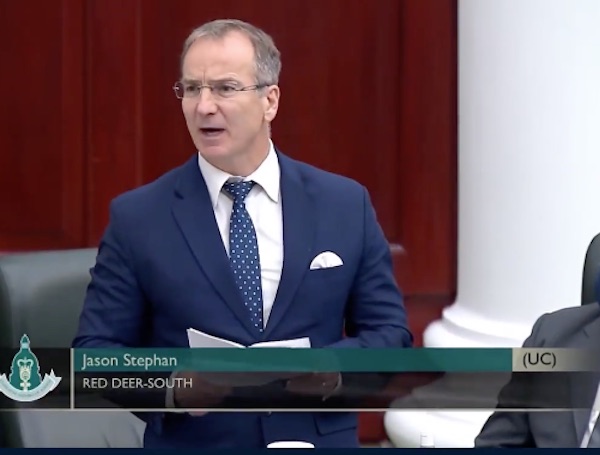
Red Deer’s Jason Stephan calls for citizen-led referendum on late-term abortion ban in Alberta
-
 Artificial Intelligence2 days ago
Google denies scanning users’ email and attachments with its AI software
-
 Health2 days ago
Organ donation industry’s redefinitions of death threaten living people
-
 COVID-192 days ago
FDA says COVID shots ‘killed’ at least 10 children, promises new vaccine safeguards
-
 Alberta2 days ago
Net Zero goal is a fundamental flaw in the Ottawa-Alberta MOU
-
 COVID-192 days ago
The dangers of mRNA vaccines explained by Dr. John Campbell
-
 Addictions2 days ago
Manitoba Is Doubling Down On A Failed Drug Policy
-
 Food2 days ago
Canada Still Serves Up Food Dyes The FDA Has Banned
-
 Alberta2 days ago
Keynote address of Premier Danielle Smith at 2025 UCP AGM