
Business
China’s Richest Are Desperate To Get Their Fortunes Out Of The Country By Any Means Necessary


From the Daily Caller News Foundation
China’s wealthiest citizens are resorting to dubiously legal methods to get their money out of the country as economic turmoil and a failing property market loom over the nation, according to the Wall Street Journal Wednesday.
The richest in the country are using various methods to circumvent the $50,000 foreign exchange limit, such as buying cryptocurrency, paintings or overpaying for imports among other methods, according to the WSJ. From the last half of 2023 to June this year, over $250 billion in assets has left the country, according to a WSJ analysis of Census and Economic Information Center data.
“Five or 10 years ago if you were a Chinese person you could put your money in real estate and have a way of growing your wealth,” Martin Rasmussen, senior strategist at research firm Exante Data told the WSJ. “That is not by any means attractive anymore.”
A similar outflow occurred in 2015 and 2016, with Chinese citizens purchasing over $200 billion in foreign assets, according to the WSJ in 2016.
China’s economic growth is projected to slow down by 4.5% in 2025, according to the International Monetary Fund (IMF) in May. The “ongoing housing market correction” is a large part of the economic downturn, as an estimated $18 trillion in value was wiped from the sector since 2021, according to the WSJ.

Top Chinese developer Evergrande was ordered to be liquidated in January by a Hong Kong court after it failed to restructure in the face of more than $300 billion in liabilities. Before the company’s collapse, China was already projected to hemorrhage at least $65 billion to foreign investments, with the Evergrande collapse accelerating the capital movement.
Beijing is publicly making examples of people it catches using illicit methods to transfer capital overseas, such as one group featured on state TV network CCTV that reportedly helped move $112 million worth of Chinese Yuan, according to the WSJ. The State Administration of Foreign Exchange also publishes records of people punished for violating its controls publicly.
Punishments usually include fines around half of the amount illegally transferred, or sometimes criminal charges, according to the WSJ.
Even for China’s ultra-rich with overseas connections, it’s getting harder to evade the government’s crackdown on capital leaving the nation, private bankers told the WSJ. The flight signals a lack of confidence in the economy as Chinese lawmakers feel the pressure to stabilize the currency and manage an aging population.
One method involves buying paintings to be sold in Hong Kong at an auction, but keeping the profit from the sale in U.S. currency on an offshore account based in the city, where the mainland’s capital controls don’t apply, according to the WSJ.
Newer methods to transport currency utilize cryptocurrency, which is bought by a third-party facilitator, stored on hard drives then converted to dollars overseas, according to the WSJ. While China banned crypto trading in 2021, crypto wallets are still allowed.

Alberta
Emissions Reduction Alberta offering financial boost for the next transformative drilling idea
From the Canadian Energy Centre
$35-million Alberta challenge targets next-gen drilling opportunities
‘All transformative ideas are really eligible’
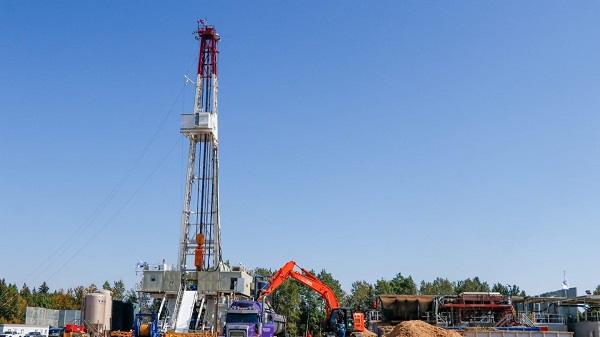
Forget the old image of a straight vertical oil and gas well.
In Western Canada, engineers now steer wells for kilometres underground with remarkable precision, tapping vast energy resources from a single spot on the surface.
The sector is continually evolving as operators pursue next-generation drilling technologies that lower costs while opening new opportunities and reducing environmental impacts.
But many promising innovations never reach the market because of high development costs and limited opportunities for real-world testing, according to Emissions Reduction Alberta (ERA).
That’s why ERA is launching the Drilling Technology Challenge, which will invest up to $35 million to advance new drilling and subsurface technologies.
“The focus isn’t just on drilling, it’s about building our future economy, helping reduce emissions, creating new industries and making sure we remain a responsible leader in energy development for decades to come,” said ERA CEO Justin Riemer.
And it’s not just about oil and gas. ERA says emerging technologies can unlock new resource opportunities such as geothermal energy, deep geological CO₂ storage and critical minerals extraction.
“Alberta’s wealth comes from our natural resources, most of which are extracted through drilling and other subsurface technologies,” said Gurpreet Lail, CEO of Enserva, which represents energy service companies.
ERA funding for the challenge will range from $250,000 to $8 million per project.
Eligible technologies include advanced drilling systems, downhole tools and sensors; AI-enabled automation and optimization; low-impact rigs and fluids; geothermal and critical mineral drilling applications; and supporting infrastructure like mobile labs and simulation platforms.
“All transformative ideas are really eligible for this call,” Riemer said, noting that AI-based technologies are likely to play a growing role.
“I think what we’re seeing is that the wells of the future are going to be guided by smart sensors and real-time data. You’re going to have a lot of AI-driven controls that help operators make instant decisions and avoid problems.”
Applications for the Drilling Technology Challenge close January 29, 2026.

From the Daily Caller News Foundation
The global war business scored record revenues in 2024 amid multiple protracted proxy conflicts across the world, according to a new industry analysis released on Monday.
The top 100 arms manufacturers in the world raked in $679 billion in revenue in 2024, up 5.9% from the year prior, according to a new Stockholm International Peace Research Institute (SIPRI) study. The figure marks the highest ever revenue for manufacturers recorded by SIPRI as the group credits major conflicts for supplying the large appetite for arms around the world.
“The rise in the total arms revenues of the Top 100 in 2024 was mostly due to overall increases in the arms revenues of companies based in Europe and the United States,” SIPRI said in their report. “There were year-on-year increases in all the geographical areas covered by the ranking apart from Asia and Oceania, which saw a slight decrease, largely as a result of a notable drop in the total arms revenues of Chinese companies.”
Notably, Chinese arms manufacturers saw a large drop in reported revenues, declining 10% from 2023 to 2024, according to SIPRI. Just off China’s shores, Japan’s arms industry saw the largest single year-over-year increase in revenue of all regions measured, jumping 40% from 2023 to 2024.
American companies dominate the top of the list, which measures individual companies’ revenue, with Lockheed Martin taking the top spot with $64,650,000,000 of arms revenue in 2024, according to the report. Raytheon Technologies, Northrop Grumman and BAE Systems follow shortly after in revenue,
The Czechoslovak Group recorded the single largest jump in year-on-year revenue from 2023 to 2024, increasing its haul by 193%, according to SIPRI. The increase is largely driven by their crucial role in supplying arms and ammunition to Ukraine.
The Pentagon contracted one of the group’s subsidiaries in August to build a new ammo plant in the U.S. to replenish artillery shell stockpiles drained by U.S. aid to Ukraine.
“In 2024 the growing demand for military equipment around the world, primarily linked to rising geopolitical tensions, accelerated the increase in total Top 100 arms revenues seen in 2023,” the report reads. “More than three quarters of companies in the Top 100 (77 companies) increased their arms revenues in 2024, with 42 reporting at least double-digit percentage growth.”


From Underdog to Top Broodmare

Landmark 2025 Study Says Near-Death Experiences Can’t Be Explained Away

STUDY: TikTok, Instagram, and YouTube Shorts Induce Measurable “Brain Rot”
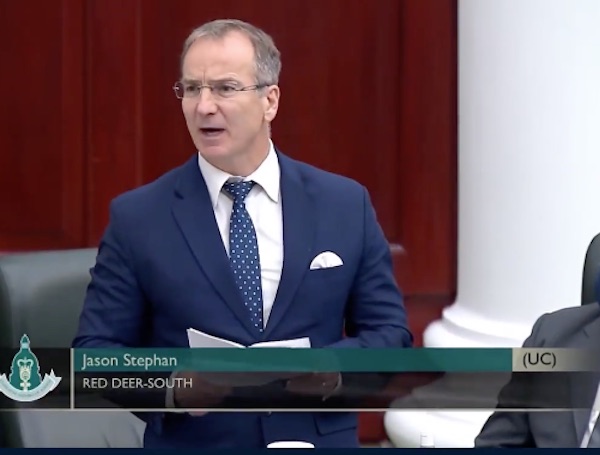
Red Deer’s Jason Stephan calls for citizen-led referendum on late-term abortion ban in Alberta
-
 COVID-192 days ago
FDA says COVID shots ‘killed’ at least 10 children, promises new vaccine safeguards
-
 Alberta2 days ago
Net Zero goal is a fundamental flaw in the Ottawa-Alberta MOU
-
 Addictions2 days ago
Manitoba Is Doubling Down On A Failed Drug Policy
-
 Food2 days ago
Canada Still Serves Up Food Dyes The FDA Has Banned
-
 COVID-192 days ago
The dangers of mRNA vaccines explained by Dr. John Campbell
-
 Alberta2 days ago
Keynote address of Premier Danielle Smith at 2025 UCP AGM
-
 Artificial Intelligence1 day ago
‘Trouble in Toyland’ report sounds alarm on AI toys
-
 Energy1 day ago
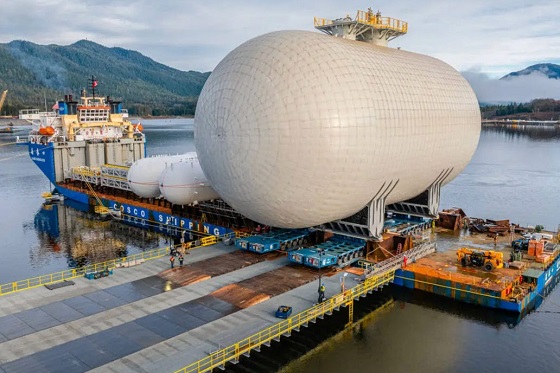
Canadians will soon be versed in massive West Coast LPG mega-project